E-Paper



‘Who had time to pursue justice’: Wife of 1996 Lajpat Nagar blast victim says was busy rebuilding life
The 1996 Lajpat Nagar blast killed 13 people, including Pinky Sood's husband. 30 years later, the mental impact of the tragedy can be felt in the community.

 Prefer HTon Google


Around 5:30pm on May 21, 1996, Pinky Sood was going about her day at home — keeping her 12-year-old daughter and eight-year-old son busy, prepping for dinner—when a phone call from a relative shifted the ground beneath her feet. A blast had rocked Delhi’s Lajpat Nagar market, where her husband Rakesh Kumar Sood had a framing shop. “You should check, Pinky,” is all the relative said to her. She had been 30-years-old at time.
“I rushed to the market. There was smoke, fire and chaos everywhere. I could see our entire shop was gutted but I had no idea where Sood sahab was,” said Pinky, now 60 years old, seated inside her Amar Colony home.
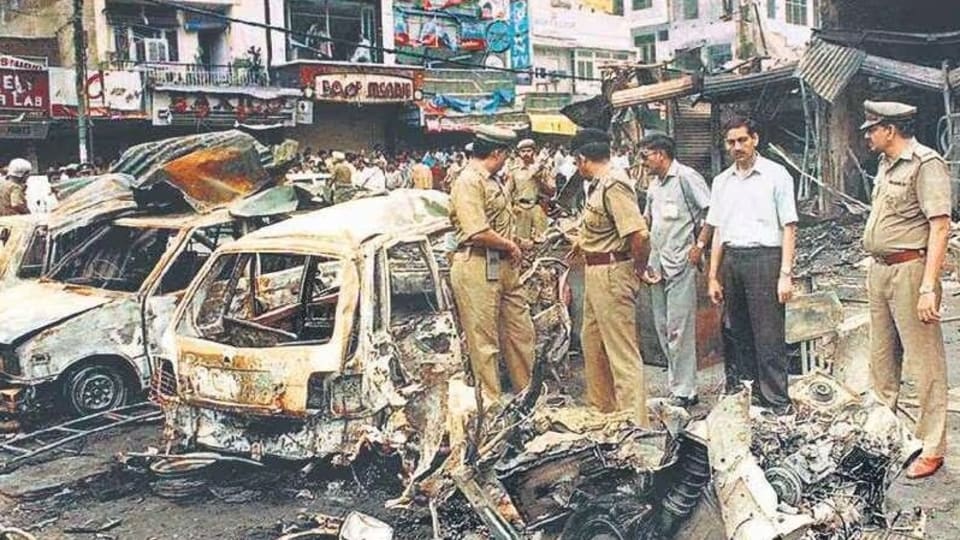
It has been 30 years since the blast, in which 13 people were killed and 39 were injured. According to police and court documents accessed by HT, a Maruti car packed with RDX detonated near a park in Lajpat Nagar Central Market around 6:30pm.
Hours after the blast, terror outfit Jammu Kashmir Islamic Front (JKIF) claimed responsibility for the attack on national television, said police.
The blast had occurred five days after Atal Bihari Vajpayee began his first term as Prime Minister that lasted 13 days. A day later, another blast in a bus, also claimed by JKIF, in Rajasthan’s Dausa killed 14.
For Pinky, a sleepless night lay ahead as she ran from one hospital to the other and then back to the market in search of her husband. Around 11 am the next day, Pinky was told that her husband had died.
In these 30 years, Pinky has not once stepped inside court premises as the blast case went on – and doesn’t regret it. “I was suddenly the head of the family, both a mother and a father to my children, and I had to run his business. Who had the time to pursue justice? I had to make peace with what had happened... These are painful memories and I had a life to rebuild,” she said.
In the immediate aftermath of the attack, the family received ₹1 lakh as compensation from the central government, HT had reported at the time.
Beyond that financial aid, rebuilding life was entirely left to the victims. “Two-three months after the incident, I took over the business because I had to feed my children… The first step was repairing the shop which took around two months. It was the staff that helped me navigate an unfamiliar world after Sood sahab’s death,” she said.
For Kuldeep Kumar, 52, general secretary of the Federation of Lajpat Nagar Traders Association, the horror of that afternoon remains equally vivid. Kumar, who owns a fabric store in Lajpat Nagar, was near the blast site when the explosion occurred.
“When the blast happened, I had just left my friend Umesh Makkad’s shop which was very close to where the blast happened,” he recalled.
Initially, many believed a gas cylinder had exploded. “Within a minute, we realised that it was a blast in a car and a planned one,” he said.
He immediately rushed back, towards the flames, to save his friend. “I saw the fire spread quickly so I pulled him out. ‘You can build everything again only if you remain alive,’ I told him,” Kumar said.
But not everyone escaped. Kumar still remembers a man who ran back into his burning shop to retrieve cash he had left behind.
According to Kumar, the narrow, encroached market lanes also hampered rescue efforts. “I still remember how fire tenders could not reach the place early, while police arrived within minutes,” he said.
Three decades later, the visuals remain impossible to erase. “The sight was horrific, dead bodies and people bleeding everywhere, the tears and people crying everywhere, a slipper here, a piece of cloth there. I can never forget,” he said.
The market remained shut for several days after the attack, and traders say its psychological and economic impact lingered for months. “For 3-4 days, shops didn’t open and the impact could be felt for a year after,” Kumar said.
Delhi Police registered FIR No. 517 in the case in 1996. Court documents showed that shopkeeper Subhash Chand Katar told police the blast occurred barely 10 feet from his shop. Investigators later found the vehicle had been stolen from Nizamuddin East three days earlier.
The Special Cell and Crime Branch discovered the accused had sourced explosive material from multiple places and had made an unsuccessful attempt to trigger a blast near Dulhan Dupatta Shop on May 19 before carrying out the fatal attack on May 21.
Hours later, JKIF claimed responsibility on national television. Investigators traced calls made to TV channels from Kashmir and arrested suspects linked to the numbers. The probe later pointed to a larger network allegedly involving JKIF operatives, Pakistan’s ISI and D-company. Court records identified JKIF leaders Bilal Ahmed Baig and Tiger Memon as key conspirators.
Police chargesheeted 17 accused, though only 11 were arrested. In 2023, the Supreme Court upheld convictions of four accused, calling the attack an “international conspiracy” aimed at destabilising India.