
 E-Paper



HAL revises LCA Mk-1A, basic trainer delivery targets
HAL aims to deliver 5 LCA Mk-1A jets and 3 HTT-40 trainers to the IAF by March 2026, down from initial targets due to supply delays.

 Prefer HTon Google


Hindustan Aeronautics Limited (HAL) plans to deliver at least five light combat aircraft (LCA Mk-1A) and three HTT-40 basic trainers to the Indian Air Force by the end of financial year 2025-26, down from 10 fighter jets and 12 trainers that the state-run plane maker was hoping to deliver under an earlier timeline, two officials aware of the matter said on Thursday.
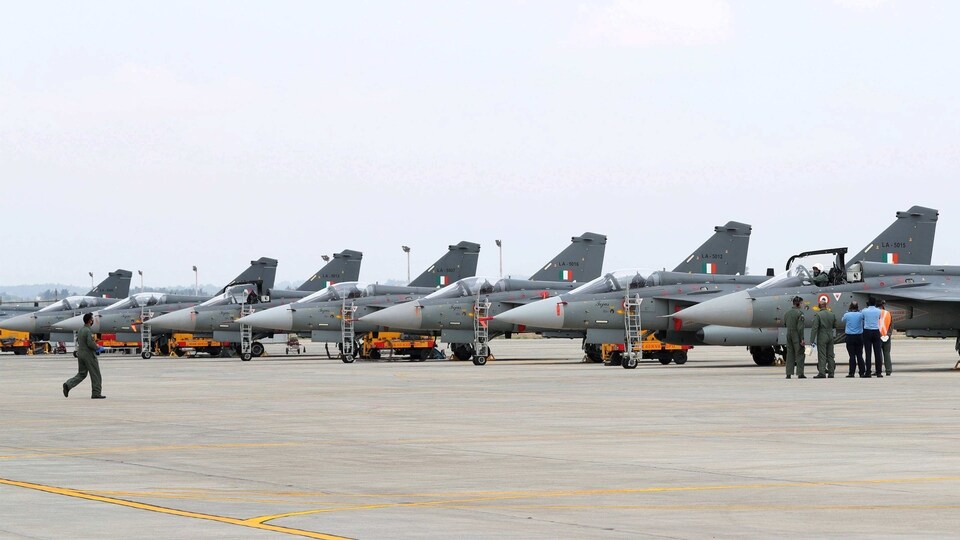
The delivery schedule has been reworked because of a combination of factors including the pace of supply of engines for both the LCA Mk-1A and basic trainer, and the completion of a series of critical weapon trials of the fighter jet, said one of the officials, asking not to be named.
HAL hopes to recover from the deadline slippage and meet its overall delivery targets in the coming years to boost the air force’s combat effectiveness, he added.
IAF has so far placed two separate orders for a total of 180 LCA Mk-1As with a combined value of ₹1.1 lakh crore to shore up its fighter fleet, with the first contract for 83 jets inked in February 2021, followed by a second one for 97 fighters in September 2025.
The five LCA Mk-1As HAL plans to deliver by March 31, 2026, are part of the first order, which is likely to be executed over the next four to five years. Deliveries under the second order are expected to begin in 2027-28 and be wrapped up over six years. To be sure, the first aircraft under the 2021 order was to be delivered in March 2024.
IAF is concerned about the current pace of the LCA Mk-1A programme because of the possible risks a delay in the induction of new fighters could pose to its combat effectiveness. The LCA Mk-1A programme (83 aircraft) was hampered by a delay in the supply of F404-IN20 engines by US firm GE Aerospace. The delivery of engines for the first order is slowly stabilising --- GE Aerospace has already delivered five engines, another 20 units are expected next year as the US firm has fixed supply chain bottlenecks, and the engine maker has said it will deliver more than 20 engines per year 2027 onwards.
“We are getting closer to operational capability as LCA Mk-1A weapon trials are progressing well and another round is planned in December-end. And with engine supply picking momentum next year onwards, HAL will be able to make up for the current delay. New manufacturing facilities will help accelerate deliveries of both LCA Mk-1A and HTT-40 (Hindustan Turbo Trainer-40),” the second official said.
In October, defence minister Rajnath Singh Singh inaugurated production lines of the LCA Mk-1 and the HTT-40 basic trainer in Nashik to meet the air force’s growing needs. HAL can build 16 LCA Mk-1As every year in Bengaluru, and the Nashik production line will help it increase production to a total of 24 jets. Also, the firm is capable of producing a total of 20 HTT-40s a year at its factories in Bengaluru and Nashik.
The air force ordered 70 basic trainers for ₹6,838 crore two years ago to train its rookie pilots. The project has slowed down due to a delay in the supply of TPE331-12B turboprop engines by US firm Honeywell, which is wrestling with supply chain bottlenecks.
Honeywell was supposed to deliver the first engine in September under a $100 million contract signed three years ago for the supply and manufacture of 88 TPE331-12B engines/kit. The US firm will supply 32 units and the rest will be built by HAL through technology transfer.
The first engine is expected in January 2026, another four by March 31 and the rest at the rate of two per month, HT has learnt. Two series production HTT-40s are already flying with ‘Category B’ (used) TPE331-12B engines that powered prototype aircraft. HAL was supposed to supply 12 basic trainers to IAF this financial year under the 70-aircraft contract, with the first plane to be delivered in September.
Currently, ab initio (Stage-I) flying training of all rookie pilots is carried out on Swiss-origin Pilatus PC-7 MkII basic trainers. Stage-I training is common for all pilots after which trifurcation into fighter, transport and helicopter streams takes place. Those selected for the fighter stream proceed for Stage-II training on PC-7 MkII and Kiran Mk-1A jet trainers and then Stage-III on the British-origin Hawk advanced jet trainers before they can fly supersonic fighter planes. Pilots from the other two streams carry out their Stage II and III training on different types of transport aircraft and helicopters.


