
 E-Paper



HC rejects plea to call Mathura’s Shahi Eidgah disputed structure
The controversy is related to the Mughal-era mosque at Mathura, which Hindu groups say was built by emperor Aurangzeb after demolishing a temple at the mythical birthplace of Lord Krishna


The Allahabad high court on Friday dismissed an application by Hindu petitioners asking that the Shahi Eidgah mosque in Mathura be referred to as a “disputed structure” during the legal proceedings on the Krishna Janmabhoomi-Shahi Eidgah title dispute.
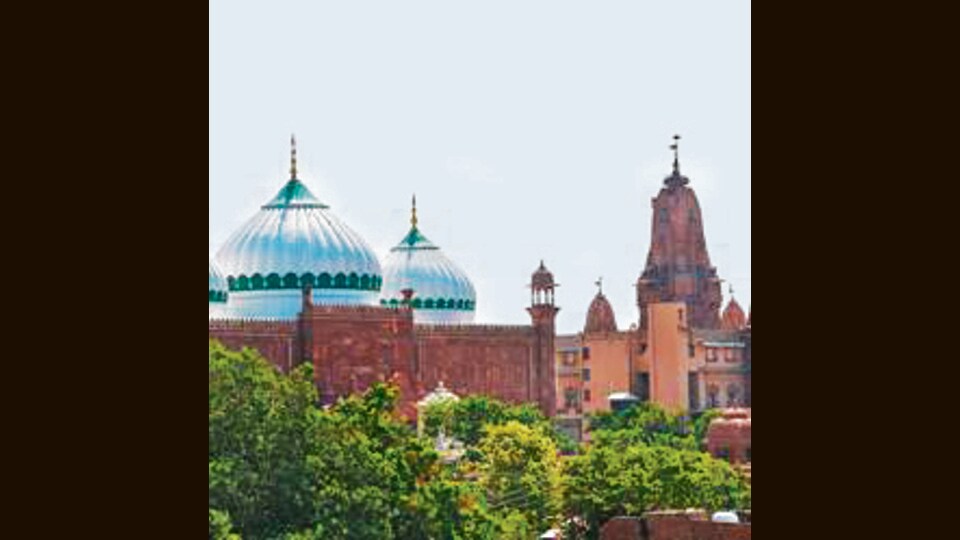
The controversy is related to the Mughal-era mosque at Mathura, which Hindu groups say was built by emperor Aurangzeb after demolishing a temple at the mythical birthplace of Lord Krishna. The suits filed by Hindu litigants since 2022 seek the removal of the Shahi Eidgah mosque as well as restoration of the temple.
The Muslim side has rejected the petitions and said they are barred under the 1991 Places of Worship Act, which freezes the religious character of shrines as they were at the time of independence, barring the Ram Janmabhoomi-Babri Masjid dispute in Ayodhya.
The Hindu petitioners asked the court to direct the stenographer to use word “disputed structure” in place of order “Shahi Idgah Mosque” during further proceedings of the suits and other connected matter. The Muslim side said it was an abuse of the process of the law.
“A bare perusal of the pleading of the parties in the suit reveals that there is dispute between the parties with regard to the site where Shahi Masjid Idgah is existing. Parties have claimed their respective title over suit property. Therefore, it may be termed as property in dispute,” said justice Ram Manohar Narain Mishra.
“In pleadings of the parties also, the structure in question is referred as Shahi Masjid Idgah and at this stage, where hearing of the suits is yet to commence and even issues have not been framed, it is neither desirable nor expedient to issue any direction to stenographer, as prayed by the applicants, to refer Shahi Masjid Idgah in judgments and orders as “disputed structure”,” the judge added.
“There is no dispute with regard to identity of property in suit, therefore, the prayer made in the application A-44 cannot be granted at this stage.”
Mahendra Pratap Singh, a lawyer from Mathura who moved this application, said that legal experts will be consulted and the order will be analysed. “We will challenge the order in the Supreme Court after consultation,” said Singh, adding that the order dismissing the application to term the Shahi Eidgah Masjid as a disputed structure will not harm the original suit.
Meanwhile, secretary for Shahi Eidgah Masjid management committee and its counsel Tanveer Ahmed welcomed the order and said, “Justice has been done.”
“Regular namaz is held at the mosque till date and has a separate access. So, there is no dispute. This cannot be called a disputed site,” said Ahmed, adding that the petitioners are wasting the court’s time.
The Hindu side had submitted that the Shahi Idgah mosque was constructed on the site historically recognised as the birthplace of Lord Krishna. The site holds immense religious significance for Hindus, they argued.
But the Muslim side argued that the mosque was in existence for the last 400 years and its existence was sought to be undermined by the present application, which was not permissible under law.
Allowing the present application will amount to pre- determination that the Shahi Masjid Idgah is not a mosque at an early stage, the Muslim side said.
The religious dispute simmered in the first half of the 20th century but a 1968 agreement calmed tempers. On October 12, 1968, an agreement was signed between the Shri Krishna Janmasthan Seva Sansthan and the Shahi Masjid Idgah Trust, which divided the land between the two parties and relinquished any claims of the Hindu parties to the land of the mosque.
But the Hindu side’s petition challenged the settlement and alleged that the pact had no legal validity because the Sri Krishna Janmabhoomi Trust, which the petitioners claimed had the ownership and title of the land, was not party to the settlement.
The Hindi suit claimed that Shahi Eidgah Masjid was constructed on a part of 13.37-acre land belonging to the Sri Krishna Janmabhoomi Trust. They demanded the mosque, which abuts the temple, be removed and the land returned to the trust because it is the mythical birthplace of Lord Krishna.
The Allahabad high court on December 14, 2023 directed the appointment of a court commissioner to supervise the survey of the mosque premises. However, the Supreme Court on January 16, 2024 stayed implementation of the December 14, 2023 order.
The case is part of a decades-old ideological project by Hindu groups that argue that medieval-era Islamic structures were built by demolishing temples and demand rights over those structures. Cases by Hindu groups and individuals in Varanasi and Mathura are currently being adjudicated in courts across Uttar Pradesh, even as a larger issue relating to the Place of Worship (Special Provisions) Act, 1991 is being heard by the Supreme Court.


