
 E-Paper



Madras HC upholds TN govt’s rules on priests’ appointments, exempts some temples
The case pertains to a petition by the All India Adi Saiva Sivacharyargal Seva Sangam, which sought quashing of rules brought in by the state government, called the Tamil Nadu Hindu Religious Institutions Employees (Conditions of Service) Rules, 2020, regarding qualifications and appointment of temple priests.


Temples built and governed by rules set by a particular set of Hindu scriptures known as agamas are exempt from appointing priests who are not allowed by custom and practice to touch the idol of the deity, the Madras High Court said in a verdict on Monday.
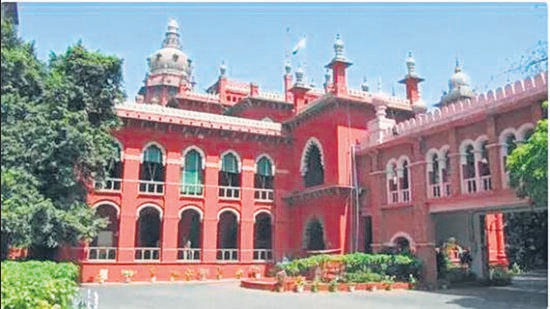
The case pertains to a petition by the All India Adi Saiva Sivacharyargal Seva Sangam, which sought quashing of rules brought in by the state government, called the Tamil Nadu Hindu Religious Institutions Employees (Conditions of Service) Rules, 2020, regarding qualifications and appointment of temple priests.
According to the petitioners, the qualification given under the Rules of 2020 cannot apply for the post of Archaka/Poojari to be appointed in the temples, where construction, installation of idols and worship of deity is as per Agamas.
It is stated that the Rules of 2020 brought by the respondent TN government provides for the qualification for the post of Archaka/Poojari ignoring those who have learned mantras and poojas in the gurukul and gained three years experience, would be made ineligible if they do not possess the required qualification given in the Rules of 2020, thereby destroying and wiping out the prevailing customs given in the Agamas.
It was further submitted that the right of appointment lies with the trustees under Section 55 of the Act of 1959, but offending the said provision, the government is trying to take over the rights of the trustees and for that reason the definition of “appointing authority” given under Rule 2(c) of the Rules of 2020 has also been challenged.
Advocate General R Shunmugasundaram submitted that the Rules under challenge are applicable not only for the appointment to the post of Archaka/Poojari,so if those Rules are struck down, the appointment of the officers and employees would remain unguided. Further he told the court that the Rules under challenge do not offend Articles 16(5), 25 and 26 of the Constitution
The rules will not apply to the group of temples governed by the agamas, a bench of chief justice Munishwar Nath Bhandari and justice N Mala said. They will, however, apply at all other temples in the state, the judges said.
“The appointment of Archakas (priests) in the temples constructed as per Agamas would be governed by the Agamas and for that the Rule under challenge would not apply,” the bench said. It cited Article 26 of the Constitution that allows every religious denomination the right to establish, maintain and manage its own affairs in the manner provided in the religion.
The judges said Saivite temples were governed by 28 Agamas, with the most important of them being Kamikagama, Karanagama and Suprabedagama. Similarly, Vaishnavites also had their own Agamas with the principle among them being the Vikhanasa and Pancharatra. Therefore, the appointment of Archakas must be strictly on the basis of such Agamas, they ordered.
The court cited an extract from a Supreme Court judgment of 1972. “No one else, however high they were placed in society as pontiffs or acharyas, or even other Brahmins could touch the idol, do puja or even enter the Garbha Griha (sanctum sanctorum). That is the general rule with regard to all these sectarian denominational temples,” it said.
Persons who are followers of four rishi traditions of Bhrigu, Atri, Marichi and Kasyapa and born of Vaikhanasa parents are alone competent to perform puja in Vaikhanasa temples of Vaishnavites, according to the texts of the Vaikhanasa Shastra, also known as agama, the judges said, citing a previous ruling by the Supreme Court.
“The only grey area is about the identification of the temples constructed as per the agamas,” the court said. It directed the state government to constitute a five-member committee presided by M Chockalingam, a retired high court judge, to decide on the matter.
The other members would include N Gopalaswami, head of the Madras Sanskrit College’s executive committee. Two members will be nominated by the government in consultation with Chockalingam within a month. The commissioner of the Hindu Religious and Charitable Endowments Department will be the ex-officio member of the panel.
The committee will identify temples constructed as per the agamas. These will be governed by custom and practice not only in respect of the worship of the deity, but in all other respects, which includes the appointment of priests, the court said.


