
 E-Paper



HistoriCity | One republic, many ‘republics’: Rethinking ancient Indian history
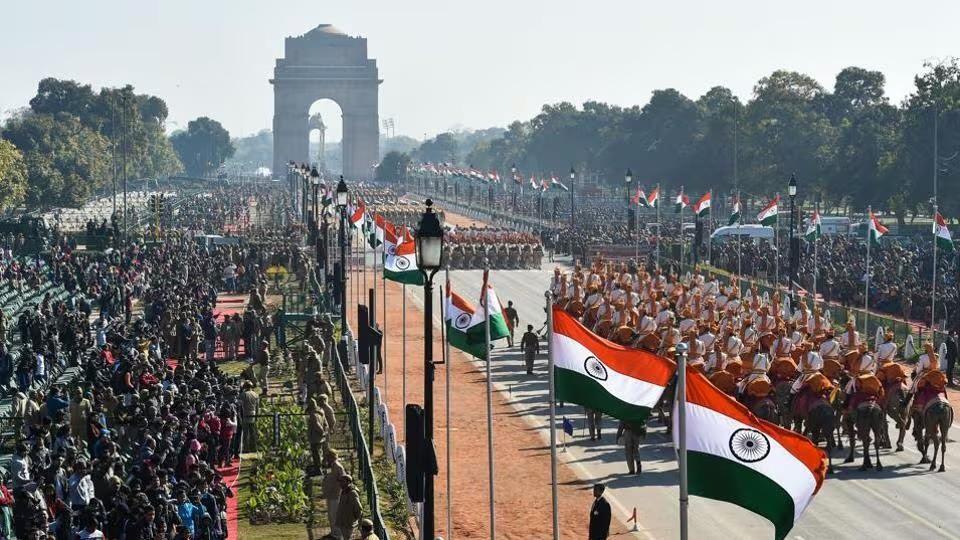
India celebrated her 77th Republic Day on Monday, with the parade also marking 150 years of Vande Mataram, iconic anthem written by Bankim Chandra Chattopadhyay

 Prefer HTon Google


India celebrated her 77th Republic Day on Monday, with the parade also marking 150 years of Vande Mataram, the iconic anthem written by Bankim Chandra Chattopadhyay. Roughly translating to “Mother, I pray/bow to thee,” the composition has endured for over a century, inspiring generations of freedom fighters and nation-builders. Independence in 1947 freed the country from colonial rule, but it was the adoption of the Constitution in 1950 that completed that journey, establishing India as a republic where authority flows from the people, not from monarchy or heredity.
What is a Republic?
The defining feature of a republic is that it is non-monarchical: it is not ruled by a hereditary king. Instead, governance is carried out by representatives who act on behalf of the people. Who is counted as “the people,” however, has varied widely across time and place.
In ancient Athens—often cited as one of the earliest republics—only free (that is, non-enslaved) adult men were recognised as citizens. Political participation and representation were limited to this narrow group, while the vast majority of the population, including enslaved people, had no right to vote. This system emerged around the sixth century BCE. The Athenian example was not unique, however; several other city-states operated in similar ways, with political power concentrated among a small elite of men who governed in their own interests. There are other examples from the ancient world as well, such as those from ancient Phoenicia (modern-day Syria, Lebanon, and Palestine–Israel). City-states like Tyre and Sidon also had oligarchic republics similar to Athens.
Also Read: An enduring republic
The development of republican and democratic forms of government has been a long and uneven process. Early republics such as the Roman Republic (509 BCE–27 BCE) established key institutions like consuls, the Senate, and popular assemblies, and distributed power among different bodies rather than concentrating it in a monarch; however, these systems still balanced oligarchic influence with limited popular participation rather than universal political equality.
Democracy and republicanism did not evolve in a straight line and, as mentioned above, for much of history political rights were restricted to narrow groups. Modern ideas of universal rights and equal citizenship, irrespective of gender, class, caste, religion, or other status, developed gradually, particularly from the Enlightenment onward, and were only widely realised with the expansion of suffrage in the 19th and 20th centuries.
Although many scholars and advocates argue that democratic and republican systems are desirable because they are based on consent, accountability, and the rule of law, not all countries that hold elections or call themselves democracies fully adhere to these principles in practice. Some authoritarian or hybrid regimes conduct formal elections and profess commitment to democratic norms while concentrating power in the executive, repressing dissent, or manipulating institutions to remain in power.
Our Earliest Known ‘Republics’
In the Indian subcontinent, while monarchy eventually became the dominant political system, other forms of governance also existed in the early historic period. Oligarchies, in which power rested with a group of elite men rather than a single ruler, were common, and forest tribes and chieftaincies played significant roles, though much of what we know about them comes from state-produced texts and inscriptions. According to Jagdish P. Sharma in Republics in Ancient India 1500 B.C.–500 B.C., the Pali canon of the southern Buddhists, Sanskrit Buddhist texts, the sacred literature of the Jainas, the Mahabharata, and treatises like the Arthasastra and the Ashtadhyayi of Panini provide the main evidence for the northeastern republics of the post-Vedic period.
Later-period Vedic texts, the epics, and the Puranas record many kings and dynasties of early historic North India, but assessing the historicity of the earliest rulers remains difficult. From the 6th century BCE onward, the outlines of North Indian political history become clearer, and figures mentioned in different textual traditions—kings as well as religious teachers—can often be identified as historical. In South India, the early historic phase is usually placed around the 3rd century BCE, though evidence for writing in the far south may date to the 4th century BCE or earlier.
State polities and societies emerged in the 6th and 5th centuries BCE across a broad belt stretching from Gandhara in the northwest to Anga in the east, extending into the Malwa region. The inclusion of Assaka (Ashmaka) in the upper Godavari valley in lists of major states suggests that similar processes were underway in trans-Vindhyan India.
Also Read:Remembering the heroes of our resilient Republic
Buddhist and Jaina texts describe sixteen powerful states, or solasa-mahajanapadas, that flourished in the early 6th century BCE. (Janapada referred to a region with urban and rural settlements and its inhabitants.) Smaller states, chiefdoms, and tribal principalities also existed. The Anguttara Nikaya lists the mahajanapadas as Kasi (Kashi), Kosala (Koshala), Anga, Magadha, Vajji (Vrijji), Malla, Chetiya (Chedi), Vamsa (Vatsa), Kuru, Panchala, Machchha (Matsya), Shurasena, Assaka (Ashmaka), Avanti, Gandhara, and Kamboja. The Mahavastu gives a similar list but substitutes Shibi (Punjab) and Dasharna (Central India) for Gandhara and Kamboja, while the Bhagavati Sutra provides a somewhat different, likely later, list.
The mahajanapadas included both monarchies (rajyas) and non-monarchical states known as ganas or sanghas. The sixteen mahajanapadas were overwhelmingly monarchical, except for at least two kingdoms that had an oligarchic system. These terms, used interchangeably in texts like the Ashtadhyayi and Majjhima Nikaya, have sometimes been translated as “republics,” but they were essentially oligarchies, where power rested with a group of clans. Therefore, to say that democracy first emerged in India in the form of gana-sanghas is an overstatement of the available evidence and an oversimplification of these complex state systems.
Sharma, in his critique of nationalist writers, asserts, “it is a serious mistake on the part of the student of ancient political institutions to interpret ancient terms, concepts, and institutions in a modern context. Jayaswal, Bhandarkar, Majumdar, and to some extent Altekar as well, have been guilty of imposing twentieth-century democratic ideas and institutions on early Indian polity. They seem to start with a purpose which was, no doubt, a natural reaction to the criticism of the nineteenth-century imperialist writers who underrated Indian achievements and various aspects of her past culture, as well as being based on the presupposition that if Greece and Rome had democratic institutions ancient India should have had them also.”
As Romila Thapar states in Early India: From Origins to 1300 AD, the compound terms gana-sangha or gana-rajya combine gana, referring to a group whose members claimed equal status, with sangha, meaning an assembly, or rajya, denoting governance. She asserts, “it was once thought that they were democracies but this is hardly appropriate, given that power was vested in the small ruling families and they alone participated in governance. The larger numbers of people who lived in the territory had no rights and were denied access to resources.” For this reason, the term republic came to be preferred: it acknowledges the presence of social stratification while distinguishing these polities from monarchies.
Structure of the Gana-sanghas: Chiefdoms and Oligarchies
Upinder Singh, in A History of Ancient and Early Medieval India, notes that two of the mahajanapadas—Vajji and Malla—were sanghas. Buddhist texts also refer to several other ganas, including the Sakyas of Kapilavastu, the Koliyas of Devadaha and Ramagrama, the Bulis of Alakappa, the Kalamas of Kesaputta, the Moriyas of Pipphalivana, and the Bhaggas (Bhargas) centred on Sumsumara Hill. Notably, most politically significant ganas were located in or near the Himalayan foothills of eastern India, while the major monarchies dominated the fertile alluvial plains of the Ganga valley.
The gana-sanghas were organised either as single clans, such as the Sakyas (the clan into which the Buddha was born), Koliyas, and Mallas, or as confederacies of clans, examples of which include the Vrijjis and Vrishnis. The Vrijji confederacy, centred at Vaishali, consisted of independent clans of equal status that retained their distinct identities. Although these were kshatriya clans, their political systems did not necessarily follow the varna order. They preserved strong clan traditions, particularly collective governance through assemblies restricted to clan or family heads.
Compared to kingdoms, the ganas retained stronger elements of tribal organisation. Some appear to have evolved from older tribal formations, while others emerged through the transformation or rejection of monarchical rule. For example, the Videhas seem to have shifted from monarchy to gana status by the 6th century BCE, while the Kurus, originally a monarchy, became a gana several centuries later. Two broad types of ganas can be identified: those based on a single clan or part of a clan, such as the Sakyas and Koliyas, and confederacies of multiple clans, such as the Vrijjis and Yadavas. These confederations point to a developed and self-conscious political identity among the ganas.
Also Read: Paintings, dance and tableaux: Vande Mataram at the centre of Republic Day Parade 2026
Origin legends of gana-sanghas often emphasised claims to high status, frequently tracing ruling families to exiled elites or to myths asserting purity of descent. Their departure from Vedic orthodoxy is reflected in Brahmanical sources that criticised them as degenerate kshatriyas or even shudras for rejecting Vedic ritual and varna stratification. Socially, gana-sanghas were organised into two main groups: the ruling kshatriya rajakula and the dasa-karmakara (slaves and labourers), who had no political rights or representation.
Governance was collective and centred on an assembly of clan representatives, presided over by a raja who functioned as a chief rather than a hereditary monarch. Decisions were debated and, if necessary, put to a vote. Supporting officials included advisers, a treasurer, and a military commander, with later sources describing more elaborate judicial procedures. Political power rested firmly with the kshatriya representatives, a fact reflected in Buddhist texts that often placed kshatriyas above brahmans in social ranking.
Rejecting monarchical authority also allowed gana-sanghas to diverge from Brahmanical political theory. Buddhist texts present a rational account of the origin of the state, resembling a social contract, in which governance arose to manage conflict and uphold justice. This stood in contrast to the Brahmanical view of kingship as divinely ordained and tasked with maintaining ritual order and varna hierarchy.
The history of the ganas of ancient India extends over at least a millennium. Their eventual military defeats by monarchical states can be attributed, in part, to the limitations of their systems of governance and military organisation in responding to the demands of territorial expansion and empire-building. By contrast, the ambitions of monarchical states were clearly articulated in the political vocabulary of the period, through concepts such as chakravartin, samrat, and sarvabhauma, all denoting the ideal of a universal or “world” ruler. As Singh observes, “several centuries later, the rulers of Magadha succeeded in translating the idea of empire into reality.”
(HistoriCity is a column by author Valay Singh that narrates the story of a city that is in the news, by going back to its documented history, mythology and archaeological digs. The views expressed are personal.)


