
 E-Paper



House panel flags gaps in SC/ST quotas at DU, seeks return to roster system
The panel noted that the 2013 change in roster calculation—mandated by the then Ministry of HRD and the University Grants Commission (UGC)—had altered the composition of reserved posts

 Prefer HTon Google


The parliamentary committee on welfare of Scheduled Castes (SC) and Scheduled Tribes (ST) has called for significant changes in the University of Delhi’s (DU) reservation policies and implementation mechanisms, including a return to the pre-2013 system of maintaining reservation rosters at the department level rather than at the university level.
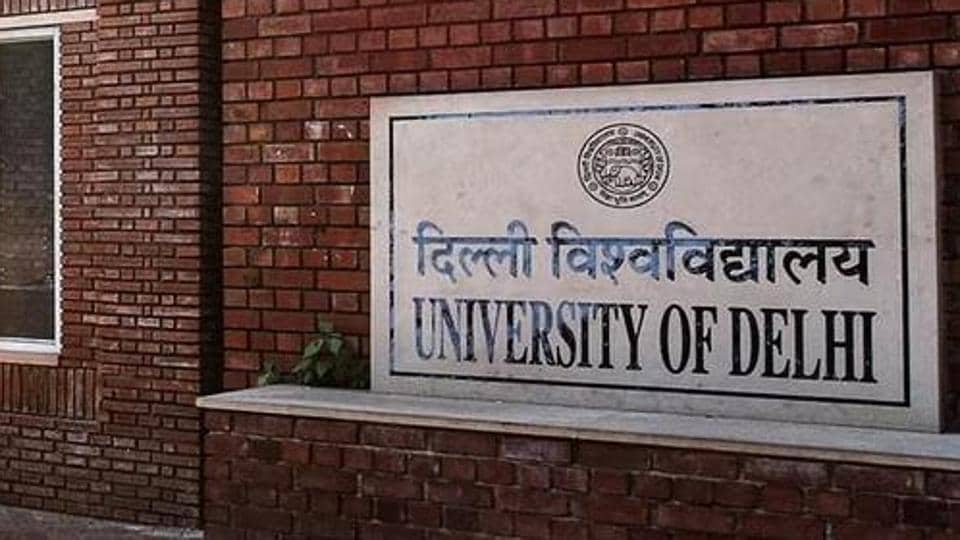
In its report, presented in the Lok Sabha and laid on the table of the Rajya Sabha on August 7 (published on website on Monday), the panel said that the shift to a university-wide roster more than a decade ago had “caused imbalances in SC/ST representation” and recommended that this change be reversed to “ensure equitable distribution of reserved posts.”
The 50 page report, which examined the role of autonomous bodies and higher education institutions in the socio-economic development of Scheduled Castes and Scheduled Tribes and the implementation of reservation policy—with specific reference to the University of Delhi—was based on a local study conducted at the university on April 11, 2025.
The committee met with DU administration, SC/ST teachers’ welfare associations, non-teaching staff, and students, and examined official data on admissions, faculty appointments, and grievances over the past five years.
Also Read:DU issues fresh anti-defacement rules ahead of polls
The panel noted that the 2013 change in roster calculation—mandated by the then Ministry of Human Resource Development and the University Grants Commission (UGC)—had altered the composition of reserved posts.
Under the earlier department-level roster, each academic department maintained its own reservation cycle, allowing for a spread of reserved posts across disciplines. The switch to a single, university-wide roster had the effect of converting certain “unreserved” positions to “reserved” ones in bulk, disproportionately affecting some departments while leaving others without representation.
Comparing faculty strength before and after the change, the committee recorded a decline in the number of unreserved posts from 522 to 402, and an increase in OBC, SC, and ST posts. SC positions rose from 98 to 119, and ST positions from 40 to 59. Despite this, the report said, representation remained uneven, and many sanctioned reserved positions were not being filled.
On the question of backlog vacancies, the committee observed that a number of teaching posts reserved for SC/ST candidates had remained unfilled for years despite earlier recommendations.
“Special recruitment drives within three months should be conducted to fill all backlog vacancies,” the report said, warning that delays were undermining the purpose of reservation.
The panel also flagged the absence of SC/ST representation among the eight existing ad-hoc faculty positions.
“Regularise ad-hoc positions with age/qualification relaxations for SC/ST candidates,” it recommended, adding that such measures were necessary to address systemic barriers in hiring.
Student admissions data examined by the committee showed that the university was broadly implementing reservation in line with Government of India norms—15 per cent for SCs and 7.5 per cent for STs—but that gaps remained in some programmes.
For 2024–25 undergraduate admissions, SC students constituted 15.44 per cent and ST students 4.14 per cent of total enrolments. At the postgraduate level, SCs made up 14.72 per cent and STs 5.72 per cent. PhD admissions in 2024–25 saw SC representation at 15.20 per cent and ST representation at 6.80 per cent.
The report noted that DU had adopted measures such as relaxation in minimum qualifying marks—45 per cent for SC/ST candidates as against 50 per cent for general category applicants—lower cut-offs, and reduced application fees for reserved categories. It also recorded the university’s policy of keeping SC/ST candidates on waitlists until all reserved seats were filled.
On faculty composition, the report said that as of March 31, 2025, DU had 995 teaching staff members, of whom 129 (12.96 per cent) were SC and 56 (5.62 per cent) were ST.
Among professors, SC representation was 9.09 per cent and ST representation 1.51 per cent. Associate professors had higher representation—15.03 per cent SC and 7.15 per cent ST. The Committee attributed the low ST representation partly to “limited applications from ST candidates” and noted that mission-mode recruitment drives had been initiated in 2022 to address this.
The committee expressed concern that while the central university had a functional SC/ST Cell—established in 1983—its affiliated and constituent colleges did not.
“SC/ST Cells should be made mandatory in all affiliated colleges,” it recommended, arguing that such units were essential for grievance redressal, awareness about rights, and monitoring the implementation of reservation.
It also recommended that SC/ST faculty be prioritised for international training programmes, saying this would contribute to their professional growth and improve representation in higher academic positions.
During its April 2025 visit, the committee also reviewed DU’s broader academic and research performance. It noted that in 2024–25, the university offered 500 programmes across undergraduate, postgraduate, and doctoral levels, including 200 directly administered by departments and centres. Publications in indexed journals had risen by 11 per cent—from 3,730 to 4,120—and DU’s H-index, a measure of research impact, stood at 286. The university had signed 22 international memorandums of understanding and awarded over 166,000 degrees in the academic year, including 623 PhDs.
The report said that the university and the Ministry of Education must take “urgent and sustained action” to address structural issues in reservation implementation.
The committee’s findings will now be examined by the Ministry of Education, which is expected to respond with an action-taken report. If implemented, the changes could affect recruitment, admissions, and governance structures across one of India’s largest universities, with possible implications for other central institutions following similar roster and recruitment policies.


