
 E-Paper



How oil tanker reached India through Strait of Hormuz under ‘dark mode’: Blow-by-blow account
The ship eventually docked in Mumbai on Wednesday evening after making its way through waters where attacks and military activity have stalled maritime traffic.

 Prefer HTon Google


A crude oil tanker carrying Saudi crude reached Mumbai Port on Thursday after navigating the conflict-hit Strait of Hormuz, a route where shipping has slowed sharply since fighting broke out between the United States, Israel and Iran late last month.
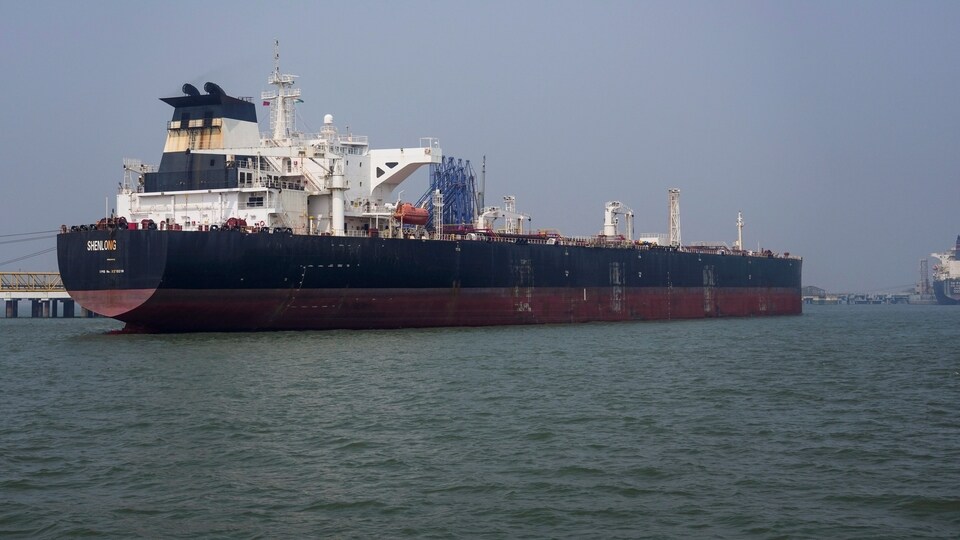
The Liberia-flagged tanker Shenlong, carrying crude from Saudi Arabia, became the first India-bound vessel to safely navigate the sensitive route during the ongoing conflict. The ship docked in Mumbai on Wednesday evening after making its way through waters where attacks and military activity have stalled maritime traffic.
The journey from Saudi Arabia
The tanker’s voyage began at Ras Tanura, where it loaded crude on March 1. Two days later, the vessel departed with India as its destination.
Also read| Ship heading to India activated 'Dark Mode' to pass through Strait of Hormuz
For several days, the tanker’s movements were tracked through maritime monitoring systems as it sailed toward the Strait of Hormuz — the narrow channel that connects the Persian Gulf to the Arabian Sea and carries a significant share of the world’s oil shipments.
Disappearing from tracking systems
The vessel’s last transmitted position was recorded inside the strait on March 8. Soon after, it vanished from monitoring systems.
Maritime sources said this suggested the crew had switched off the ship’s Automatic Identification System (AIS) while crossing the most sensitive stretch of the route. AIS normally broadcasts a vessel’s location, speed and identity, allowing ships and authorities to track movements at sea.
Also read| First India-bound oil tanker crosses Strait of Hormuz, reaches Mumbai Port
Ships rarely disable this system because international maritime rules require it to remain active. However, in conflict zones such as the Strait of Hormuz during wartime, vessels may temporarily turn off their transponders to avoid detection.
Reappearing after clearing the strait
The tanker reappeared on tracking databases the following day after it had cleared the strait. It then continued its journey toward India without further interruption.
Port officials said the ship reached Mumbai at around 1pm on Wednesday and was later berthed at the Jawahar Dweep Terminal.
“The ship Shenlong is carrying 1,35,335 metric tonnes of crude oil. She is berthed at Jawahar Dweep Terminal and has started discharging the cargo,” said Praveen Singh, deputy conservator of the Mumbai Port Authority.
The crude will be sent to refineries in Mahul, located in eastern Mumbai.
The crew and cargo
The tanker is owned by Shenlong Shipping Ltd and managed by Dynacom Tanker Management Ltd.
Officials said the vessel has a crew of 29, including Indians, Pakistanis and Filipinos. The ship is commanded by Captain Sukshant Singh Sandhu, and unloading of the crude cargo is expected to take around 36 hours.
The voyage comes at a time when maritime traffic through the Strait of Hormuz has slowed considerably due to security concerns. The narrow waterway — located between Iran and Oman — handles more than 20 million barrels of oil shipments a day.
Recent attacks have added to the risks. A Thai bulk carrier, Mayuree Naree, was struck by projectiles while passing through the strait after leaving the United Arab Emirates. The ship, which was heading to Kandla Port, caught fire. Three crew members remain missing, while 20 others were rescued by the Royal Thai Navy and Omani authorities.
With ships waiting outside the region or diverting routes, the safe arrival of Shenlong in Mumbai marks a rare successful transit through one of the world’s most sensitive maritime corridors during the ongoing conflict.


