E-Paper



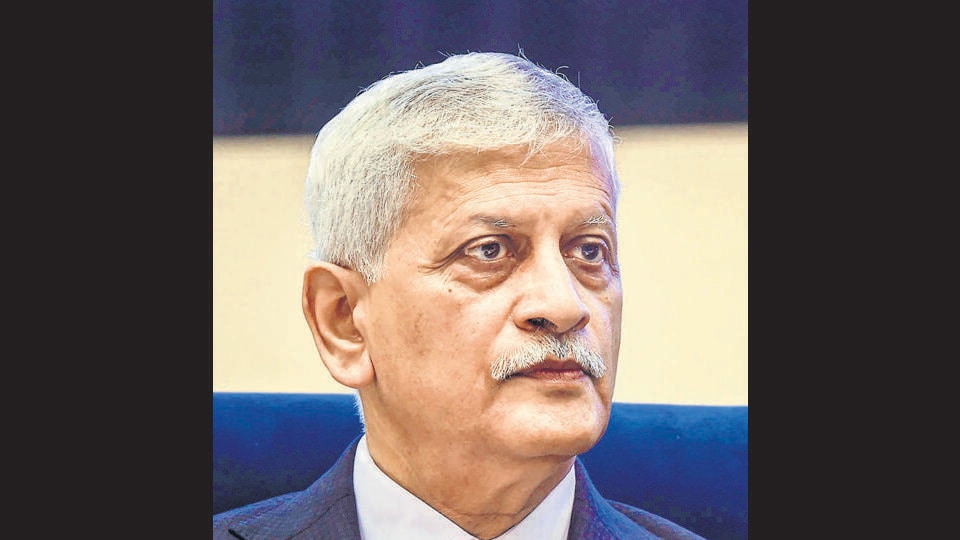
HT Interview: Length of tenure doesn’t matter, it is about your contribution, says Justice Lalit
The basic function of the Supreme Court is to interpret the Constitution with such clarity that it becomes a guiding beacon, justice Uday Umesh Lalit told Utkarsh Anand in an interview just days before he takes over as the 49th Chief Justice of India on August 27. Edited excerpts

 Prefer HTon Google


The basic function of the Supreme Court is to interpret the Constitution with such clarity that it becomes a guiding beacon, justice Uday Umesh Lalit told Utkarsh Anand in an interview just days before he takes over as the 49th Chief Justice of India on August 27. Edited excerpts
Q) How was it growing up in a family where your father (Umesh R Lalit) was an established lawyer and then a judge?
A) My family belongs to Solapur in Maharashtra. My grandfather became a lawyer in 1920. My father started his practice in 1955 in Mumbai. Today, my son is practising as a lawyer, which means that we have 102 years of unbroken chain of lawyering. So, the advocacy has been in the family for four generations now. However, as a youngster, my mother was my role model and she taught me everything. My dad became a judge in 1974 in the Bombay high court. He lost his judgeship during the Emergency and was not confirmed. The only time I saw my dad on the dais as a judge happened to be his last day in the office. I joined the Mumbai Government Law College in 1980 and the curriculum was designed in a way that several legendary lawyers such as YV Chandrachud (who later went on to become the CJI) and Nani Palkhivala would be the visiting faculties and then, we would have the time to attend trials and proceedings in the high court.
Q) What were your aspirations as a law student?
A) I will tell you frankly. I joined the law college to become a judge someday. So, that was always my dream. My wife (Amita) also knew that this is what I wanted to be in my life. I wanted to become a part of the judiciary. Therefore, when the judgeship was offered to me, I did not think twice nor did I consult anyone and said “yes”. I came back home and told my wife about it. Her response was: “Finally!”
Why I wanted to become a judge also is important. I believe creativity of a judge is of different dimension than the creativity of a lawyer. Lawyers can always be of great assistance but a judge has a greater role in shaping up something for the benefit of society, for people at large. And that is when I felt that my role would be better as a judge.
Q) You shifted to Delhi in 1985 and joined former Attorney General Soli Sorabjee the next year. How was that experience?
A) If you are watching a great mind applying the same set of rules to individual fact situation in different perspectives, that is where the learning experience actually teaches you so much. I did around five and half years in Sorabjee’s chamber and those years were the foundation of my life as a lawyer. I could see what independent thinking at the optimum degree means when I was with Sorabjee. He was one of the three giants I have always revered in this profession. The other two are Fali S Nariman and K Parasaran. They all have the unique ability to think something out of the box. As a young lawyer, I would keep following them to the courtrooms just to listen to them arguing.
Q) You were known as an ace criminal lawyer before you joined the bench. How did you come to specialise in criminal matters?
A) It was a combination of many factors. I was working with a civil lawyer in Mumbai. My dad had a substantial practice in the criminal side and I used to observe him. When I came to Delhi and Sorabjee became the AG, he put me on the panel of the Union of India in 1989 and then the central agencies started briefing me on a variety of criminal matters. The first big criminal matter that I got inducted in was General Vaidya assassination case (In August 1986, former army chief General AS Vaidya was assassinated in Pune by Sikh militants of Khalistan Commando Force). It was an appeal under TADA and I was assisting the then additional solicitor general, Altaf Ahmed. I had the benefit of working with two investigators who helped me understand the case and the evidence very closely. I flew to the crime scene in Pune and made it a point to understand everything about the case. That case and those interactions with those investigators taught me the basics of criminal law. Then the state of Maharashtra also started engaging me and that’s how it all began. But let me tell you that my stint did not begin as a defence lawyer but as a prosecutor in criminal cases.
Q) Who do you consider as your ‘star’ judges?
A) I will tell you an anecdote. In 1978, I had gone to the Supreme Court with my father just to see how that court works. An important case arising out of the Presidential reference in relation to the Special Courts Bill was being argued. Justices YV Chandrachud, PN Bhagwati and Krishna Iyer were on the bench. That’s when I saw three of them...dazzling and very inspiring and I followed that case. I looked at the judges and said to myself -- “They are my heroes”.
Q) Did you ever think of heading the judiciary at some point? And now when it is happening, is it too short a tenure?
A) I must tell you that when it was offered to me, I was not even aware of who were the other people being recommended for judgeship... Whether they were younger or senior or anything at all about the other names. It actually did not bother me at all. Therefore, this (opportunity to take over as the CJI) has come as a part of life on its own and that’s how I am taking it.
The length of the tenure does not matter to me. Every person gets a different tenure in the institution and I believe it is your contribution which matters. Whatever you may do has to be at the institutional level. You may come out with an idea. That idea needs to be acceptable to everyone. Everyone in the sense, everyone who is part of the judiciary. If that idea is something that is acceptable to everyone, regardless of your tenure, the idea will always be a long-standing one and it will see the idea getting crystallised in the form of an accepted mode of practice.
Q) What is one thing that Justice Lalit would want to change about the perception of the judiciary?
A) See, perception is very difficult to counter in case there is any adversity or any such thing. As a judge, I have dealt with every matter with the same sense of zeal and dedication. I have taken every matter the way it stands, the way it presents as a challenge; deal with it and move on. According to me, if the judges and the judiciary apply themselves and keep doing whatever is there diligently, and with what is called a sense of purpose, a sense of duty, then the perception is bound to change. It has to change at an institutional level.
Q) Mounting pendency is the most vocal criticism for the judiciary. Even in the Supreme Court, there are more than 70,000 pending cases.
A) You are right, the issue of pending cases needs to be tackled at various levels. When a criminal appeal remains pending in the Supreme Court, it gives rise to tertiary litigation. There will be applications for bail and other miscellaneous pleas. So, one pending matter will beget more cases at different levels. Therefore, the need is to tackle the one pending before the Supreme Court at the earliest.
Second, there are certain matters which need to be decided expeditiously so that there is certainty and consistency in law. For instance, if there is one income tax matter on the point of law that is pending, you will have scores of cases adding up only on the basis that a similar matter is still to be decided. A stitch in time saves nine...So, if that one matter is disposed of early, with clarity, it will actually see to it and it will stop the next generation of matters under similar issue entering the walls of the court.
Third, there are certain matters, for instance, where the system should not be running counter to the very idea of deciding them quickly, such as death sentence cases. They must be decided quickly. For how many years can a death sentence matter be left pending? Therefore, some matters must be decided at an early date.
Q) What about constitution bench cases? We have not seen the apex court taking up these cases of late. Is there a plan to speed up constitution bench matters?
A) I would say that should be the plan ideally. I have always believed that the Supreme Court’s basic function is to lay down the law and interpret the Constitution with such clarity that it becomes a guiding beacon for everybody to follow. The emphasis must be on constitution bench cases which are pending consideration because they are the matters which must be dealt with at the earliest... that is where the societal interest is also very intricately connected. Those matters must be dealt with. However, it is also important to remember that this cannot be a one-man initiative. This is the plan which the entire body has to take. And we, as judges, will certainly look forward to implementing this plan. I have one more idea. If the judges who are supposed to be the best of the lot are elevated to the Supreme Court, every judge must have the opportunity to be there in at least three constitution bench matters. Every judge must get that opportunity.
Q) How do you see the Supreme Court’s role as a protector of rights and free speech?
A) The Supreme Court has a duty to protect constitutional rights of people, including free speech. Any unreasonable transgression has to be repelled by the court.
Q) What about the collegium system of appointing judges and the alleged frictions with the government on judicial appointments?
A) I think there are sufficient checks and balances in the system of judicial appointments. The role of the government is also a part of the same system. If there are adequate reasons to flag issues, the government has to send back the names and the collegium can then reconsider.