
 E-Paper



Human trafficking case: NIA carries out raids in 10 states; 44 held
NIA on Wednesday raided over four dozen locations across 10 states and arrested 44 people as part of its probe into a human trafficking syndicate.

 Prefer HTon Google


The National Investigation Agency (NIA) on Wednesday raided over four dozen locations across 10 states and arrested 44 people as part of its probe into a human trafficking syndicate involved in the infiltration, and settlement, of Rohingya in India through the Indo-Bangladesh border, officials said.
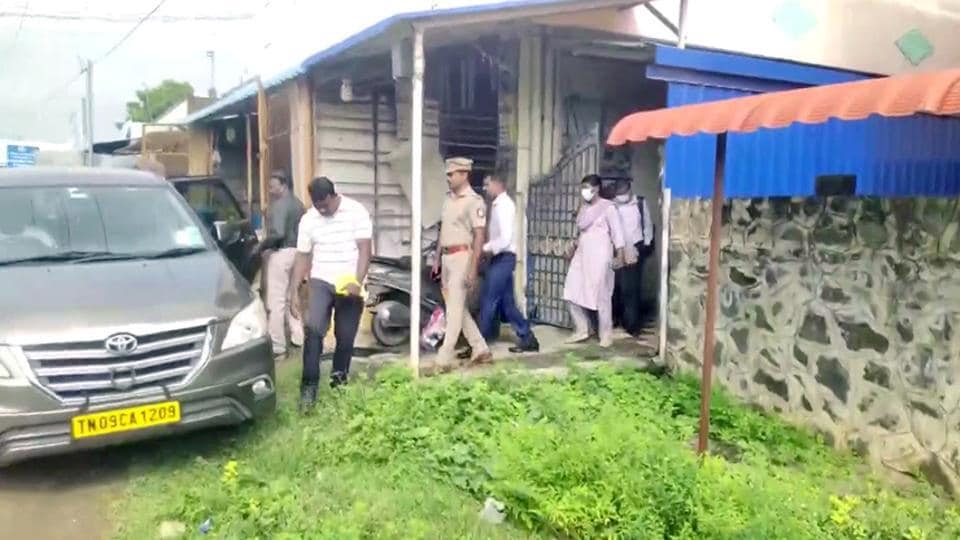
The anti-terror probe agency took over the probe into the alleged extensive human trafficking network on the directions of Union home Amit Shah after Assam unearthed a racket in February this year. It has registered four cases to probe an alleged larger nexus and is likely to seek help from Bangladeshi authorities to identify middlemen and key players on the other side, the officials, who did not wish to be identified, said.
In a statement, NIA said they conducted the searches in a total of 55 locations across Tripura, Assam, West Bengal, Karnataka, Tamil Nadu, Telangana, Haryana, Rajasthan, Jammu and Kashmir, and Puducherry in coordination with the Border Security Force (BSF) and the respective state police.
“In a big blow to human trafficking networks operating across 10 states and Union territories, the NIA, in close coordination with the Border Security Force (BSF) and state police forces, conducted a comprehensive operation across multiple states in India Wednesday morning. The operation aimed at dismantling illegal human trafficking support networks involved in infiltration and settlement of illegal migrants across the Indo-Bangladesh border into India,” the agency said.
Speaking to HT, Assam director general of police (DGP) G P Singh said: “This is a pan-India network of touts which brings Rohingya to India. From February till now, we have stopped or turned back around 450 Rohingya Muslims with the assistance of border guarding forces.”
He said the racket in the state came to light in February when a group of Rohingya were detected on a train arriving from Tripura, at Karimganj railway station, by Karimganj Police.
“The touts on both sides of the border facilitated the entry of illegal migrants. That’s when we began an operation to root out the network of these touts. It turns out that they are based across India, which is a serious national security concern,” Singh said.
In its statement, NIA said its probe revealed that “different modules of this illegal human trafficking network were spread over various states, including Tamil Nadu, Karnataka, Rajasthan, Haryana and Jammu & Kashmir and operating from there.”
It said that 21 people were arrested in Tripura, 10 in Karnataka, five in Assam, three in West Bengal, two in Tamil Nadu, and one each in Telangana, Puducherry and Haryana after the raids. It also recovered a significant number of identity-related documents, including Aadhaar cards and Pan cards – suspected to be forged – Indian currency notes with a total value exceeding ₹20 lakh and foreign currency amounting to $4,550.
“Further investigations into the activities and modus operandi of these illegal human trafficking networks would continue to dismantle the entire ecosystem of these networks,” the statement said.
The Centre has maintained that illegal migrants, including Rohingya, pose a threat to national security and also raised concerns over reports suggesting the involvement of Rohingya migrants in illegal activities.
In response to a petition filed in the Supreme Court by two Rohingyas seeking refugee status, the Centre in September 2017 said the “continuance of Rohingya’ illegal immigration into India and their continued stay has serious national security ramifications and threats.”
The affidavit estimated around 40,000 Rohingya Muslims in the country at that time. It said that intelligence inputs suggested links between some Rohingya and Pakistan-based terror organisations, and that the former were indulging in anti-national activities such as mobilisation of funds through hawala channels, procuring fake identities and indulging in human trafficking.
India is not a signatory to the UN Refugee Convention and rejects the UN position that deporting Rohingya violates the principle of refoulement, sending refugees back to face danger.


