
 E-Paper



IAF's C-17 aircraft with over 120 Indian diplomats from Kabul lands in Delhi
According to news agency PTI, the Gujarat government said that PM Modi is “personally looking after the evacuation of Indian nationals and officials stranded in Afghanistan”. A video tweeted by news agency ANI showed those airlifted inside a bus and shouting “Bharat Mata Ki Jai” and “Vande Mataram”.

 Prefer HTon Google


More than 100 diplomats, including Indian ambassador to Afghanistan Rudrendra Tandon, officials and journalists evacuated from Kabul in Afghanistan on Tuesday reached New Delhi at 1.30pm after a stopover at Gujarat’s Jamnagar, an official said. The C-17 aircraft carrying the second batch of Indians first touched down at the IAF airbase at Jamnagar at 11:15am, the officials added. “Your welcome has an impact on all of us. Thank you to the Indian Air Force who flew us out under conditions that are not normal,” Tandon was quoted as saying by news agency ANI after landing at Jamnagar.
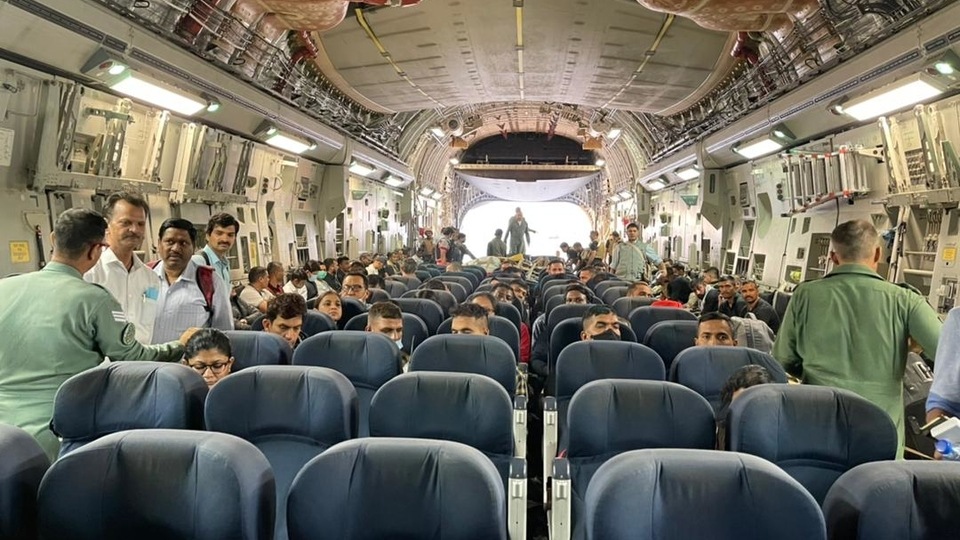
A video tweeted by news agency ANI later showed those airlifted inside a bus and shouting “Bharat Mata Ki Jai” and “Vande Mataram”. Their evacuation came after 24-hour-long negotiations.
“Those who were aboard the aircraft will be given lunch and taken to their destinations,” Gujarat minister of state for food and civil supply Dharmendrasinh Jadeja said, according to news agency PTI. Jadeja and Jamnagar mayor reached the Jamnagar airbase before the plane landed.
PTI reported that the Gujarat government said in a release that Prime Minister Narendra Modi is “personally looking after the evacuation of Indian nationals and officials stranded in Afghanistan” after the Taliban took over the war-ravaged country.
The IAF aircraft flew from the Hamid Karzai International Airport around 8am Kabul time with the help of US forces manning the air traffic control. India is now waiting for US forces to allow civilian flights to Kabul for further evacuation. The first batch of Indians came on Sunday via an Air India flight.
With no chain of command in Kabul, the Indian ministry of external affairs (MEA) and security officials started bringing evacuees to the Kabul airport from Monday as negotiations were undertaken with sundry Taliban and other terrorist groups manning the 15 check posts from the Indian mission in Kabul to the international airport. India apparently had kept two C-17s on stand-by so that officials could be evacuated as soon as the US manned ATC gave a green signal.
According to sources based in Kabul, it was part of the withdrawal deal that the Turkish forces would man the HKI airport but Ankara withdrew at the very last minute leading to utter confusion. With all local staff abandoning the ATC and other positions and illiterate Taliban having no idea about manning the air traffic services, it was left to the US to take control.
It was due to the ensuing chaos that led to the death of desperate Afghans at the HKI airport as the civilians feared for their life and limb at the hands of the Taliban. It was only after this that the US decided to stop civilian flights from Kabul on Monday and decided to only allow military flights. Other Indians will be evacuated from Afghanistan after the HKI airport is opened to civilian flights.


