
 E-Paper



Supreme Court hints at relief for Sonam Wangchuk if detention records found suppressed
Kapil Sibal referred to four videos that formed the basis for his detention under the NSA but were not part of the pen drive provided to him on September 29.

 Prefer HTon Google


The Supreme Court on Thursday told jailed climate activist Sonam Wangchuk that if it is satisfied that the material that formed the basis for his detention was suppressed by the authorities, it may not need to examine other grounds challenging his arrest over violent protests in Ladakh last year, which claimed four people and injured several others.
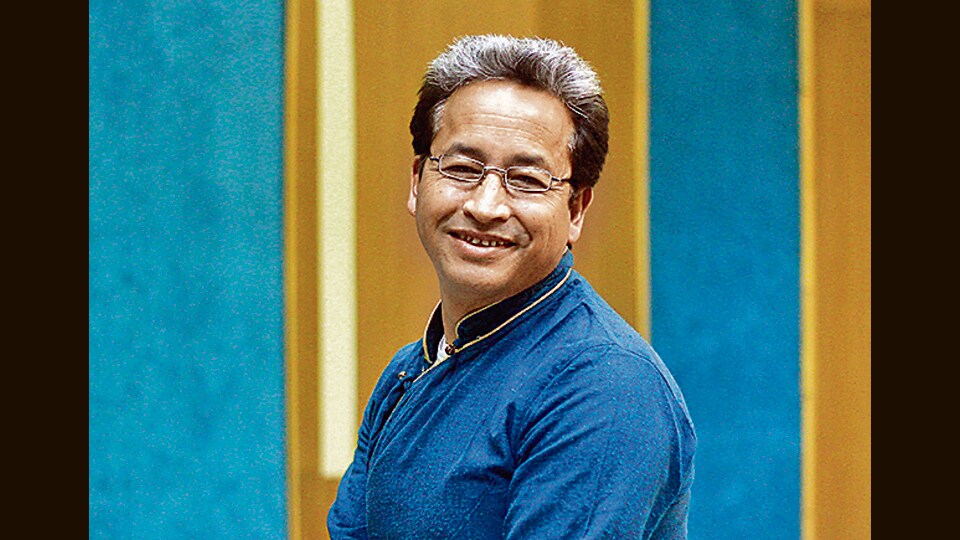
Hearing a petition filed by his wife, Gitanjali Angmo, questioning Wangchuk’s continued incarceration since September 26, 2025, at a Jodhpur jail, a bench of justices Aravind Kumar and PB Varale said, “Suppose we accept your first argument, we need not go into the other points.”
The court was responding to submissions by senior advocate Kapil Sibal appearing for Angmo. He referred to four videos that formed the basis for his detention under the National Security Act (NSA) but were not part of the pen drive provided to him on September 29.
“You can argue all your points. Let us not have a piecemeal approach. It will help us also to understand,” the bench replied.
Sibal told the court, “It is settled law that documents relied upon for detention that are not served to detenu vitiate the arrest.” He further said, “Four videos of different dates in September 2025 are relied upon by the prosecution. The grounds of detention refer to these videos. It is our case that it was not supplied. It is their case it was supplied. Admittedly, it was not part of the pen drive.”
He played another video in court that showed Wangchuk appealing for peace. Sibal argued that as this was contrary to the grounds of arrest, it was not included. “The tenor of this speech is not with intent to harm the security and integrity of the country. Rather, it is consistent with the integrity and unity of the nation. They did not rely on this. This was also proximate material,” he added
Sibal further pointed out that when it came to challenging the detention order before the Advisory Board, not all documents were supplied, and those that were given were supplied close to the date of the hearing, which violated the detenu’s right to a fair hearing. “There has to be a time lag between supply of documents and hearing of the Advisory Board. I must have enough time as that is a requirement under Article 22(5) of the Constitution under which a maximum of 10 days should be provided,” he said.
As arguments remained inconclusive, the court posted the matter for next week
Wangchuk has claimed that his arrest on September 26 was part of a “deliberate and malicious” campaign to destroy his credibility. He was accused of instigating the violence that erupted on September 24 as part of a protest seeking independent statehood for Ladakh.
The Ladakh administration claimed that the “chain of events” that took place on that day are “directly traceable to the detenu’s continued public provocation” in order to justify his continued incarceration.
However, his wife in her petition filed through advocate Sarvam Ritam Khare, said, “The detention constitutes a clear violation of Articles 21 and 22 of the Constitution of India and amounts to an abuse of preventive detention powers. The present invocation of the National Security Act (NSA) is thus an unjustifiable, disproportionate and unwarranted exercise of power.”
The UT administration had earlier told the court that Wangchuk was detained after the district magistrate (DM) was “satisfied” that the activist was “indulging in activities prejudicial to the security of the state, maintenance of public order and services essential to the community.” It stressed that “all procedural safeguards under Article 22 of the Constitution and the NSA have been faithfully and strictly adhered to.”
The Ladakh government further rejected allegations of illegal detention, claiming that the activist was duly informed about the grounds of his detention and his right to make a representation against it.


