
 E-Paper



A bus returns after 12 years: How Chhattisgarh’s Maoist heartland got a lifeline
Discontinued after Maoist violence spiralled, journey remains dangerous but locals are willing to take risk as the bus is their lifeline in a region bereft of connectivity

 Prefer HTon Google


Though the bus connects two nondescript towns in Chhattisgarh’s south Sukma region, its journey is possibly tracked by security forces as minutely as they do with the Samjhauta Express, the bi-weekly train connecting India and Pakistan.
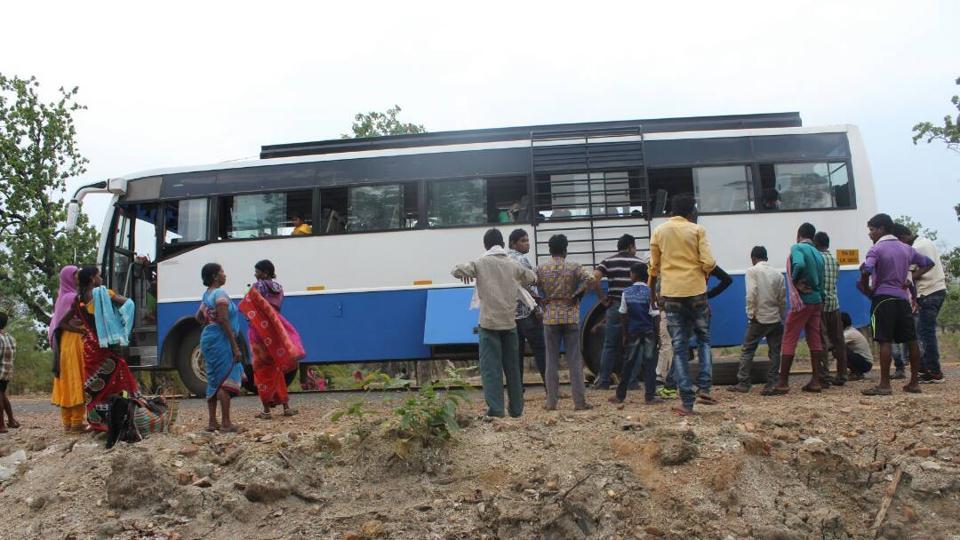
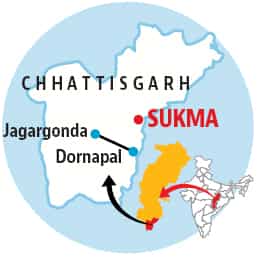
Passengers on the Gupta Travels bus plying between Dornapal and Jagargonda are required to carry their Aadhar card all the time as proof of their identity. And as the bus passes by each of the 13 CRPF camps along the way, it has to make mandatory stops for the driver to sign the register. At places, each of the passengers need to disembark and go through thorough frisking.
The road is bad, the non-AC bus isn’t very comfortable and the passengers are mostly dirt poor.
But the 56-km journey that the bus makes either way every day is like no other in the country. Reintroduced after 12 years, it route cuts through the Maoist heartland where security forces have been battling the insurgents in an unending cycle of violence. In April, it was in Burkapal, on the bus route, that a Maoist ambush killed 25 CRPF men.
Given the blasts and bloodshed the region has witnessed, the driver of the bus leaves nothing to chance as he negotiates the road that has been under construction for years, but still far from being completed in the face of violent Maoist opposition.
“Koi road ke neeche nahi jayega... sab road pe hi nipat lena,” he shouts at the passengers, cautioning them against stepping away from the road to relieve themselves. Often booby trapped, the stretch has witnessed 18 IED blasts in the past three years.
The bus service – run privately but under state government patronage – was discontinued 12 years ago after violence spiralled. Though no less dangerous now, people are willing to take the risk as the bus is their lifeline in a region bereft of connectivity. Rickety jeeps did pick up passengers for a price on the stretch, but they were irregular, inadequate and overcrowded.
Seventy-year-old Hidmu, a resident of Jagargonda, has reasons to be delighted at the bus service being reintroduced since May 3. Sitting beside the driver, she breaks into a Gondi song. Her travel time to visit relatives in Dornapal has been cut by more than half.
The bus leaves Jagargonda at 6 am every day for Dornapal. The return journey starts at 3 pm.
“Darr to lagta hain lekin kya karein? (we are scared but what can we do), says Kamlesh, the bus conductor. He and the passengers take comfort in the fact that the Maoists till date have not targeted a civilian passenger bus.
Security forces are both happy and wary at the resumption of the service. With people beginning to travel from the interiors, they expect human intelligence on Maoist movements to improve. They also remain on their toes since the insurgents could use the bus to launch a surprise attack.
DM Awasthi, the special director general of police (Naxal), however, believes that the benefits far outstrip the risks. “There are more than 60 village that are connected with this road, which makes this bus very important for the tribals. I visited Jagargonda after the Burkapal attack and people requested me to start a bus on this road. I wrote a letter to the government and prompt attempts were made to start the service,” he said.
He promised more buses in the region to improve connectivity and help free people from the Maoist stranglehold.
-kW0H-U20214218012MgB-250x250%40HT-Web.jpg)


