
 E-Paper



Independent woman who forged own path
A retired school teacher, a devout follower of Arya Samaj, a Partition refugee, and a feminist, Kaushal Nagpal died of Covid-19 disease in June aged 78. She is survived by two sons and three grandchildren.

 Prefer HTon Google


A retired school teacher, a devout follower of Arya Samaj, a Partition refugee, and a feminist, Kaushal Nagpal died of Covid-19 disease in June aged 78. She is survived by two sons and three grandchildren.
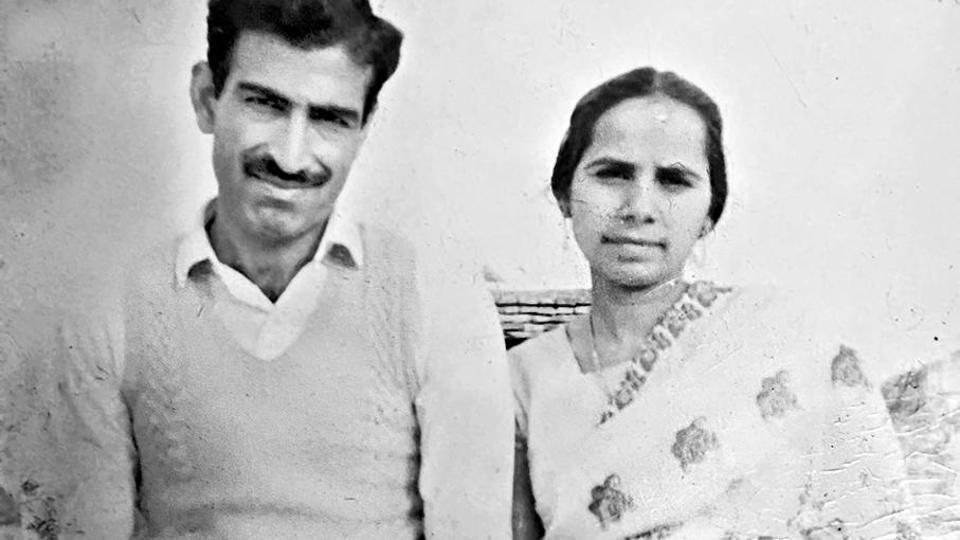
Her journey began with a major milestone: at age eight, Nagpal was the first girl in her village to go to school. That was in Dujana, then in the district of Rohtak, Haryana, and her father, an officer in the Indian Railways, had to take special permission from the principal to get her admitted.
Most of the subsequent life-shaping experiences happened while she pursued her higher studies: she got married to an advocate working at the district court in Karnal, became a mother of two boys and a caregiver to her elderly parents-in-law. Nagpal eventually became a school teacher specialising in History, Hindi and English. As a young independent working woman in the 1980s, in an otherwise conservative town, Nagpal had to combine a career with the traditional expectations from a woman of her milieu.
It was no small thing.
Nagpal would get up each morning at 4.30 am, prepare breakfast and lunch for the family and leave home at 6 am, first in a rickshaw to the bus stand, and from there, in a bus to the government school. She would return by 4.30 pm. After a short nap, she would take care of the domestic errands, including helping her sons with their school homework. She would sit with one of the boys, and her husband, Prithvi Raj, with another — they shared household chores. After she would leave for school in the morning, he would set the kitchen in order, make tea for his parents, and help his sons get ready for school, making it a habit to daily oil and comb their hair.
In 1997, Nagpal took early retirement and moved with her husband to Faridabad’s Sector 28, in the house shared by sons Subhash and Gajendra and their families.
Her life became more quiet, and more spiritual. She developed a particular interest for the writings of Swami Dayanand Saraswati, became more active in the Arya Samaj, and got a corner —the Yag Shala —especially built in the house to daily perform yagnas and havans. Each morning she would preside for two hours over the ceremony, offering ghee and scented “samagri” to the sacred fire. The comforting fragrance spreading through the air would appease her, as if the world around was getting purified.
But Nagpal also remained a teacher. Every afternoon she would summon Shivani, the young daughter of the house maid Anita, to her room. The lessons would be delivered from her bed, cross-legged, her back resting on the pillow.
Born in August 1942 in what is now Pakistani Punjab, Nagpal often recounted the train journey her family took to a newly independent India during Partition.
Her mother wore a locket filled with poison to quickly end their lives in case their coach was attacked.
As Nagpal was placed on a ventilator in Delhi’s Indraprastha Apollo Hospital, she never learnt of her husband’s demise on June 9 in a hospital in Faridabad. He, too, had died of the coronavirus. She died five days later.
Their ashes were buried in an Arya Samaj park in Faridabad. Her children planted a mango and a neem tree over the spots.


