
 E-Paper



India and Israel vow to deepen bilateral ties
India supports the Gaza peace plan and seeks enhanced cooperation with Israel in counterterrorism, trade, and regional connectivity.

 Prefer HTon Google


New Delhi India on Tuesday backed the Gaza peace plan with the hope that it leads to a lasting solution, as external affairs minister S Jaishankar and his Israeli counterpart Gideon Sa’ar held talks on deepening cooperation in counterterrorism, trade, and regional connectivity through projects such as the India-Middle East-Europe Economic Corridor (IMEC).
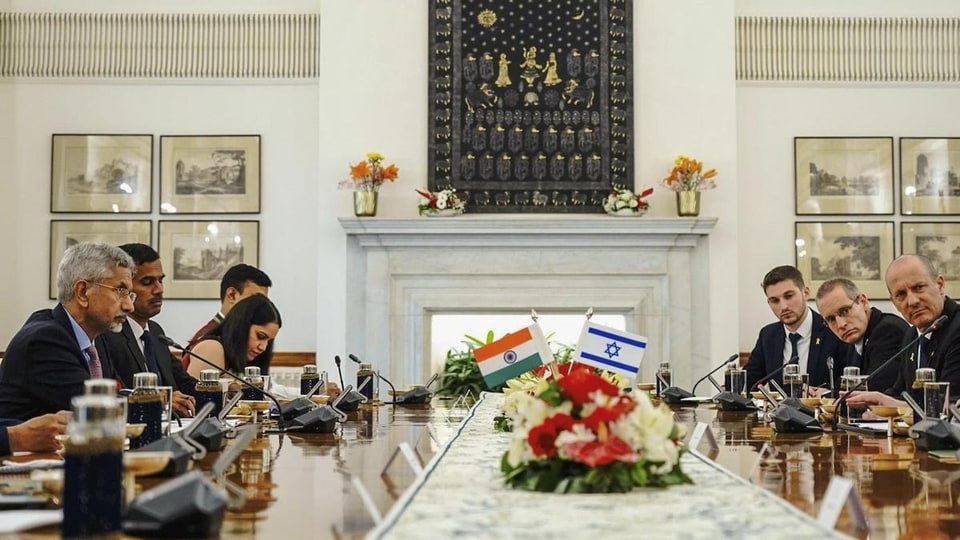
The fight against terrorism, including the need for a zero tolerance approach towards the menace from the world community, figured in the meeting between the two ministers. Sa’ar is on his first visit to India, becoming the fifth Israeli minister to travel to the country this year. The visits prepared the grounds for a planned trip by Prime Minister Benjamin Netanyahu, people familiar with the matter said.
Noting that India has been closely following developments in West Asia, Jaishankar welcomed the return of Israeli hostages and the remains of those who lost their lives in Hamas’ terror attacks in October 2023. “India supports the Gaza peace plan and hopes that it paves the way for a durable and lasting solution,” he said.
Israel, Sa’ar said, is confronting the “radical terror states” of Hamas in Gaza, Hezbollah in Lebanon and Houthis in Yemen, and uprooting them is necessary for the region’s security and stability. “The eradication of Hamas’ terrorist state is at the heart of President [Donald] Trump’s plan. Hamas must be disarmed, Gaza must be demilitarised. We will not compromise on it,” he said.
Last month, Israel and Hamas agreed on the first phase of the US-backed 20-point peace plan, which included a ceasefire in Gaza and release of Israeli captives and Palestinian prisoners. This ended the fighting triggered by Hamas’ terror attacks on Israel in October 2023, which killed 1,200 people. More than 67,000 Palestinians, including 20,000 children, were killed in Israeli offensives in the past two years.
Sa’ar also recalled Prime Minister Narendra Modi’s solidarity in the aftermath of the attacks and said: “We remember he was the first world leader to call Prime Minister Netanyahu after Hamas’ October 7 massacre and we won’t forget it.”
Jaishankar noted that both countries face the challenge of terrorism and said: “It is essential that we work towards ensuring a global approach of zero tolerance towards terrorism, in all its forms and manifestations.” Sa’ar described “radical terror” as a threat to both countries and reiterated Israel’s condemnation of the terror attack in Pahalgam in April.
Jaishankar noted that India and Israel have a strategic partnership with a “real meaning”, and the two sides have stood together in testing times and created a relationship with a “high degree of trust and of reliability”.
The two sides discussed a range of measures aimed at deepening cooperation in areas ranging from trade and innovation to mobility of professionals and connectivity. A bilateral investment agreement was signed by finance minister Nirmala Sitharaman and her Israeli counterpart Bezalel Smotrich during the latter’s visit to India in September.
Jaishankar highlighted India’s new capabilities in rail, road and port infrastructure, renewable energy and health and said Indian businesses are keen to explore opportunities in Israel. The two sides can also take forward their joint work in agriculture, innovation, semiconductors and cyber issues, he said. In this context, he said, India looks forward to Israel’s presence at the AI Impact Summit next February.
“Indian workers are… present in Israel in growing numbers as a result of our mobility understandings. They have some issues which need attention and I hope that we can take that dimension of our ties forward,” Jaishankar said without providing details of the issues.
Israel is currently home to some 40,000 Indian workers. Israel stepped up the recruitment of Indians as caregivers and construction workers in the past two years in order to replace Palestinians.
The two sides also discussed plurilateral initiatives and Sa’ar said Israel backs regional connectivity projects such as I2U2 and IMEC. “We want to promote connectivity between South Asia, West Asia and Europe,” he said, adding that India is the fastest growing economy while Israel is a regional powerhouse. Later in the evening Sa’ar described India as “the future”.
The two sides finalised a memorandum of understanding (MoU) on cooperation in training between the Sushma Swaraj Institute of Foreign Service and Israel’s foreign ministry.



