
 E-Paper



‘India, China most vulnerable to joint risks of climate change, air pollution’
Scientists at the University of Notre Dame found a “strong and statistically significant” link between the two environmental hazards and said the countries which are at most risk of climate change are also the countries with highest risks of toxic pollution.

 Prefer HTon Google


India and China are among the world’s top five countries that are most vulnerable to climate change and air pollution with the capacity to deal with the risks, a first of its kind research assessing the combined risks of air pollution and climate change, said on Thursday.
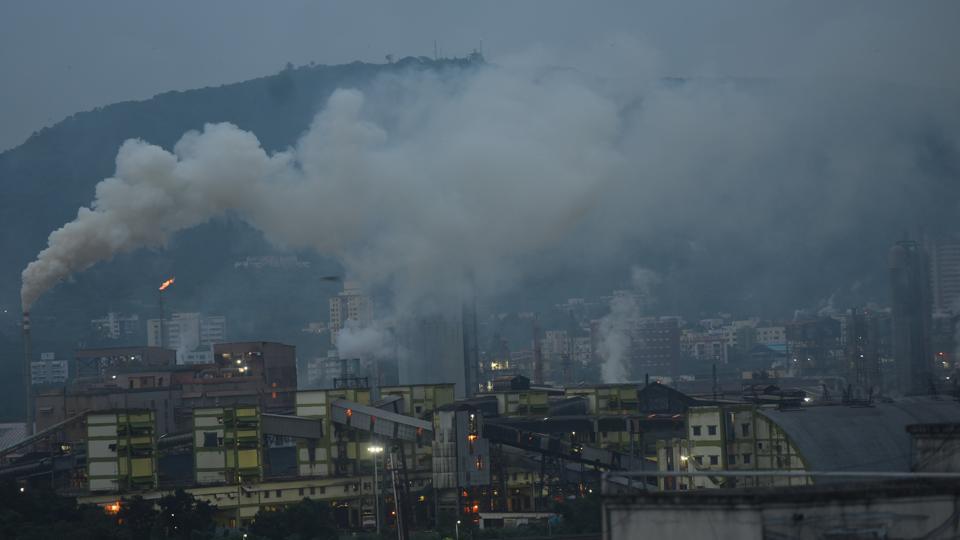
The world’s two fastest developing economies with 2.5 billion plus people have witnessed a spurt in particulate matter induced air pollution levels in the past two decades and have seen high risks due to climate change induced extreme rainfall, frequent cyclones and heat waves in recent past, the study says.
“Deaths resulting from toxic pollution are highest where the distribution of toxic pollution is greatest and, critically, also where the impacts of climate change pose the greatest risk,” the study, Global distribution and coincidence of pollution, climate impacts, and health risk in the Anthropocene, said, in a specific reference to India and China.
For more than 30 years, the scientists on the UN’s Intergovernmental Panel on Climate Change (IPCC) have assessed impacts of human induced climate change whereas bodies such as World Health Organisation have focused on health impacts of rising air pollution globally.
Scientists at the University of Notre Dame found a “strong and statistically significant” link between the two environmental hazards and said the countries which are at most risk of climate change are also the countries with highest risks of toxic pollution.
A vital difference between climate change and air pollution is that greenhouse gases that cause global warming are considered non-toxic whereas air pollutants such as particulate matter or nitrogen dioxide are toxic.
“It is not surprising to find that these risks are highly correlated, but this study provides the data and analysis to inform policy, data and analysis that were previously lacking,” associate professor of Political Science at the university Debra Javeline said, in a statement.
To make the study useful for policymakers, the authors ranked 177 countries on “Target”, a measure that combined a country’s climate impact risk, toxic pollution risk and its potential readiness to mitigate these risks. Most countries such as India and China, have high air pollution and green house gas (GHG) emissions. China is the world’s leading total GHG emitter and India is on track to join it at the top and they are two top ranked countries to emit toxic air pollution.
Based on these criteria, the study ranked Singapore, Rwanda, China, India, Solomon Islands, Bhutan, Botswana, Georgia, the Republic of Korea and Thailand as top 10 countries. “The top one-third of countries at risk of toxic pollution and climate impacts represent more than two-thirds of the world’s population, highlighting the magnitude of the problem and unequal distribution of environmental risk,” researchers wrote in the paper published in peer-reviewed scientific journal PLOS One.
Among those countries appearing at the bottom of the list are Equatorial Guinea, Iraq, Jordan, Central African Republic and Venezuela. “These (bottom of the table) nations are most likely to have outstanding governance issues that currently stand in the way of effectively addressing pollution and climate change,” the study said.
On India and China, the two largest countries, together representing over 2.5 billion people, the study said they have relatively high Proportion Mortality ranks --- India ranked 5th and China 13th with 23.5% and 17.9% of annual deaths associated with toxic pollution, equalling 2.3 and 1.9 million premature deaths annually, respectively.
The study also pointed out that the two countries have come up with national pollution reduction policies to reduce pollution deaths. In the case of China, it said, its National Plan on Air Pollution led to 40% reduction in pollution levels.
“The improved air quality resulted in significant corresponding reductions in respiratory disease and cardiovascular disease mortality rates,” the study said, adding that there is strong potential for co-benefits from efforts focused on China and India in risk reduction for neighbouring countries and other countries at-risk of climate change more broadly.
Anumita Roy Chowdhary of Centre for Science and Environment said the study interestingly provides broad parameters linking air pollution and climate change and provides insight on how tackling both with singular policy instruments can be co-beneficial. “We know that reducing air pollution helps in managing green house gas emissions and vice-versa. The study, however, analyses the capability of 180 countries to deal with twin environmental problems,” she said.
University’s postdoctoral research associate Drew (Richard) Marcantonio said the idea of ranking (Target) is to highlight where action can be taken to reduce risk to human health and whether it can be done through incentives or sanctions. “A range of measures can be used to promote risk reduction such as trade incentives..., or other policy and regulatory enforcement mechanisms,” the study said, adding that it provides moral reflection to determine what actions should be taken and who should take them.


