
 E-Paper



India drives landmark WTO deal on subsidies, vaccine waiver
India and other developing countries, however, conceded one of their key demands -- discontinuing the moratorium on customs duty on e-commerce during bargaining.

 Prefer HTon Google


The 164 members of World Trade Organisation (WTO) approved a series of agreements including a temporary and limited patent waiver for Covid-19 vaccines, an emergency response to the food crisis, a commitment to limit overfishing, and reforms in WTO’s functioning with some concessions for developing countries on the back of some hard talk by India.
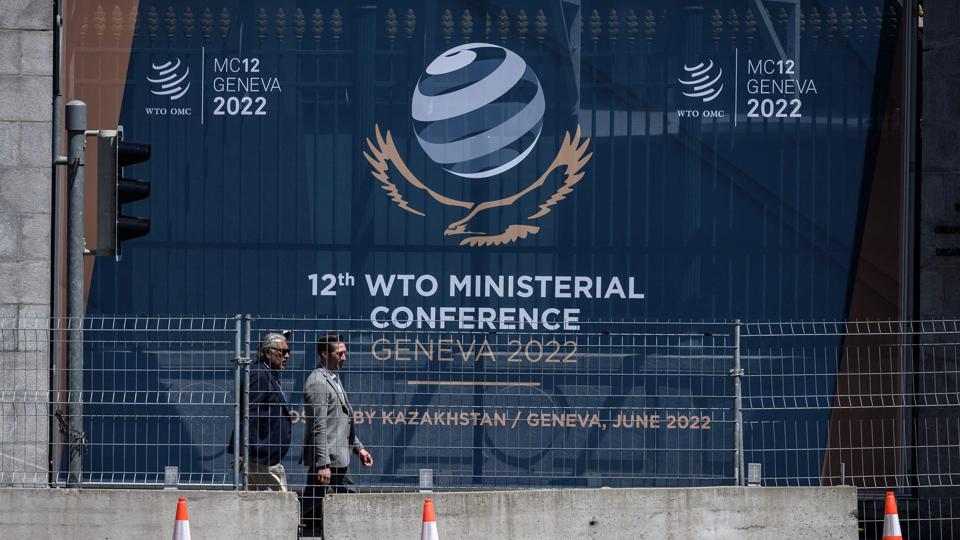
The agreements, reached early on Friday, well into overtime after the talks, originally expected to end on Wednesday were extended, are the first arrived at WTO in almost nineyears, and comes even as questions were beginning to be raised about the relevance of the body in a world where countries seem to prefer dealing bilaterally with each other.
“There is not one issue on which we need to return to India with any kind of worry,” commerce minister Piyush Goyal said. He added that the meeting had made progress on issues “pending for decades”.
India and other developing countries, however, conceded one of their key demands -- discontinuing the moratorium on customs duty on e-commerce during bargaining. The members at the 12th ministerial conference (MC12) extended the moratorium till the next ministerial conference (MC13) or March 2024, whichever is earlier.
MC12’s decision on a patent waiver for Covid-19 vaccines will allow countries to authorise production of vaccines patented elsewhere without consent, even export these. The decision falls short of India’s demand of Trade-Related Aspects of Intellectual Property Rights (TRIPS) waivers for all Covid-19 related therapeutics and diagnostics. “A decision on diagnostics and therapeutics would be taken in six months. There would be faster pandemic response in future and there would be fewer trade barriers in pandemics,” the Indian commerce ministry said in a statement.
On the issue of food security, the outcome focussed on making food available in developing countries while working towards increasing productivity and production. There will be no export restrictions on World Food Programme purchases for food security in other countries, although domestic food security will take priority, the commerce ministry added in its statement.
India and other developing countries also pushed for a permanent solution on public stock holding programmes, including crop support prices. While this will only be taken up at the next meeting, there was “no negative outcome on India in the agriculture sector”, Goyal said. The permanent solution will now be discussed at the next ministerial.
WTO has also agreed to check illegal, unreported and unregulated (IUU) fishing and mooted “very strict controls” on overfishing so that fish stocks are restored. “Additionally, no subsidies to be provided for fishing in areas outside EEZ (exclusive economic zone) or RFMOs (regional fisheries management organisations),” the commerce ministry’s statement said.
Goyal said India has completely protected interests of its farmers and fishermen. “There is no impact on subsidies for fishing within our EEZ or RFMOs areas. Restrictions are for IUU fishing and India does not indulge in any such activities,” one official aware of the development said.
On e-commerce, while agreeing to the temporary moratorium, India asked for intensifying discussions on the moratorium, including on its scope, definition and impact for taking an informed decision on the same.This will have to wait, though.
“India has been able to secure a favourable outcome at the WTO after many years, despite a strong global campaign against our farmers and fishermen,” Goyal said immediately after the formal announcement of the deal on Friday early morning in Geneva.
Goyal called the outcomes as “100% successful” and said Indian delegation-led was constantly guided by Prime Minister Narendra Modi since June 12 when MC12 met in Geneva.
Goyal said the New India is no longer a weak force to accept the diktat of the developed countries in the multilateral forum as it used to do in the last three decades. “India today bats on the front foot rather than being fearful on various issues be it environment, startups, MSMEs or gender equality,” he said.
“Today as we return India there is no issue on which we have to be the least concerned, whether it is related to agriculture such as MSP [minimum support price], reinforcing the relevance of the public stockholding (PSH) programme towards fulfilling the National Food Safety Programme or PM Garib Kalyan Scheme, TRIPS waiver, e-commerce moratorium, response to Covid and fisheries,” he said.
He said the agreement to check overfishing will not impact Indian fishery sector because curbs are on big players who fish in deep ocean.
Goyal added that India pushed for the IP waiver on Covid vaccines on behalf of other developing and least developed countries as it is self-sufficient on this account. It (the MC12 decision) will enable ease of authorisation for production of patented vaccines and India can produce for domestic requirements and exports, he added.
New Delhi has also been pushing for reforms in WTO, and Goyal said the basic structure and core principles of the body, including consensus, special and differential treatment (S&DT) provisions, sustainable development goals (SDG), should be retained while making it more contemporary.
“I believe it will be good for the WTO, and will be good for the developing and underdeveloped countries in the future and foster global trade through transparent means,” he said at a press conference in Geneva.
“Few countries attempted to create false campaign, initially on Sunday and Monday, that India is obstinate due to which no progress is being made. The real situation has emerged before us all, the issues raised by India, on which Prime Minister had asked us to focus upon, now the whole world acknowledges that was the correct agenda and ultimately India played a vital role in arriving at all solutions,” Goyal added.
Deepak Sood, secretary general of Associated Chambers of Commerce and Industry of India (Assocham), said the commerce minister championed “the cause of fishermen and farmers not only in India but all the developing countries” and “a temporary waiver from IPR for the Covid vaccine would bring global equity in making the critical vaccine available to several developing and less developed countries, especially in Africa”. The meeting also re-emphasised the importance of the multilateral institutions in addressing the global issues, he added.


