
 E-Paper



India expects developed countries to do more at COP26 on funds to tackle climate change
India has been pushing developed countries to share more finances and technology to cope with climate change. On the other hand, the developed countries want India to frame updated Nationally Determined Contributions (NDCs) or targets for reducing greenhouse gas emissions.


India is expecting concrete outcomes at COP26 on developed countries providing more financing and technology for tackling climate change since the country is well on its way to meeting targets set under the Paris Accord, foreign secretary Harsh Shringla said on Thursday.
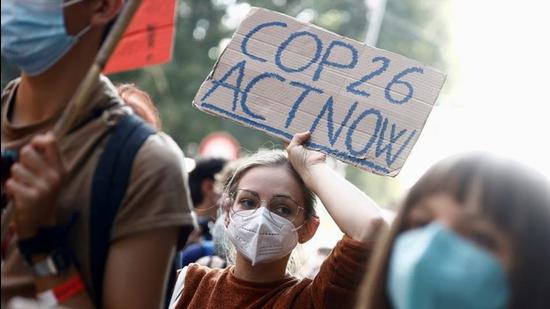
New Delhi is also looking towards “very concrete outcomes” at the upcoming G20 Summit in Rome in combating the Covid-19 pandemic and similar challenges in future, Shringla told a news briefing ahead of Prime Minister Narendra Modi’s participation in the G20 Summit and COP26 in Glasgow.
In a departure statement ahead of his visit to Italy and the UK, Modi said India is taking “ambitious action” on expanding clean and renewable energy and “creating new records in collective effort for climate adaptation, mitigation and resilience”.
Modi said he would highlight the need to “comprehensively address climate change issues, including equitable distribution of carbon space, support for mitigation and adaptation and resilience building measures, mobilisation of finance, technology transfer and importance of sustainable lifestyles” at COP 26.
He also said he would join other leaders of the world’s largest economies at the G20 Summit in Rome to discuss global economic and health recovery from the pandemic, sustainable development, and climate change. The summit will allow the leaders to exchange ideas on how G20 can be an engine for “strengthening economic resilience and building back inclusively” from the pandemic, he added.
India has been pushing developed countries to share more finances and technology to cope with climate change. On the other hand, the developed countries want India to frame updated Nationally Determined Contributions (NDCs) or targets for reducing greenhouse gas emissions.
Shringla told a news briefing ahead of Modi’s departure for the G20 Summit and COP26 that India has been “one of the best performers” in G20 as far as meeting the commitments of COP26 is concerned.
“We are well on our way to meeting our NDC commitments and even doing better than that,” he said. In addition to commitments under the Paris Accord, India has made unilateral announcements that set much higher benchmarks.
With developed countries announcing this week that they will miss by three years their promise of $100 billion a year as funding to developing countries to manage the climate crisis, Shringla said India wants clearly defined commitments in this regard.
“The problem is that we would like to see such commitments converted into promises. The quantum of such financing is also, in our view, inadequate. You need much more financing in order to reach the goals that have been set...to collectively meet at a global level in order to achieve the 1.5 degrees that we are talking about,” he said.
The means of delivering “green financing and green technology” is key to enabling developing countries to meet their climate action commitments, he said.
“This is something that...will occupy the leaders and negotiators, this is something that we expect to see some outcomes on, not only in terms of commitments and NDCs...[and] a review of those commitments in Glasgow, but also a review of the financial backstopping that is very important for developing countries and small island states and countries like ours that have [small per capita emissions]...,” he said.
India’s contributions to climate change have to be recognised and supported through appropriate finance and technology from the developed world, he added.
“We are going to Glasgow with a positive mindset. India has always approached the issue of climate change in a manner that is constructive...We have set targets that far exceed the NDCs within our own country,” Shringla said.
Shringla also said the management of current and future pandemics and the global health architecture will be key issues at the G20 Summit n Rome.
“The G20 is going to come up with very concrete outcomes on this. There is a suggestion to create mechanisms that would cater to the requirements of future health pandemics...there is some fairly intensive discussions on the sort of architecture that the G20 could create that could supplement international cooperation and collaboration in dealing with future pandemics,” he said.
India has been a strong voice for reforming the multilateral system, including the global health architecture with WHO at its centre, the trading system centred round WTO and the international financial architecture to make them more responsive, inclusive and reflective of contemporary realities, he said.
New Delhi is also an advocate for equitable and affordable access to Covid-19 disease control tools, including vaccines, through technology transfers, diversification of supply chains and production hubs, Shringla added.
Modi will participate in the G-20 Summit in Rome during October 30-31 at the invitation of Italian Prime Minister Mario Draghi. From Rome, Modi will travel to Glasgow to attend the world leader’s summit of the 26th Conference of Parties (COP-26) to the UN Framework Convention on Climate Change under the presidency of the UK.
The prime minister will also hold several bilateral meetings in both countries. In Rome, he will meet the Pope, Saudi crown prince Mohammed bin Salman and Indonesian President Joko Widodo.
India has backed efforts to create mechanisms for pandemic prevention, preparedness and response, including mobilisation of global financing for this purpose and better coordination between stakeholders for management of common resources to deal with future pandemics.
One of the key outcomes of India’s initiative to push for a G20 extraordinary summit on Covid-19 was the Debt Service Suspension Initiative (DSSI) that benefited more than 45 countries by providing liquidity relief of more than $5 billion.


