
 E-Paper



India fought Covid in best way despite limited resources: Amit Shah at NDMA event
The Union minister also praised the NDMA for doing “a very good job” in the fight against the second wave of the Covid-19 pandemic

 Prefer HTon Google


New Delhi: Union home minister Amit Shah on Tuesday lauded India’s response to the coronavirus (Covid-19) pandemic while highlighting the country’s low fatality rate, at an event to mark the 17th Foundation Day celebrations of the National Disaster Management Authority (NDMA).
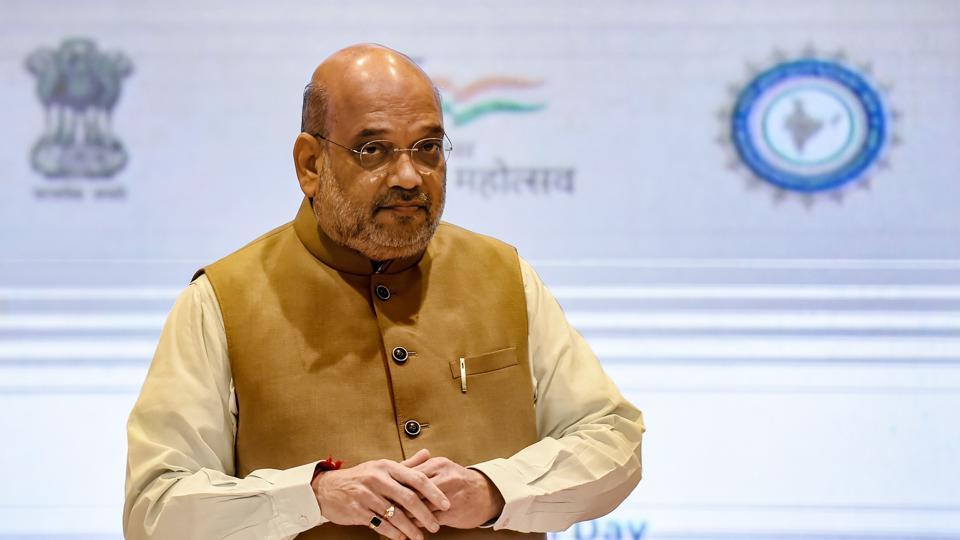
“If any unbiased agency assesses, then it will say that if the fight against COVID-19 has been fought in any country in the best way in the world, then it has been fought in India. With a population of 130 crores (1.3 billion), limited resources, limited infrastructure, we had the lowest mortality rate in the world, and our number of COVID-19 cases per million people was also very low,” Shah said at the event where he was the chief guest.
The Union minister also praised the NDMA for doing “a very good job” in the fight against the second wave of the Covid-19 pandemic.
He also spoke about the trajectory of disaster management in India and highlighted the need to introduce scientific systems for avoiding disasters and preventing loss of lives.
Shah said the NDMA, the national disaster response force (NDRF), and state disaster response force (SDRF) have, over the last 17 years, “changed the history of disaster management in the country”. He added that in a country of over 1.3 billion people, where every state has different geographical features, there is a higher need to adopt scientific systems for avoiding disasters to prevent loss of life and infrastructure.
Shah also talked about Aapda Mitra and Common Alert Protocol, the two new initiatives launched by the NDMA, while releasing the training manual and plan documents of the initiatives.
Shah said Aapda Mitra has been implemented on an experimental basis in 30 flood-prone districts across 25 states. “Work has been done to prepare 5,500 Aapda Mitras and Aapda Sakhis for flood protection. Those who can swim were selected for this and wherever there was a flood, they did a great job,” he said, adding 28 states and Union territories have signed MoUs with NDMA for this scheme.
“When we look back at the last 17 years, we have come a long way, but there is still a long way to go and we have not yet reached the stage of being content,” Shah said, adding, “Our goal should be to create such a disaster management system that no matter how severe the disaster may be, not even one person should die…”
He said the mechanisms put in place by the states have been successful at reducing the death toll to a great extent.
In addition, he pointed out the potential impact of climate change and controlling the intensity and frequency of disasters through disaster management as two major challenges facing the nation. The Union minister acknowledged that while earlier, the government’s approach towards disasters was relief-centric, it has now shifted to prevention and early preparedness. “We should continue this approach and strive for reaching zero loss of life,” he said.


