E-Paper



India has many rivers on the map but don’t have water in them: PM at Narmada meet
Prime Minister Narendra Modi said he would ask other states to follow Madhya Pradesh’s action plan for the Narmada as a role model to protect rivers across the country


Prime Minister Narendra Modi called for a concerted push to conserve and rejuvenate India’s rivers, saying the country has many but not all have water in them.
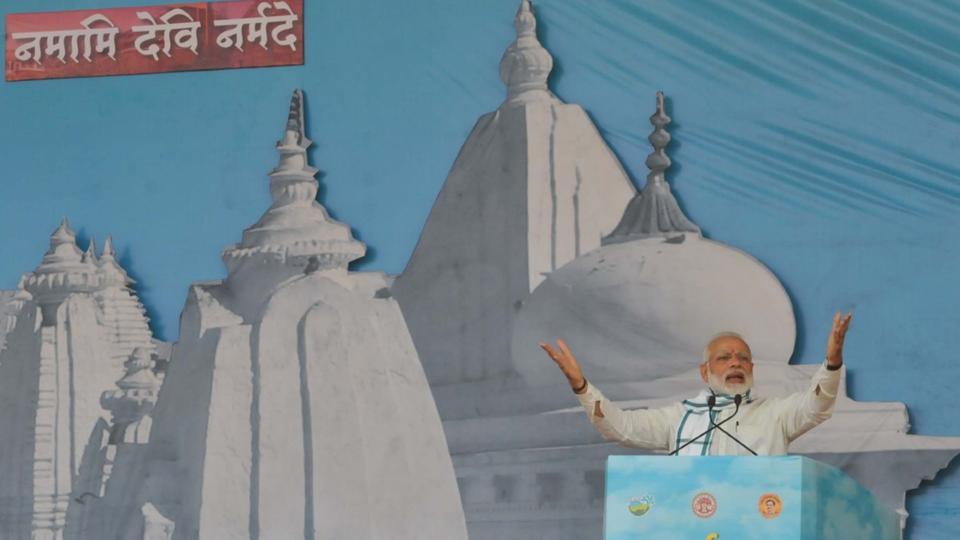
He said he would ask the states to follow Madhya Pradesh’s action plan for the Narmada as a role model for the protection of rivers across the country.
“The country has many rivers on the map but don’t have any water in them,” Modi said at an event to mark the conclusion of the Namami Devi Narmade Sewa Yatra in Madhya Pradesh’s Annooppur district.
He praised the Shivraj Singh Chouhan government for its work to conserve one of the country’s major rivers and said the Narmada roadmap is “a perfect document” for other states to follow.
“We have almost lost many rivers in the country. There is a river in Kerala, Bharathapuzha. I don’t know whether it will be saved or lost.”
The Prime Minister requested Madhya Pradesh to share the document with other states.
He said river protection and water conservation are vital for growth, especially farm economy that is the mainstay of millions of people living in rural areas.
“We thought we have right over it (Narmada), so we can go on exploiting it. We have looted the Narmada’s resources. It is unfortunate that the Narmada, which has bestowed life to our forefathers, saved our ancestors, today needs to be saved,” he said.
The Namami Devi Narmade Sewa Yatra, which was launched on December 11, 2016 from Amarkantak, concluded on Monday after covering a distance of 3,344km, traversing over 1,100 villages and towns.
“I was born in Gujarat. I know the value of each drop of the Narmada,” he said.
The 1,312km river starts at Narmada Kund in Amarkantak, flows westward through Madhya Pradesh Gujarat and drains into the Arabian Sea.
Modi congratulated Madhya Pradesh for its performance in the Swachhta survey in which Indore and Bhopal were adjudged the country’s number one and two cleanest cities among 434 urban centres.
Chief minister Chouhan listed his government’s initiatives such as sewerage treatment plants along riverbanks to protect the Narmada.
(With agency inputs)