
 E-Paper



India dials up ties with Gulf countries, sharpens the contrast with Pakistan
India is asking the Gulf countries to start opening its doors to the thousands of workers who had come back during the pandemic.

 Prefer HTon Google


Foreign minister S Jaishankar will travel to Qatar and Kuwait and his deputy, V Muraleedharan to Oman later this month as part of India’s continuing outreach to Gulf countries that is described by Prime Minister Narendra Modi as India’s extended neighbourhood, people familiar with the matter said on Sunday as Indian Army chief General MM Naravane preps to begin his visit to Saudi Arabia and the United Arab Emirates (UAE).
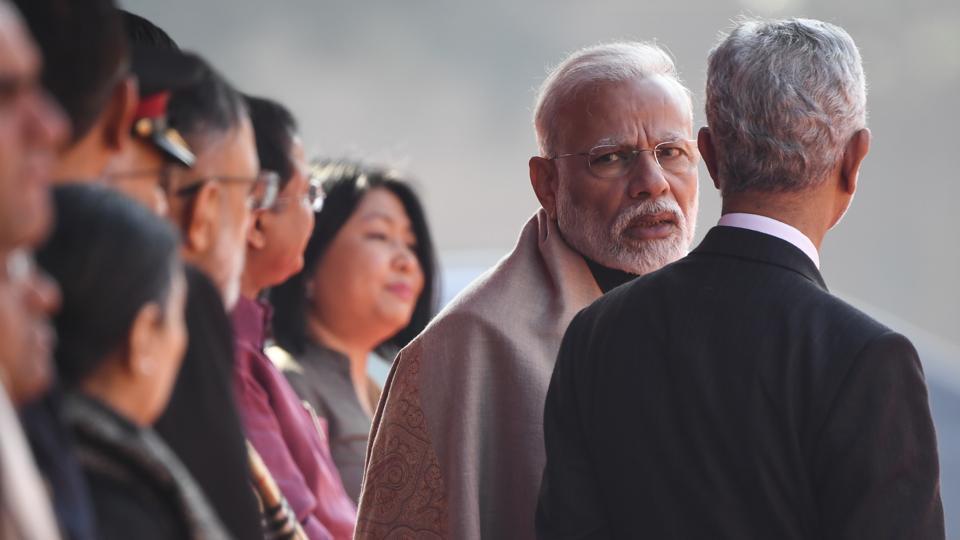
Jaishankar, who had focused on deepening ties with West Asia through the Covid pandemic, addressed the Gulf Cooperation Council leaders at the annual political dialogue last month and later travelled to the UAE and Bahrain.
“India shares warm, close and multi-faceted relations with the Gulf countries underpinned by historic cultural, religious and economic linkages,” a government official said, underlining how New Delhi - after reaching out to countries in the immediate neighbourhood for the past few weeks - had put the spotlight on West Asia.
The dates and the specific agenda for the two ministerial visits to Qatar, Kuwait and Oman later this month are still being worked out.
Officials told Hindustan Times that a key focus of this heightened engagement at this point was to protect the interests of Indian workers who were employed in the West Asian countries before the coronavirus pandemic disrupted economic activity and plunged the global economy into a contraction.
India is asking the Gulf countries to start opening its doors to the thousands of workers who had come back during the pandemic. This was also one of the central themes of Jaishankar’s address to the GCC Troika in early November, urging the GCC leadership to facilitate the return of Indian workers and professionals eager to resume work through sustainable travel bubble arrangements.
Officials believe that New Delhi’s efforts to reach out to the Gulf countries through the peak of the pandemic when India sent not just medicines but medical teams to countries in the “extended neighbourhood” had held the country in good stead. The Indian gesture was reciprocated by the West Asian countries as well. Like when the UAE was packing off immigrants from every other country following the outbreak of the pandemic, India requested Kuwait and the United Arab Emirates to go slow with repatriating Indian nationals because the state governments didn’t have the infrastructure to deal with the influx. The request was immediately accepted.
Six West Asian countries - UAE, Saudi Arabia, Kuwait, Oman, Qatar and Bahrain - accounted for nearly 70% of all Indians who live abroad. UAE is home to the largest number of Indians, 3.4 million, which was approximately a quarter of all NRIs around the world. Another 2.6 million were in Saudi Arabia and Kuwait, Oman, Qatar and Bahrain were home to another 2.9 million NRIs.
Between them, they sent home nearly half of India’s total foreign remittances of US 80 billion.
The World Bank, back in October, had projected a 9% decline in foreign remittances to India due to the Covid-induced restrictions and disruption in economic activity across the world.
Officials said India is working closely with UAE which stopped giving work and visit visas for nationals from 12 countries including Prime Minister Imran Khan’s Pakistan, seen as a fallout of Islamabad trying to challenge Saudi Arabia’s leadership of the Muslim world and its stand against the UAE’s peace deal with Israel that paved the way for UAE-Israel relations. According to a report in the Nikkei Asian Review over the past week, many of the job opportunities that Pakistani workers are losing are going to Indian workers.
Indian officials said that UAE’s visa ban on Pakistan was just one aspect of Islamabad’s growing diplomatic isolation. Pakistan’s embarrassing moments when its request for a side event on Kashmir was turned down at the recent Organisation of Islamic Cooperation foreign ministers meet was another.
Indian officials also cite a change in Malaysia’s approach towards South Asia after Mahathir Mohamad’s exit. There are clear indications that Malaysia is looking at its relationship with India from a broader perspective. This change led New Delhi to reduce the duty on palm oil last month, prompting Malaysian foreign minister Hishammuddin bin Tun Hussein to tweet his thank you note to foreign minister Jaishankar.
Or when defence minister Rajnath Singh and foreign minister S Jaishankar, were planning to make a transit halt in Iran on their way to the Shanghai Cooperation Organisation meeting in Russia this September, Tehran requested for meetings with the Indian leaders and turned the halt into a bilateral visit. It was during these meetings that Iran indicated that it was keen to restore its energy relationship with India and it emerged that New Delhi and Tehran were on the same page as far as Afghanistan is concerned.


