E-Paper



India, Maldives review withdrawal of military personnel ahead of Male’s May 10 deadline
More than 80 Indian military personnel, including pilots, were posted in the Maldives to operate three aircraft used mainly for medical evacuations and humanitarian relief operations

 Prefer HTon Google


New Delhi: India and the Maldives on Friday reviewed the process of withdrawing Indian military personnel from the Indian Ocean archipelago, which Male has insisted must be completed by May 10.
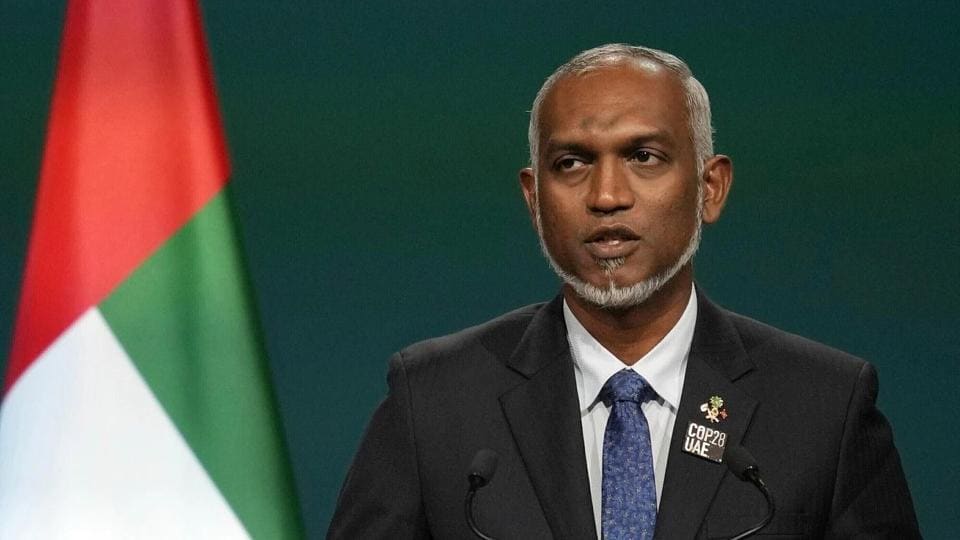
The fourth meeting of a bilateral high-level core group overseeing the replacement of Indian military personnel with civilian experts in New Delhi. More than 80 Indian military personnel, including pilots, were posted in the Maldives to operate three aircraft used mainly for medical evacuations and humanitarian relief operations.
During the meeting, both sides reviewed “ongoing efforts to enable continued operation of Indian aviation platforms that provide humanitarian and medevac services to the people of Maldives”, the external affairs ministry said in a statement.
A readout from the Maldivian foreign ministry said the Indian government “will replace military personnel at the last of the three aviation platforms by 10 May and all the logistical arrangements are going ahead as per schedule”.
Also Read: Maldives asks India to withdraw military, to discuss ‘workable solutions’
India had pulled out two batches of military personnel from the Maldives in March and April and replaced them with civilian experts. The personnel were deployed in the Maldives to operate and maintain two helicopters and an aircraft.
Maldivian President Mohamed Muizzu, who has moved his country closer to China after winning last year’s presidential election on the back of an “India Out” campaign, had set May 10 as the deadline for the withdrawal of all Indian military personnel.
Muizzu has also taken steps to reduce the Maldives’ dependence on India in areas ranging from maritime security to healthcare and food security by finalising agreements with Sri Lanka, China and Turkiye for medical services and supply of food items and military equipment.
The external affairs ministry said the core group had also discussed wide ranging issues related to bilateral cooperation, including defence cooperation, development cooperation projects, efforts to enhance bilateral trade and investment, and capacity-building initiatives.
The Maldivian readout too said the two sides reviewed existing bilateral cooperation and discussed issues of mutual interest such as development and defence cooperation.
Both sides also agreed to hold the next meeting of the high-level core group in Male. The Maldivian readout said this meeting is expected to be held in June or July.
India and the Maldives had set up the core group following a meeting between Prime Minister Narendra Modi and Muizzu on the sidelines of the COP28 summit in Dubai in December. By that time, bilateral ties were strained because of Muizzu’s increasingly pro-China stance.
Muizzu, 45, defeated former president Ibrahim Solih in the presidential runoff last September on the basis of his campaign to send back the Indian military personnel. The ruling coalition led by Muizzu subsequently swept the general election last month, securing an absolute majority in the Majlis or Parliament.