
 E-Paper



India not to give in to any PLA demand over disengagement. Restore status quo ante is the mantra
Despite a number of meetings at both military and diplomatic level, the Xi Jinping regime is adamant on its positions and posture on LAC with all dialogues showing hardly any progress.

 Prefer HTon Google


With the People’s Liberation Army (PLA) drawing up optical fibre cables to the transgressions spots at Pangong Tso and Gogra-Hot Springs, the Indian Army has decided to stay put at dominant positions on the ridge-lines of the Kugrang River till such time China does not restore status quo ante on the Line of Actual Control (LAC).
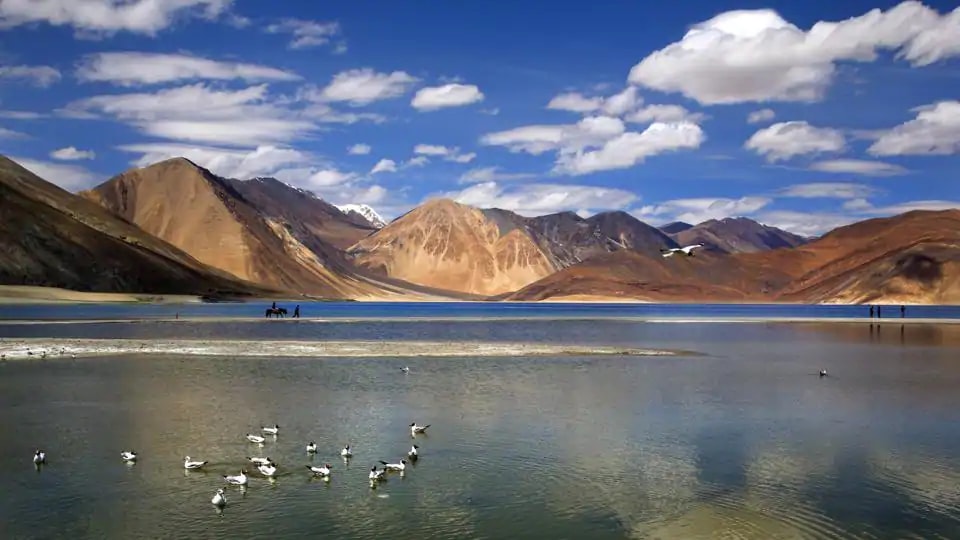
Even though PLA’s air activity over Ladakh and occupied Aksai Chin has become negligible, the Chinese army is present in strength across the 1,597-km LAC in Ladakh and showing no signs of any de-escalation. “ While we can see the Chinese intent to turn transgressions into intrusions in both the friction spots, the Indian Army has been directed to foil this PLA design even if it means sitting on the forward positions for time to come,” said a senior military commander.
National security planners are quite clear that the May transgressions by PLA in the Ladakh sector had the approval of Chinese Central Military Commission (CMC), headed by General Secretary Xi Jinping, as it involved both the Tibetan as well as Xinjiang Military district with troops being inducted from outside the Western Theatre Command.
Deciding to put an end to Chinese unchecked expansionism, the Indian Army draws parallel to the 1984 Operation Meghdoot to claim Saltoro Ridge and Siachen Glacier. “We are used to sitting on heights since 1984. Even 36 years later, a full Indian brigade is sitting on the heights and guarding all the ingress points to Siachen glacier from any Pakistani attack. Any unilateral change in ground position on LAC is unacceptable to the Indian Army,” said an Indian diplomat.
While Chinese diplomats talk about peace and tranquillity on the LAC, their interlocutors are making unacceptable demands on the Indian Army like asking removal of an old administrative base in Pangong Tso or coming down from heights in Kugrang ridgeline. It is these demands that are couched in diplomatic jargon of meeting India “half-way.”
Despite a number of meetings at both military and diplomatic level, the Xi Jinping regime is adamant on its positions and posture on LAC with all dialogues showing hardly any progress.
Prime Minister Narendra Modi in his Independence Day speech virtually made it clear that India was ready for two front aggression—from the Line of Control with Pakistan to LAC expansion by China. The speech was also signal to both the neighbours that India will not back down and stand up to aggression on its own. And in both the cases, the border flare-ups have been coupled with the progress (in this case regress) in bilateral ties.
“Whether China wants the $80 billion bilateral trade with India which is hugely tilted in favour of Beijing to steadily come down is a call that Xi Jinping’s military ambition has to take. The ball is in the Chinese court,” summed up another Indian diplomat.


