
 E-Paper



India raises Chinese surveillance facilities at Coco Islands with Myanmar
It was George Fernandes, Defence Minister in Vajpayee government, who first raised the PLA surveillance facilities in Myanmar’s Coco Islands in Bay of Bengal.

 Prefer HTon Google


India has raised serious concern over Myanmar allowing China to establish monitoring and surveillance facilities at Coco Islands in Bay of Bengal to track India’s missile launches off the Balasore test range in Odisha as well as strategic assets stationed off the eastern seaboard south of city of Visakhapatnam.
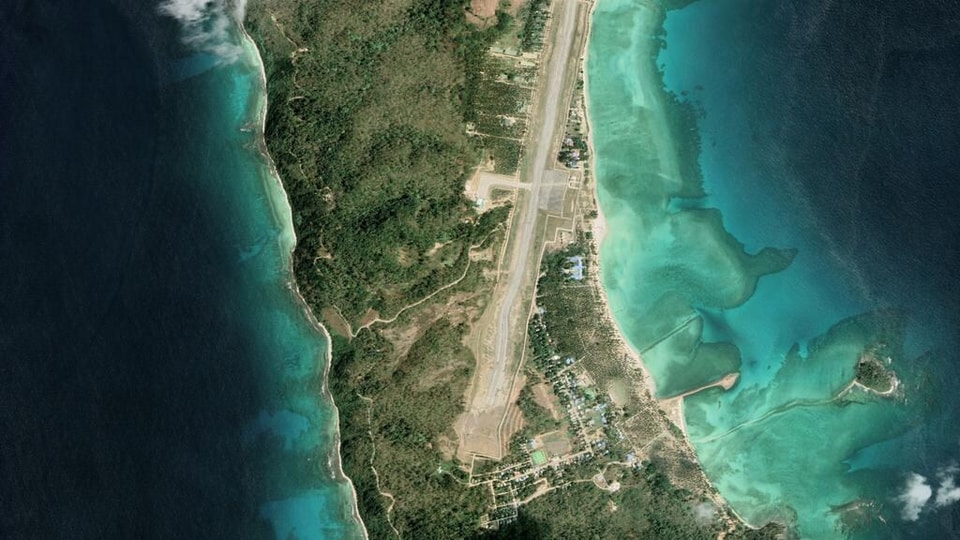
It is understood that while India will continue engagement with the present political leadership of Myanmar led by Senior General Min Aung Hlaing, South Block has raised the issue of Coco Islands and is not satisfied with the answers it has received from Naypyidaw. On the face of it, the Myanmar junta has denied that the Chinese have any role to play in extending the runway, hardened shelters, setting up monitoring stations or infrastructure development in Coco Islands.
While the Myanmar junta is wary of China, it has no option but to go with Beijing as the latter has continuously engaged the government since the west declared the military regime a pariah after the 2021 coup led by Senior General Min Aung Hlaing against arch-rival Aung San Suu Kyi. China has given some USD four billion in aid to Myanmar and is trying to rope in Naypyidaw in Belt Road Initiative along with Bangladesh to form a China-Myanmar-Bangladesh corridor to project dominance in Bay of Bengal and the Indian Ocean.
Inputs to national security planners and available satellite imagery clearly show that the runway at Coco Island has been extended to accommodate transport aircraft flights as well as new shed/barracks have been constructed with nearly 1500 military personnel including Chinese living on the island. It was George Fernandes, Defence Minister in the Vajpayee government, who had first highlighted the presence of Chinese monitoring in Coco but was derided by the China supporters in India.
Currently, construction of a causeway to link with the adjacent Jerry Island is taking place with land being cleared by the Myanmar military personnel. Fact is that the Myanmar Army or Tatmadaw has seeped into Burmese society, and it is unforeseen in the near future that the junta can be overthrown by the democratic forces.
While India will continue to raise the Coco Islands issue with Myanmar, it is worried about the PLA monitoring the movement of India’s nuclear submarines at its newly constructed naval base at Rambilli, mere 50 kilometers from Visakhapatnam. India’s ballistic missile firing submarines are based on its eastern board with the new SSBN currently being refitted near Visakhapatnam. The nuclear and conventional missile test firing range at Balasore and at APJ Abdul Kalam Island are virtually on the same latitude as Coco Island. This means the Chinese deep state can not only monitor the range of Indian missiles but also have a clear idea about its lethality through its air surveillance and ballistic missile tracking ships often crisscrossing the Indian Ocean.


