E-Paper



India rejects Chinese foreign minister’s remarks on Kashmir at OIC meeting
India said that matters related to the union territory of Jammu & Kashmir are entirely the internal affairs of India and China has no locus standi to comment on the matter.

 Prefer HTon Google


NEW DELHI: Ahead of a planned visit to New Delhi by Chinese foreign minister Wang Yi, India on Wednesday rejected his support for the Islamic world’s views on the Kashmir issue and said China has no locus standi to comment on the matter.
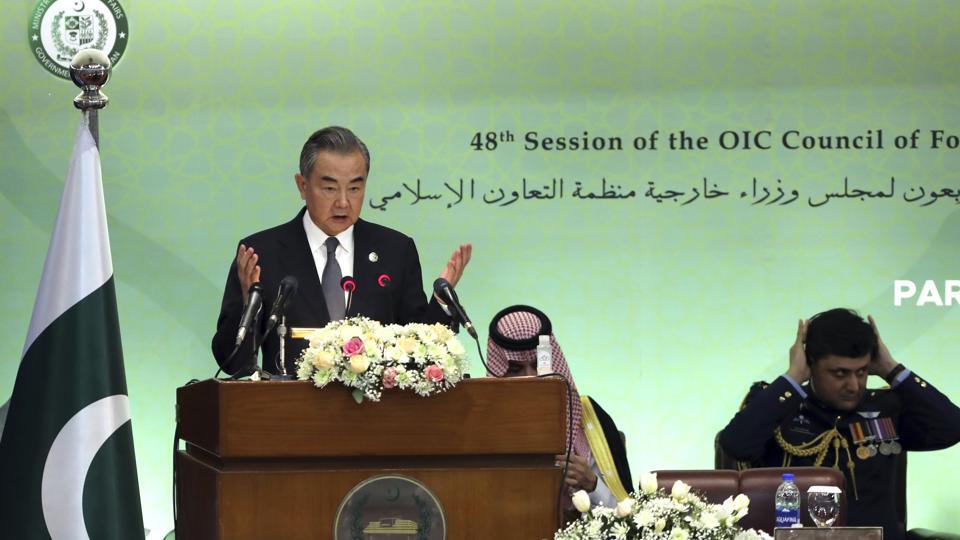
Wang made the comments while speaking at the opening ceremony of a meeting of the council of foreign ministers of the Organisation of Islamic Cooperation (OIC) hosted by Pakistan on Tuesday. Several leaders, including Pakistan Prime Minister Imran Khan, expressed concern over the situation in Jammu and Kashmir and Wang endorsed their views.
“We reject the uncalled reference to India by the Chinese foreign minister Wang Yi during his speech at the opening ceremony,” external affairs ministry spokesperson Arindam Bagchi said.
“Matters related to the union territory of Jammu & Kashmir are entirely the internal affairs of India. Other countries including China have no locus standi to comment. They should note that India refrains from public judgement of their internal issues,” he added.
The Chinese side has proposed a visit to India by Wang as part of his ongoing trip to the region. Wang is scheduled to be in Nepal during March 25-27. However, the Chinese and Indian sides have not made any official announcement regarding a visit to New Delhi.
While addressing the OIC meeting, the Pakistan prime minister accused India and Israel of committing “war crimes” in Kashmir and Palestine with impunity because Muslim countries had not effectively taken up these issues. “We have failed both the Palestinians and the people of Kashmir,” Khan said.
Saudi Arabia’s foreign minister Faisal bin Farhan reaffirmed his country’s support for the Palestine and Kashmir issues. He also expressed support for the Kashmiri people and the world community’s efforts to find a solution to the dispute.
Wang, the first Chinese foreign minister to participate in a meeting of the foreign ministers of OIC, said in his speech: “On Kashmir, we have heard again today the calls of many of our Islamic friends. And China shares the same hope.”
He also said China and Islamic countries need to be partners promoting security and stability. “China will continue to support the efforts by Islamic countries to use Islamic wisdom to solve current hotspot issues and to hold the key to peace and stability firmly in their own hands,” he added.
China will continue to stand with the Palestinian people and support an early and representative international peace conference on the basis of the two-state solution to promote a settlement of the Palestinian issue, Wang said.