
 E-Paper



India’s longest bridge in Assam transforming local economy, but unleashing chaos
Since its inauguration by Prime Minister Narendra Modi in May, the structure has become a major tourist attraction.


Guwahati businessman Bibek Patowary took his family during this summer vacation on a 550 km road trip to see Bhupen Hazarika Setu, India’s longest bridge inaugurated by Prime Minister Narendra Modi in May.
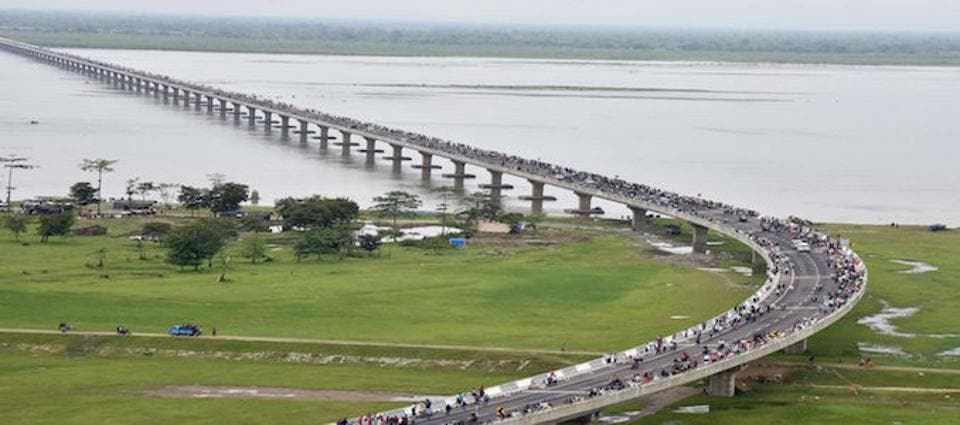
He was not alone. Located in the easternmost point of the state, an area ravaged by annual floods, the strategically important bridge connecting Assam and Arunachal Pradesh has become a tourist hotspot.
“We visited on a weekday but were surprised to find hundreds like us who had reached Dhola in Tinsukia district to see the bridge, ride across to the other side, click photos and more,” Patowary said.
The 9.15 km long bridge over Lohit, which will make it easier to transport military logistics close to the border with China, has literally transformed both places located on the northern and southern banks.
The media hype surrounding its inauguration by Modi on May 26 and the bridge’s entry into the record books has led to a heavy influx of tourists from across Assam, northeast and other parts of India.
On weekends thousands of people throng to the structure over river Lohit, a major tributary of the Brahmaputra. The sudden rush to the area, where very few ventured earlier, has led to tea-stalls, eateries, ‘paan’ shops mushrooming to cater to the tourists.
Locally produced organic vegetables, crafts and clothes have also found a new market enabling locals in the area both in Assam and Arunachal Pradesh see a surge in their earnings.
Sensing a business opportunity, Aghi Mihu, a local Idu-Mishmi youth from Roing in Arunachal Pradesh has started a venture allowing tourists to get photos clicked wearing the traditional attire of the sub-tribe of the Mishmis.
But the sudden surge of tourists and hundreds of vehicles to the area is creating administrative problems that never existed before the bridge became operational.
“There is chaos on the bridge and nearby areas especially on weekends. We have deployed more personnel to manage and set up check gates,” said Sanjay Kumar Sain, superintendant of police of Lower Dibang Valley district in Arunachal Pradesh.
Since outsiders visiting Arunachal Pradesh need to procure an inner line permit, the administration has set up a check point along the road, which is creating further traffic snarls.
Earlier this month, Arunachal Pradesh police seized 8000 kgs of illegally procured explosives from a truck on way from Meghalaya during a routine check-up of vehicles.
The explosives were meant for road construction, but officials say there could be the possibility of such contraband landing in the hands of terror outfits which operate in the area.
“The bridge has benefitted local economy due to surge of tourists but has created management problems for us. We are planning to create no-parking zones in some areas,” Oinam S Singh, deputy commissioner Tinsukia district in Assam told HT.



