E-Paper



India seeks ‘safe, unimpeded transit’ for more stranded vessels after Shivalik, Nanda Devi cross Strait of Hormuz
Earlier in the day, two Indian vessels – Shivalik and Nanda Devi, chartered by Indian Oil Corp – passed through the Strait of Hormuz safely.

 Prefer HTon Google


The government of India on Saturday said it is working with multiple countries to secure safe passage for the Indian-flagged vessels still stranded in the west of the Strait of Hormuz, after Iran recently allowed two Indian ships carrying LPG — Shivalik and Nanda Devi — to move through the war-hit waterway, in a rare move.
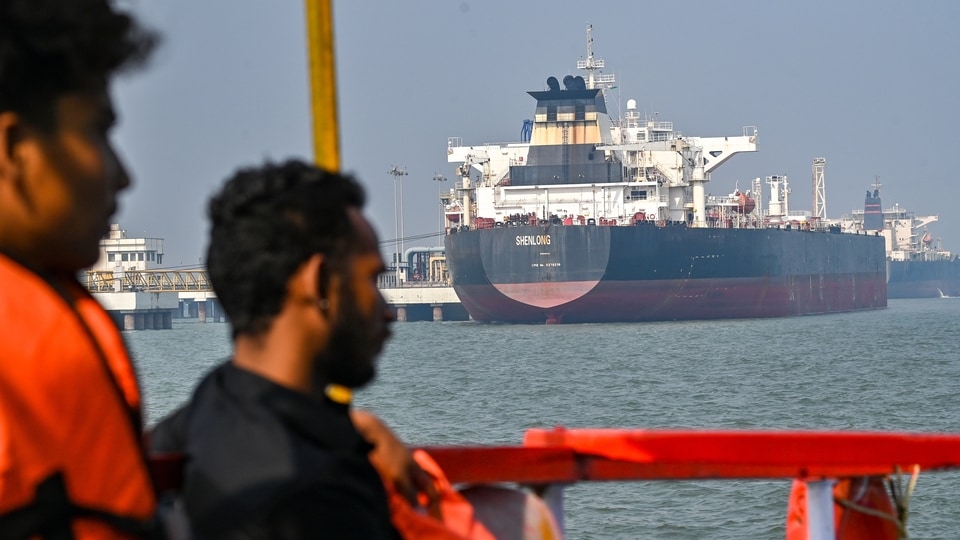
Speaking at a press conference, external affairs ministry spokesperson Randhir Jaiswal said New Delhi has remained in constant touch with key stakeholders in the region to protect India’s interests.
“Several of our ships remain in standby in the Gulf region. We propose to continue to remain in touch and coordinate with all concerned countries to ensure a safe and unimpeded transit for them in an effort to ensure our energy security,” Jaiswal said at the briefing.
Two Indian LPG vessels already cleared
Earlier in the day, special secretary at the shipping ministry Rajesh Kumar Sinha has said that two Indian vessels – Shivalik and Nanda Devi, chartered by Indian Oil Corp – have already passed through the strait safely.
The ships are expected to reach the western Indian ports of Mundra and Kandla in Gujarat on March 16 and 17, respectively.
Sinha said the vessels together carry more than 92,000 metric tonnes of liquefied petroleum gas (LPG).
Meanwhile, Iranian ambassador Mohammad Fathali reiterated Tehran’s friendly ties with New Delhi. “We believe that Iran and India are friends. We have common interests, we have a common fate,” Fathali told reporters in New Delhi on Friday.
The Strait of Hormuz has been under severe strain since the United States and Israel launched a bombing campaign on Iran, after which Tehran largely halted traffic through the narrow maritime corridor along its coast.
The strait is one of the world’s most critical energy routes, handling roughly 20% of global oil and seaborne liquefied natural gas supplies.