
 E-Paper



India sole rational shelter for persecuted: Govt to SC over CAA petitions
The 2019 Citizenship (Amendment) Act, or CAA, does not discriminate on the ground of religion but makes a distinction on the grounds of “religious persecution” in countries where Islam is the State religion, the Union government has submitted in the Supreme Court.

 Prefer HTon Google


The 2019 Citizenship (Amendment) Act, or CAA, does not discriminate on the ground of religion but makes a distinction on the grounds of “religious persecution” in countries where Islam is the State religion, the Union government has submitted in the Supreme Court , adding that CAA seeks to undo the “historical injustices” meted out to persecuted minorities in Pakistan, Afghanistan, and Bangladesh.
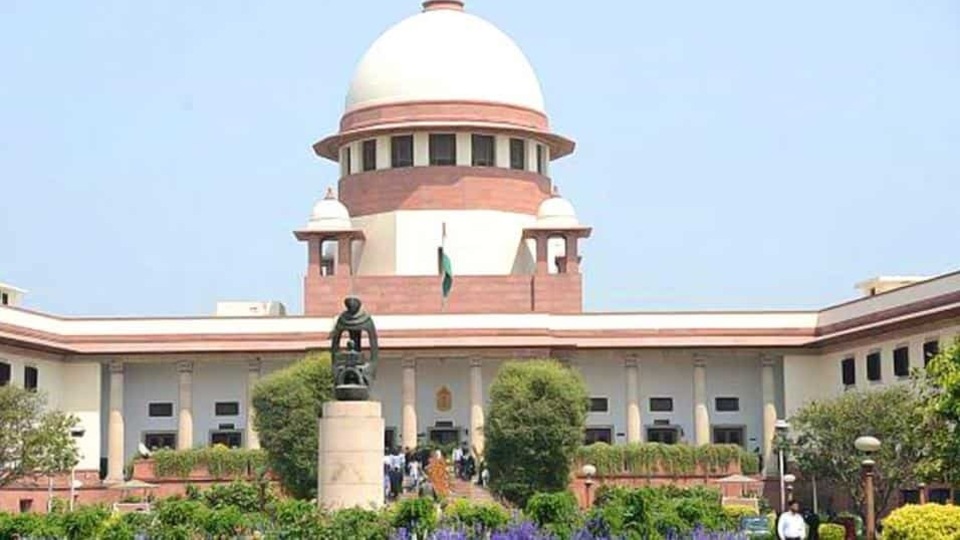
In a fresh affidavit submitted before a bench led by Chief Justice of India Uday Umesh Lalit, the government emphasised that “India represents the sole rational and logically feasible place to seek shelter” for Hindus, Sikhs, Buddhists, Jains and Christians who have suffered atrocities on account of their religious identities in the three neighbouring countries.
Also read: CAA may not be within scope of judicial review, govt tells SC
“The assertion that CAA is against any particular community is erroneous, unfounded and designedly mischievous...CAA does not classify or differentiate on the ground of religion rather it classifies on the ground of religious persecution in countries functioning with a State religion. CAA, therefore, does not violate the cherished principle of secularism,” said the affidavit, filed on Sunday night.
Arguing that CAA does not approve of citizenship to Tibetan Buddhists from China or Tamil Hindus from Sri Lanka, the government said that the allegation that the law attempts to classify the persons belonging only to the Muslim community as illegal migrants has no basis in law or in fact.
The recognition of religious persecution in the particular neighbouring countries which have a specific State religion and long history of persecution of minorities, it claimed, is “actually a reinstatement of Indian ideals of secularism, equality and fraternity.”
The government maintained that the law draws from the constitutional principle to protect the freedom of religion, which is an invaluable human right. “It is submitted that rather than breaching any principle of freedom of religion, CAA seeks to protect the freedom of religion of the classified communities which have been persecuted for exactly expressing and practicing their respective religions in the particular neighbouring countries,” stressed the affidavit.
It added: “History clearly depicts that persecuted minorities in the said three countries were left without any rights, and the said historical injustice is sought to be remedied by the amendment without taking away or whittling down the right of any other person.”
The document, filed through the Union ministry of home affairs, is in response to a clutch of over 200 connected petitions that have challenged the validity of the 2019 law on grounds of religious discrimination against Muslims and arbitrariness. The petitioners before the court include Indian Union of Muslim League (IUML), Congress leader Jairam Ramesh, Lok Sabha MP and AIMIM president Asaduddin Owaisi, RJD leader Manoj Jha, TMC MP Mahua Moitra, All Assam Students’ Union and Tripura royal Pradyot Kishore Deb Barman.
On Monday, the CJI-led bench took up the matter and fixed December 6 for commencing the detailed hearing in the case. Clarifying that IUML’s petition will be the lead case, the bench appointed advocates Pallavi Pratap and Kanu Agrawal as nodal counsel to prepare a common compilation of the pertinent documents to ensure a smooth hearing on the next date.
Meanwhile, defending the law which aims at granting fast-track citizenship to non-Muslim refugees who came to India because of religious persecution in Pakistan, Bangladesh and Afghanistan on or before December 31, 2014, the government maintained that there are sound reasons and a valid exercise of legislative powers to pick communities as well as choose only certain countries to bring within the fold of CAA. It added that the subject matter is outside the realm of judicial review. Rules for the law are yet to be framed, though.
“Unlike the particular neighbouring countries, India is a constitutionally secular country and further has a large population of persons belonging to the classified communities already residing as Indian citizens. It is therefore submitted that the said classification is logically complete and made as a legislative policy strictly in light of prevailing geo-political and other allied reasons which would not be justiciable,” stated the affidavit.
Responding to a complaint in the batch of PILs regarding the choice of the countries and the communities sought to be granted citizenship under CAA when religious persecution is prevalent in several other countries as well, the Centre contended that CAA does not seek to provide answers to all kinds of purported persecution across the world but is a narrowly tailored legislation trying to address the specific problem which has awaited India’s attention for a solution for several decades.
Also read: Those using two-finger test for rape survivors should be prosecuted: SC
“CAA is not meant to be an omnibus solution to issues across the world and the Indian parliament cannot be expected to take note of possible persecutions that may be taking place across various countries in the world,” it added.
The government further said that a parallel cannot be drawn between the classified communities under CAA and those belonging to Ahamadis, Shias, Bahaiis, Hazras, Jews, Atheists or Baloch communities since sectarian persecution cannot be equated with the persecution of religious minorities.
Similarly, the affidavit said that the purported persecution of the Rohingya community from Myanmar is more related to ethnic and linguistic discrimination and is thus, different from religious persecution.
“It is further submitted that thousands of Rohingya have come into India mainly through Bangladesh in search of better economic opportunities. It is submitted that Rohingya are not on the same footing as the religiously persecuted minorities who have fled into India from the particular neighbouring countries,” it said.



