
 E-Paper



Imran Khan hits mute on Saarc Covid-19 pledge, India sends $1.7 mn relief
India’s $1.7 million expenditure from the country’s $ 10 million Saarc Covid-19 Emergency Fund does not include a single amount that had been spent in transporting the medicines in chartered planes.

 Prefer HTon Google


India, which had pledged $10 million to help other South Asian countries tackle the Covid-19 pandemic last month, has already delivered medicines and other relief material worth $1.7 million, people familiar with the development told Hindustan Times.
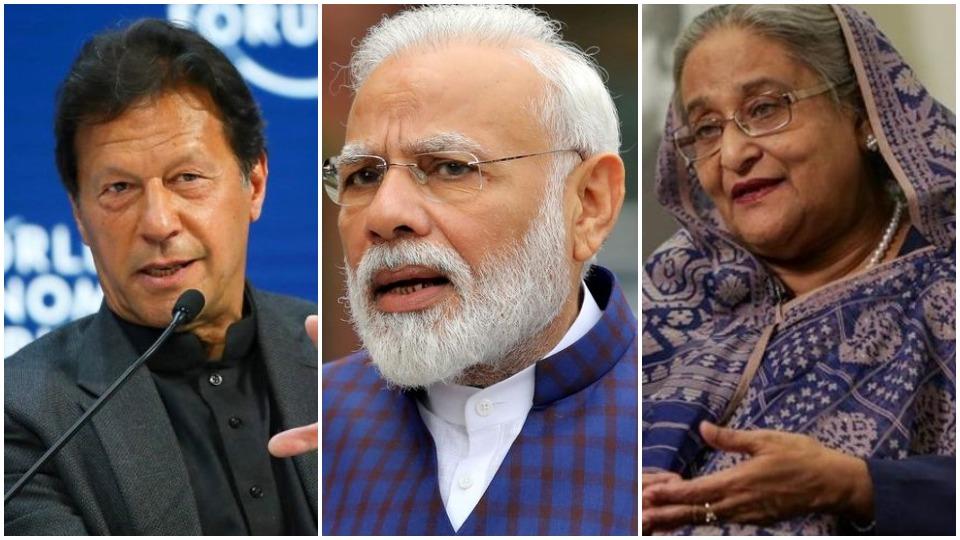
India has used its Saarc Covid-19 Emergency Fund to send drugs, medical supplies and machines to Afghanistan, Bhutan, Bangladesh, Nepal, Maldives and Sri Lanka. This amount of $1.7 million does not include the transportation of the relief commodities, which has, in some sectors, translated into 2-3 times the value of the relief material as New Delhi chartered flights to quickly reach the material to their destination.
Bangladesh’s Prime Minister Sheikh Hasina, the other regional leader to have started delivering on her $1.5 million promise, dispatched a shipload of relief material to Maldives this week.
Also watch | COVID-19 | Doubling rate reduced since lockdown, growth factor down 40%: Govt
There has, however, been no word from , pledged $ 3 million after holding off for 25 days.
Prime Minister Narendra Modi had during a video conference of heads of government of South Asian Association for Regional Cooperation member countries on March 15 proposed voluntary contributions to help others in the region.
PM Modi, when he proposed the fund, had committed to spend $ 10 million, followed by Sri Lanka ($5 million) and then Bangladesh ($1.5 million). In all, except Pakistan, the fund has firm commitments of $18.8 million.
Imran Khan had absented himself from the video conference. Islamabad was, instead, represented by its de facto health minister Zafar Mirza.
Zafar Mirza, whose performance as Pakistan’s key man to tackle the coronavirus pandemic had recently come in for sharp criticism from its Supreme Court, had also created a flutter at the March 15 Saarc conference when he raised Kashmir at this discussion.
The idea of setting up the fund, as the external affairs ministry later explained, was that each country sets aside a certain amount of money that it would spend to help each other.
“It is for each SAARC Member State to decide on the timing, manner and implementation of their Saarc Covid-19 Emergency Response Fund commitments,” foreign ministry spokesperson Anurag Srivastava, had said.
Pakistan’s commitment to spend $3 million on other countries was followed by a rider that their fund should be channelled via the SAARC secretariat based in Kathmandu.
Diplomats based in the SAARC secretariat in Kathmandu and other officials told Hindustan Times that they had not received information from Islamabad about a single dollar being spent towards coronavirus mitigation efforts by Pakistan.
“Maybe, Islamabad is still waiting for the distribution modalities to be worked out by the SAARC secretariat,” said a senior official based in Kathmandu, a trifle derisively.
The official also confirmed that “no such modalities, as sought by Pakistan for the fund had been worked out, and no such formal fund had to be created”.
It is not clear why Pakistan hasn’t delivered on its pledge. But Pakistan is in a precarious financial situation due to the pandemic. Khan had put out a video appeal this week that asked the international community to give developing countries debt relief.
On its part, New Delhi has supplied hydroxychloroquine tablets, paracetamol, active pharmaceutical ingredients, personal protection equipment, ventilators and masks to Saarc countries. Officials recall how PM Modi had insisted that the first countries to receive medical supplies would be Saarc countries, then Indo-Pacific countries apart from other countries that urgently needed the medicines
Bangladesh, so far, is the only other Saarc country to have come to the rescue of a neighbour. On April 15, Bangladesh sent a ship carrying 100 metric tons of food and medical material to Maldives.
According to available data, Bangladesh supplied 20,000 personal protection equipment, 900 goggles, 5,000 hand sanitizers and 80 tons of food items and essential medicines to Maldives.
Bangladesh has also supplied 12,000 hand sanitizers to the Himalayan kingdom of Bhutan.


