
Sign in

India uses Saarc Covid Fund for HCQ tablets to neighbours. Afghanistan next

A top government official told Hindustan Times that the decision to send the tablets had been taken but New Delhi is yet to work out the logistics in view of relations with neighbouring Pakistan.

Updated on: Apr 15, 2020, 22:08:08 IST
Hindustan Times, New Delhi | By
Share
Share via
  • facebook
  • twitter
  • linkedin
  • whatsapp
Copy link
  • copy link

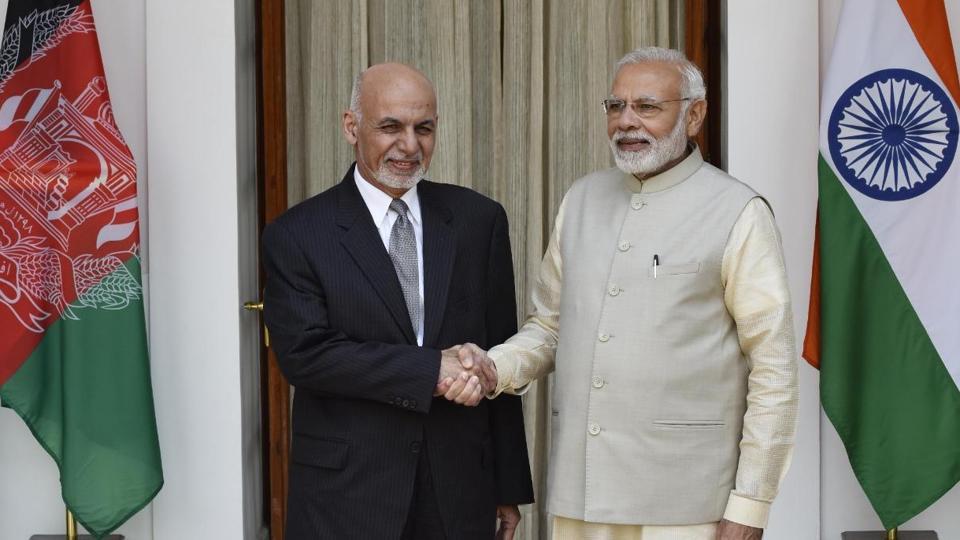
India has decided to send 5 lakh tablets of hydroxychloroquine to Afghanistan from the Saarc Covid-19 Emergency Fund set up at Prime Minister Narendra Modi’s suggestion last month. The fund was created with an initial corpus of $10 million from India; other Saarc members had also pitched in.
Global demand for the anti-malarial drug hydroxychloroquine had boosted over the last few weeks after some studies showed that it helped to reduce the viral load in Covid-19 patients. (File photo by Vipin Kumar/ Hindustan Times)

A top government official told Hindustan Times that the decision to send the tablets had been taken but New Delhi is yet to work out the logistics in view of relations with neighbouring Pakistan. “We are looking at various possibilities to reach the medicine to the people of Afghanistan at the earliest,” the official said.

One of the options being explored is use of third-party planes, may be international cargo planes.

A second official said India had already made deliveries of hydroxychloroquine to other Saarc countries such as Maldives, Sri Lanka, Nepal, Bangladesh and Bhutan. There has been no proposal to send the medicine to Pakistan in the absence of a request from Islamabad.

“I think there have been public statements by leaders in Pakistan that they have sufficient supply of the medicine,” the official said.

Global demand for the anti-malarial drug hydroxychloroquine had boosted over the last few weeks after some studies showed that it helped to reduce the viral load in Covid-19 patients.

India initially had banned exports of the drug to ensure that there were sufficient supplies to cater to domestic requirements. These restrictions were later eased, mostly to enable pharmaceutical companies to honour their contractual obligations on a case-to-case basis.

Otherwise too, pharma companies have been permitted exports to friendly countries such as the United Arab Emirates and Saudi Arabia.

The decision taken to supply the medicine and other medical assistance under the Saarc Covid-19 Emergency Fund demonstrates the utility of the fund that was created last month.

PM Modi, speaking at the virtual conference of Saarc leaders, had underscored that the fund would be financed by voluntary contributions from all members. Pakistan was the last member state to pledge its share of the contribution, $ 3 million, but had demanded that the fund should be placed at the disposal of the secretary general of the South Asian grouping.

The current secretary general of Saarc is veteran Sri Lankan diplomat Esala Ruwan Weerakoon, who recently succeeded Pakistan’s Amjad Hussain Sial.

Pakistan Prime Minister Imran Khan was the only Saarc head of government who opted out of the conference and instead, sent Pakistan’s de facto health minister for the meeting.

  • Shishir Gupta
    ABOUT THE AUTHOR
    Shishir Gupta

    Shishir Gupta is Executive Editor at Hindustan Times and one of India's top journalists covering national security, strategic affairs, foreign policy and geopolitics. Over the past three decades, he has extensively reported on India's military, diplomatic and security landscape, covering every major conflict and national security challenge, from the 1999 Kargil War and the 2020 East Ladakh standoff to Operation Sindoor in 2025. He has also covered major terror attacks, including the IC-814 hijacking, the 26/11 Mumbai attacks and the 2025 Pahalgam terror strike, along with numerous Pakistan-backed terrorist incidents in the Kashmir Valley and across India. He has reported on national and state elections for more than three decades. A recognised authority on strategic affairs, Gupta has covered India's nuclear programme since the Pokhran-II (Shakti series) tests in May 1998 and has written extensively on global nuclear issues, Indian diplomacy and the country's expanding global outreach. He has also reported widely on international conflicts and terrorism, with a special focus on the Indian subcontinent. Gupta has interviewed Prime Minister Narendra Modi more than four times, including Modi's first interview with the print media after becoming Prime Minister in May 2014. His other interviews include three with the Dalai Lama, as well as conversations with Benjamin Netanyahu, Amit Shah, Yogi Adityanath, S. Jaishankar, Nirmala Sitharaman and Piyush Goyal. He is the author of Indian Mujahideen: The Enemy Within (Hachette, 2011) and Himalayan Face-off: Chinese Assertion and Indian Riposte (Hachette, 2014). He was awarded the Chevening-Wolfson Joint Scholarship at Wolfson College, University of Cambridge, UK, in 1998 and participated in the International Visitor Leadership Program (IVLP) of the US State Department in 2006. He received the Ben Gurion Prize from Israel in 2011 and the K. Subrahmanyam Prize for Strategic Studies in 2015 from the Manohar Parrikar Institute for Defence Studies and Analyses (MP-IDSA). Since 2024, he has hosted Point Blank, Hindustan Times' weekly YouTube show on global geopolitics.Read More

Get the latest India News, breaking headlines and real-time updates from across the country. Stay informed about politics, government policies, crime, weather and major national developments.