As India continues to extend helping hand to flood-ravaged Nepal, external affairs minister S Jaishankar on Friday said that a team of tunneling experts is being sent as nearly a hundred people are stranded in a hydropower tunnel. This comes amid Nepal government denying help from foreign countries saying that its security agencies are capable of handling the rescue operation.
Jaishankar was speaking to the media after meeting group of 21 people who returned to Delhi from flood-ravaged Nepal on Friday. The minister said that a team of NDRF personnel may also be sent if Nepal requires it, adding that two planes of relief materials have already gone and third one will be sent on later in the day.
Track live updates on Nepal floods
What Jaishankar said
“The main thing is that in one place where there is a hydroelectric project, there could be possibility of people who may be a tunnel. So, we are sending a team to help with the experts in tunneling. Also, they need some bailey bridges, so we are sending bridges. These are bridges that can be quickly put together along with a team. There may be some medical teams also going out there. If they require NDRF people to go, we will send them. We have given them that option. Two planes of relief supplies have already gone out there and third plane will be taking off today,” Jaishankar said.
Deep Dive
What assistance is India providing to Nepal in response to the recent floods?
Why has Nepal refused foreign rescue teams despite the flood disaster?
How is Nepal assessing the financial impact of the recent flash floods?
While 85 Indians were rescued in Nepal on Friday, 315 still remain out of contact, Jaishankar noted. “We are still very much focused on contacting all the Indians who are there,” he said, adding that those who were evacuated and safely sent to India were thankful to Nepalese army.
{{/usCountry}}While 85 Indians were rescued in Nepal on Friday, 315 still remain out of contact, Jaishankar noted. “We are still very much focused on contacting all the Indians who are there,” he said, adding that those who were evacuated and safely sent to India were thankful to Nepalese army.
{{/usCountry}}Also read: ‘First responder’ India leads global relief race after deadly flash floods in Nepal
Jaishankar further added that he spoke to Nepal's foreign minister on Friday morning as India remains focused on helping the flood-ravaged Nepal in the relief and rescue of people.
“We have given them a range of support offers, they are evaluating it. Whatever they feel is appropriate, they will pick up for their needs. Right now, the main thing is that in one place where there is a hydroelectric project, there could be possibility of people who may be a tunnel. So, we are sending a team to help with the experts in tunneling,” he said.
“Also, they need some bailey bridges, so we are sending bridges. These are bridges that can be quickly put together along with a team. There may be some medical teams also going out there. If they require NDRF people to go, we will send them. ”
MEA says help being sent
The ministry of external affairs spokesperson Randhir Jaiswal also said this earlier during the weekly MEA briefing. “As requested by the Nepal, we are preparing to send a Tunnel rescue team, for which a recce team is being flown in first to assess the equipment required etc. A medical team is also being sent. In addition, we have also offered Bailey bridges along with their associated technical teams so that connectivity can be restored quickly in the affected parts of Nepal. One Bailey bridge is already in Nepal and can be deployed for relief efforts," Jaiswal said.
Nepal rejects foreign help
Nepal has turned down offers from several countries to send search and rescue teams after devastating flash floods hit towns and villages near the China border. Nepal's Balen Shah-led government said on Friday that its security agencies are capable of handling the rescue operation.
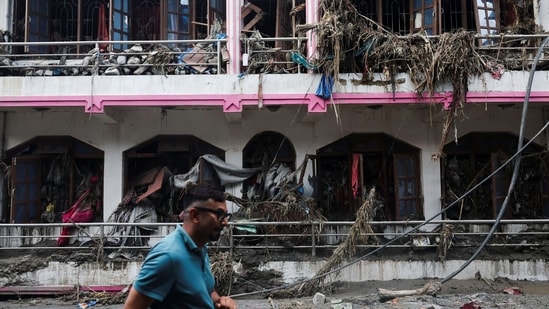
At least 547 people have died and over 1,500 remain missing since Wednesday. Rescuers are searching through mud and debris, while newly formed barrier lakes raise fears of more flooding.
“The offer for help is natural. Our security agencies are doing the search and rescue operation. For now we don’t require such help,” Lok Bahadur Chhetri, spokesperson for Nepal’s foreign ministry, said, news agency Reuters reported.
The government has received requests from India, China, the US, UK, Japan, South Korea, Sri Lanka and Bangladesh to allow their search and rescue teams to assist with the operation.
The official said the decision was influenced by Nepal’s experience during the 2015 earthquake, when the arrival of a large number of foreign rescue teams created coordination challenges. As many as 76 international urban search-and-rescue teams from 34 countries responded to the disaster, along with foreign medical and military teams.