
 E-Paper



India, US hold 2+2 dialogue to boost strategic ties
According to top diplomats in New Delhi and Washington, there are no arms deals on the table at the 2+2 meeting as the two sides have decided to keep the hardware relationship separate from bilateral political ties.


India and the US are set to deepen their strategic relationship with the Pentagon in favour of increased engagement between the Tampa-based Central Command and South Block, besides ongoing cooperation with the Hawaii-based Indo-Pacific Command.
The Central Command’s area of responsibility includes West Asia, Central Asia, Afghanistan and Pakistan.
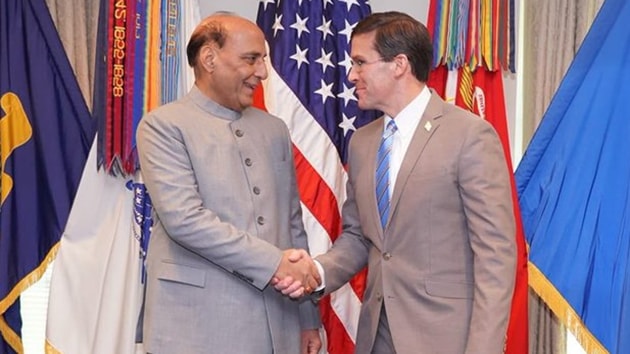
India’s defence minister Rajnath Singh and external affairs minister S Jaishankar met their US counterparts Mark Esper and Mike Pompeo for the 2+2 ministerial dialogue on Wednesday, with both sides exchanging notes on developments in West Asia, the Af-Pak region, and the growing shadow of China over the Indo-Pacific.
While Jaishankar is expected to take questions from the US Congress over the Citizenship (Amendment) Act, or CAA, when he visits Capitol Hill, he is prepared to walk the Congress through community-specific citizenship laws by Washington in the past. The nullification in August of Articles 370 and 35A — which granted special status and privileges to Jammu & Kashmir — and the purchase of Russian arms with a historical legacy are not listed in the agenda.
The two Indian ministers are also not expected to meet President Donald Trump even as India-US trade issues are being separately handled by commerce minister Piyush Goyal and US trade representative Robert Lighthizer.
According to top diplomats in New Delhi and Washington, there are no arms deals on the table at the 2+2 meeting as the two sides have decided to keep the hardware relationship separate from bilateral political ties.
The India-US relationship is currently at a level where any global event can come up for candid exchange of assessments, people familiar with developments said.
The US decision of engaging the Taliban for stabilising Afghanistan was expected to figure in discussions as India is wary of the Sunni fundamentalist group with umbilical links to the deep state in Pakistan.
Beijing’s beefing up of the Peoples’ Liberation Army (PLA) Navy, with two aircraft carriers and nuclear submarines, and its impact on the Indo-Pacific, is also a matter of concern for both countries.
Terrorism emanating from the Af-Pak region with the so-called Islamic State-Khorasan threatening the Durand Line and Pakistan’s continued support to terror groups targeting India is also expected to figure prominently in the agenda, with both sides keen that perpetrators of the 2008 Mumbai attacks and the Pulwama attack be brought to justice in Pakistan.


