
 E-Paper



Indian Army to assess implications of Chinese construction in Shaksgam valley
India has been raising the issue of Shaksgam Valley in the Special Representative Dialogue on Boundary Resolution.

 Prefer HTon Google


New Delhi: The Indian Army will be studying the military implications of China building a road in Shaksgam Valley as Beijing’s physical occupation could potentially threaten Indian defences in Siachen Glacier. The 5180 square kilometer of Indian territory in Shaksgam Valley was illegally ceded by Pakistan to China in 1963.
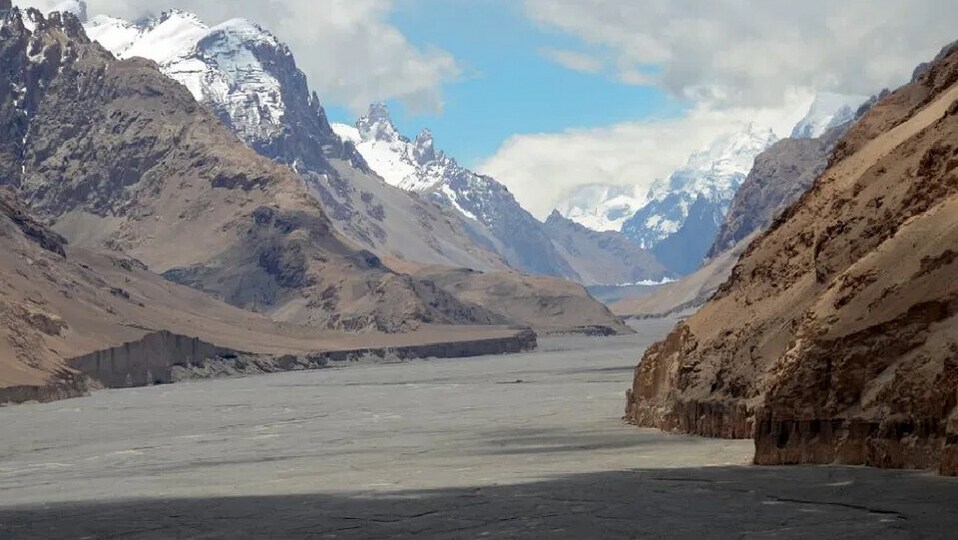
While India last week lodged a strong protest against Chinese road construction in the Valley in Delhi as well as in Beijing, the road could be part of an alignment that links Karakoram Highway to Upper Shaksgam Valley, bordering the Siachen Glacier. The new road transverses through 16333 feet Aghil Pass and could provide an alternative alignment to Karakoram Pass via Upper Shaksgam and thereon to Khunjerab Pass in Northern Areas of Occupied Jammu and Kashmir.
The matter is of serious concern to India for if China extends the road to Upper Shaksgam Valley, then the Indian positions on Siachen Glacier will face twin threats---Pakistan in the South and China to the north. It is only logical to assume that the Indian Army will have to plan long term defences to deal with Chinese expansion in the Occupied Shaksgam Valley.
Also read: How Five Eyes Bloc is trying to defang India’s counter-terror & intel apparatus
Although the current road construction is a patch between two possible alignments in the long term, it is quite evident that China wants to link Lower and Upper Shaksgam valley through road and military outposts in order to pressurize Indian Army positions on Siachen Glacier and Saltoro Ridge. This is not to say that the area is largely glaciated with high mountains on all sides and dominated by K 2 peak and the Concordia complex.
Also read: Rapprochement with Taliban is most underrated achievement of Modi government
India has been raising the issue of Shaksgam Valley in the Special Representative Dialogue on Boundary Resolution, the last meeting of which was held in December 2019. Even though Indian Special representative Ajit Doval has met his Chinese counterpart Wang Yi on the sidelines in BRICS in South Africa on July 24, 2023, the SR dialogue has virtually been put on the back burner after Chinese PLA threw all the bilateral agreements out of the window and transgressed in East Ladakh in May 2020. The loss of Colonel Santosh Babu and his 19 troopers in a clash with PLA at Galwan on June 15, 2020 has further hardened positions on both sides as India has no intentions in allowing Beijing to unilaterally impose the 1959 line on East Ladakh.
Also read: View: Belligerent PM Modi puts Congress in a fix over Muslim empowerment
By lodging at least two protests in the past two years on road construction in Shaksgam Valley, India has made it clear to China that it is right to protect its territory and will take measures to ensure that road construction is halted in the illegally occupied territory.


