
 E-Paper



India’s heart the top prize as election cycle kicks off today
The UP polls stand out for their sheer scale — at least 150 million voters are eligible to exercise their choice in close to 175,000 polling booths in the state’s 403 assembly segments over seven phases of polling.

 Prefer HTon Google


Kicking off the assembly elections in India’s largest state, voters in 58 assembly constituencies of western Uttar Pradesh (UP) will exercise their right to vote to elect legislators on Thursday. The first phase of polling in UP will mark the beginning of a two-month-long election process — the outcome of which, according to both politicians and analysts, will shape the political direction of not just the Gangetic plains but also the nation in the run-up to the 2024 Lok Sabha elections. Between now and 2024,more than a dozen states will go to the polls.“Like it or not, the UP polls will be seen as a midterm referendum on the Modi government,” said Milan Vaishnav, senior fellow and director of the South Asia programme at Carnegie Endowment for International Peace in Washington DC.
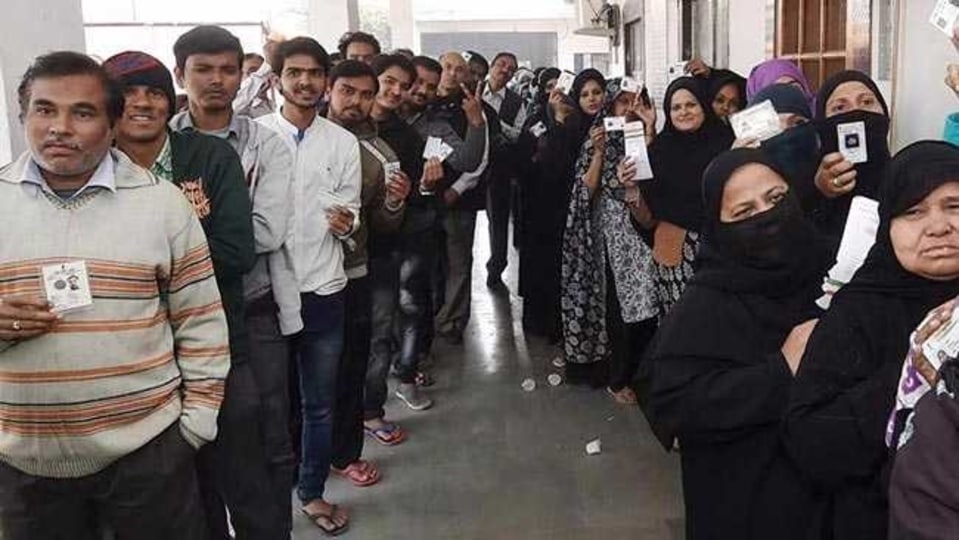
The UP polls stand out for their sheer scale — at least 150 million voters are eligible to exercise their choice in close to 175,000 polling booths in the state’s 403 assembly segments over seven phases of polling. The results of the polls will be declared on March 10.
Besides the implications for the key parties — especially the incumbent Bharatiya Janata Party (BJP) and the primary opposition, Samajwadi Party (SP) — the outcome is expected to shape the political fortunes of top national- and state-level leaders, including chief minister Yogi Adityanath, former chief ministers Akhilesh Yadav and Mayawati, and Congress leader Priyanka Gandhi Vadra.
Catch all latest updates related to assembly elections here
The polls have also drawn attention for the modality of the campaign — they are being held in the shadow of the pandemic and there has been curtailment of large-scale public rallies-based outreach due to the Omicron surge. Four campaign issues have dominated headlines — religious identity, including attempts to deliberately deepen polarisation; caste-based mobilisation, with attempts to expand social alliances and project rival formations as catering to only select castes; governance, livelihood and development concerns, especially in the wake of the pandemic and the now-aborted farm laws; and claims and counterclaims over law and order.
All these issues have played out starkly in western UP, which has seen both high degrees of communal polarisation and class-based mobilisation in recent years and will go to polls first.
Commenting on the region’s significance, Rahul Verma, fellow at the Centre for Policy Research, whose doctoral work has focused on local politics in UP, said, “Just like in the past few elections, the first two rounds of polling are in the western region. The BJP was, in 2014, 2017 and 2019, able to capitalise on the momentum built in its favour here. But this time, the western region may be the toughest battle for the party in the backdrop of the farmers movement.” Verma said that the BJP’s game plan may be to minimise its losses in this region, while the SP’s objective is to win big in alliance with the Rashtriya Lok Dal (RLD), led by Jayant Chaudhary, and then transmit the momentum to the rest of the state.
Also Read | West UP turns fortress; 22.8 million to decide fate of 623 candidates
This is the first election for the RLD since the party supremo Ajit Singh died in 2021, and the party hopes to capitalise on Jat disenchantment due to the farm laws (which were repealed late last year after a 14-month-long protest). But whether Jats and Muslims vote together for common candidates, as the SP-RLD combine hopes, in a region that witnessed deadly communal riots in 2013 is to be seen. The BJP believes that with its decision to revoke the farm laws, the issue has dissipated; instead, it is hoping that the Hindu religious identity will prevail over caste identity, and this, coupled with the perception of improved law and order, will pay electoral dividends.
But over the next two months, issues of governance, social alliances, and leadership and the messaging of parties around these themes will remain key in shaping the electoral outcome.
In terms of governance, the state government has highlighted its achievements in terms of tackling crime, ensuring the safety for women, improving infrastructure, effectively delivering central and state-level welfare schemes, increasing large-scale investments, and completing pending development projects. The Opposition has alleged that the government is seeking credit for schemes that were initiated under earlier regimes, questioned official claims on law and order and instead spoken of increased attacks and atrocities against minorities, Dalits and women, accused the administration of thoroughly mismanaging the pandemic, especially during the second wave of Covid-19 infections, claimed that economic distress has increased, and sought to paint the incumbent dispensation as insensitive to farmers and workers.
In terms of social alliances, the BJP is hoping to maintain its coalition of upper castes, backward communities, especially non-Yadav Other Backward Classes (OBC) subgroups, and Dalits, especially non-Jatav subgroups. It believes that a high degree of Hindutva assertion — aided by the state government through laws and policies in the past five years, and reflected in the CM’s rhetoric — will help cement this social alliance, besides the government’s specific agenda for various sub groups. The Opposition, especially the SP, has accused the BJP of catering only to members of the CM’s caste, sought to leverage the perceived discontent among other upper-caste groups such as Brahmins, and made an effort to dispel its tag of being an exclusivist Yadav party by wooing other OBC groups. The Congress has introduced a gender-based ticket distribution criteria, promising 40% of its seats to women candidates.
Also Read | Factors at play in turbulent west UP
In terms of leadership, unlike the 2017 election which the BJP entirely fought in the name of Narendra Modi, the party is fighting this election under the leadership of both Modi and CM Yogi Adityanath — BJP leaders claim this is but natural since in 2017, they did not have a CM, and are hoping that continued faith in the PM will work to offset any dip in support in the past five years. The Opposition, while critiquing the central government and PM Modi, has kept its key focus on the CM.
If the BJP wins, it will be the first time in seven decades that a CM would have both served his five-year term and then got re-elected to serve another full five-year term in UP, and will catapult Adityanath, 50, as among the most important next generation leaders of the party. A victory for Akhilesh Yadav, meanwhile, will firmly cement his position not just as the premier non-BJP leader in north India, but also make him a key opposition figure on the national stage. For Mayawati, under whose leadership the Bahujan Samaj Party has now lost four consecutive elections, despite retaining a vote share of an average of 20%, this is seen as a battle for survival — with the party’s best case scenario being a hung assembly where it becomes a key player. The Congress is contesting the election under Priyanka Gandhi, but the party is widely expected to remain fourth in the race — with the only question being how far it is able to improve its 2017 tally of seven of 403 seats in the assembly.
Commenting on the national significance of the elections, Carnegie Endowment’s Vaishnav said: “A decisive BJP win will help create an aura of inevitability headed into 2024. For the opposition, a strong showing — even a narrow loss — could add wind to their sails. If the SP can give the BJP a tough fight, it will put pressure on the central government in its final two-and-a-half years.”
But Vaishnav emphasised that it would be a mistake to read an opposition win in UP as automatically translating into national-level gains. “In fact, it could further federalise what is already a regionally fragmented constellation of parties.”


