E-Paper



India’s lion population logged 32.2% surge in last 5 years
The census, carried out from May 10 to 13, spanned 58 talukas across 11 districts, including Junagadh, Amreli, and Bhavnagar.

 Prefer HTon Google


Gandhinagar Gujarat’s latest lion census shows that the western state has 891 Asiatic lions, across approximately 35,000 sq km of lion landscape, a 32.2% increase over the 674 lions counted in 2020.
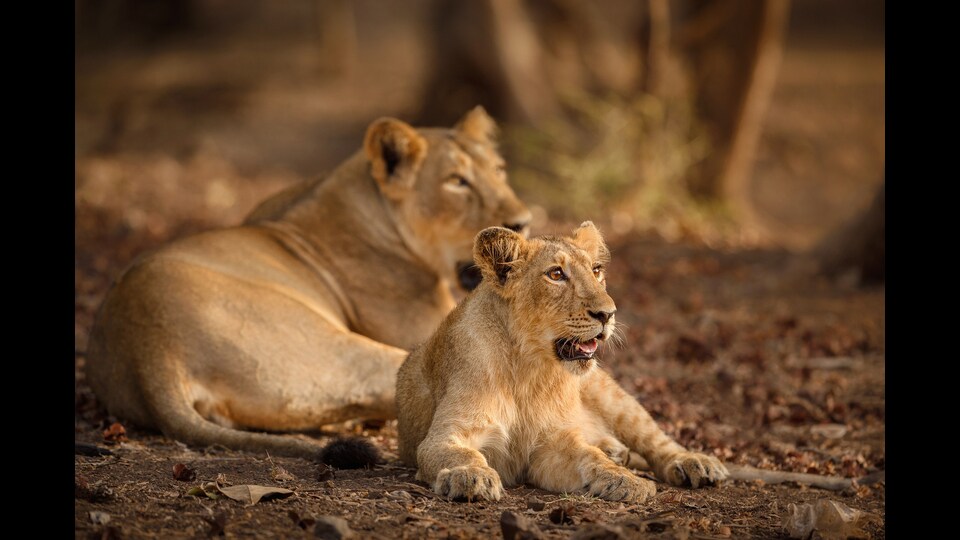
Of the 891, 384 reside in the forest and sanctuary areas and 507, outside in the revenue area and coastal and lion corridors, said AP Singh, Principal Chief Conservator of Forests (PCCF) and Head of Forests. The corresponding numbers in 2020 were 334 and 340.
The growing presence of lions outside so-called protected areas is also evident in the increase in their range -- by almost 60% since 2015, when there were 523 tigers/lions.
Chief Minister Bhupendra Patel announced the results of the census on Wednesday. The 16th lion population estimation was announced during the seventh meeting of the National Board for Wildlife at Sasan-Gir on March 3, chaired by the Prime Minister of India.
The census, carried out from May 10 to 13, spanned 58 talukas across 11 districts, including Junagadh, Amreli, and Bhavnagar.
Amreli district has the highest population of lions at 257.
CM Patel credited the success to Gujarat’s sustained conservation efforts, particularly the ₹2,927 crore Project Lion, launched in 2020. This initiative focuses on habitat restoration, prey-base enhancement, and mitigating human-wildlife conflict.
The population in Gir National Park and Gir and Pania Wildlife Sanctuary and adjoining areas serves as the cource or core population; but the lions have dispersed and established distinct satellite populations.
During previous population estimations, seven of these satellite populations Mitiyala Wildlife Sanctuary, Girnar Wildlife Sanctuary, the southwestern and southeastern coastal regions, Savarkundla-Liliya and its adjoining areas in Amreli, Bhavnagar Mainland, and Bhavnagar Coast—were recorded. The latest estimation highlighted three new satellite populations including Barda Wildlife Sanctuary.
Of the total population, 55.78% were found in forested areas, while the remaining 44.22% were located in non-forested areas, as per the census data.
Unlike the tiger census done once every four years and carried out over a period of two years, the lion census, done once in five years, is completed in just three days. “The tiger census mainly relies on the pug marks methodology as compared to Asiatic lion census that is done through direct beat verification. Our lion census methodology is more scientific,” said Jaipal Singh, PCCF-Wildlife, Gujarat forest department.
He added that the beat verification methodology consistently proven to be statistically robust and operationally practical, especially when implemented in the diverse Asiatic Lion Landscape.
“I’m delighted to see the lion population grow from 284 in 1990 to 891 today, a nearly threefold increase, with their range expanding from 6,600 to 35,000 square kilometers, an over fivefold increase. It’s a remarkable achievement, and I commend the government and forest department for it. However, the protected areas haven’t expanded and have already exceeded their carrying capacity, forcing lions to spill out. This is not a good thing. To ensure the safety of wildlife, we must create more reserved forests and sanctuaries,” said renowned conservationist MK Ranjitsinh.
YV Jhala, a leading wildlife biologist and an expert on lions, said that the growing population, particularly in human-populated areas, wonderfully demonstrates coexistence, reflecting how people have learned to live alongside these majestic cats.
“Lions must stay wild, independent of livestock subsidies, to preserve their natural evolutionary traits. It’s our moral duty to ensure they thrive as nature intended, feeding on wild prey and devoid of people and cattle.”
The Asiatic lion (Panthera leo persica), once widespread across West Asia and northern India, faced near extinction by the early 20th century due to hunting and habitat loss. By the 1900s, only 12-20 lions remained in the Gir forest, prompting the Nawab of Junagadh to ban hunting. This pivotal step, followed by the establishment of Gir Wildlife Sanctuary in 1965 and Gir National Park in 1975, laid the foundation for the species’ recovery. Today, the lion landscape extends beyond Gir into the Greater Gir region, coastal areas, and Barda Wildlife Sanctuary near Porbandar, which is being developed as a second habitat to support genetic diversity and reduce population pressure. As per the latest census, 17 lions reside in Barda . Identified by the Wildlife Institute of India as a suitable habitat for translocating 40 adult and sub-adult lions, Barda historically sheltered lions until their local extinction in 1879.