
 E-Paper



Worry for India? US seeks ‘friendship’ with Bangladesh’s once-banned Jamaat-e-Islami, says report
Exiled in India, Hasina has called Muhammad Yunus as “fascist”; her party argued the upcoming election is “one-sided” and “meaningless”

 Prefer HTon Google


The United States is reported to be seeking a friendly relationship with the Jamaat-e-Islami party in Bangladesh ahead of elections scheduled for next month, and this can potentially further strain American ties with India, where ex-PM Sheikh Hasina is living in exile since her ouster in mass protests in 2024.
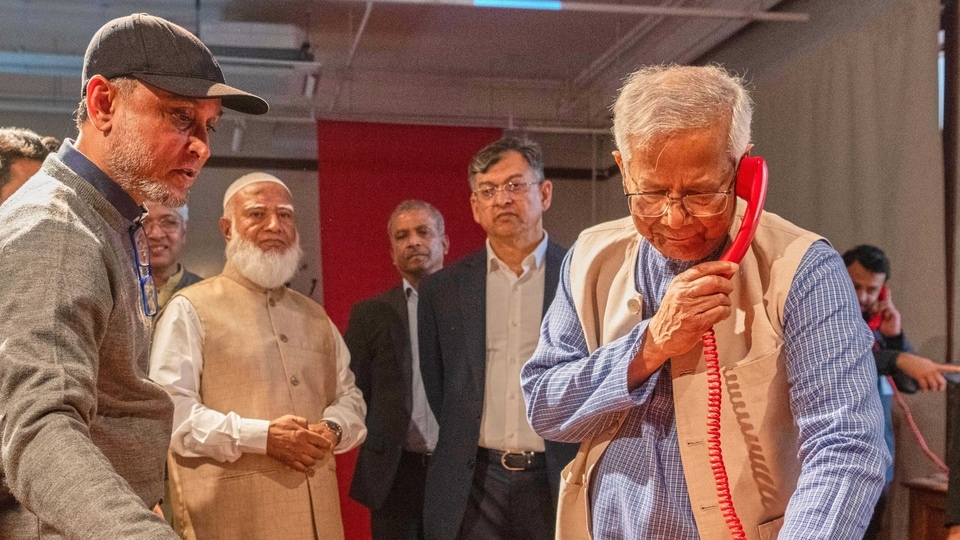
US diplomats are looking to step up their engagement with the once-banned radical group, The Washington Post has reported citing audio recordings of a meeting from December 1. In that closed-door meeting with some Bangladeshi journalists, a US diplomat based in Dhaka said the country has “shifted Islamic” and predicted that the Jamaat would “do better than it’s ever done before” in the February 12 election, the Post further said in its report.
“We want them to be our friends,” the diplomat, whose identity is withheld by the US-based premier news outlet, is quoted as saying. He can be heard requesting journalists to give more airtime to the party’s influential student wing, the report added.
As for fears that the Jamaat-e-Islami could take Bangladesh down the route of strict Islamic law, the US diplomat reportedly said Washington has leverage it can use — “100 per cent tariffs put on them the next day”.
The US has not denied that the meeting took place. Monica Shie, spokesperson for the US embassy in Dhaka, reportedly said “the conversation that took place in December was a routine gathering, off-the-record discussion between US Embassy officials and local journalists".
“Numerous political parties were discussed,” she argued, and asserted that the US has no plans to favour a party or about which government is elected by the Bangladeshi people. Mohammad Rahman, the US spokesperson for Jamaat-e-Islami, told the Post that “we choose not to comment on the context of remarks reportedly made during a private diplomatic meeting".
Why Jamaat is a worry for many
The Jamaat-e-Islami has been banned multiple times in the country’s history, most recently under Sheikh Hasina. It has held strict sharia-aligned positions such as reduced office hours for women for them to “fulfill their duties toward their children". But it has sought to rebrand itself as an anti-corruption force ever since the students-led protests toppled Hasina's regime over alleged misgovernance.
Hasina's party, the Awami League, stands de-registered and banned, while she has been awarded the death penalty over deaths of protesters and “crimes against humanity”.
At an event in Delhi on Friday — her first public address, albeit via online audio — Hasina decried the interim government led by Nobel Peace Prize winner Muhammad Yunus as “fascist”. Her party has argued that the upcoming election is “one-sided” and "meaningless".
Hasina's main rival for decades was Khaleda Zia, who died recently, while her party BNP — now led by Zia's son who returned from London after several years — is now seeking to be a governing party, possibly working with the Jamaat.
But the American outreach to the Jamaat has the potential to “drive another wedge” in US-India ties, international relations analyst Michael Kugelman told WaPo.
India is already facing massive tariffs from Donald Trump-led US over buying oil from Russia — purchases that Trump says funds the war in Ukraine. Trump has asserted he is “good friends” with PM Narendra Modi, but trade deal talks between the two countries have not yet led to results even after almost a year of negotiations.
Then there is Trump's insistence for credit for a ceasefire between India and Pakistan after Delhi responded militarily to a terror attack in Kashmir last year. India has insisted it did not act on Trump's or anyone's cue in its foreign policy decisions.

India’s biggest worry in Bangladesh for many years has been the Jamaat, Kugelman noted. "India views the party as being allied with Pakistan and a threat to regional security," Kugelman, a senior fellow for South Asia at the Atlantic Council, reportedly said further.
The US embassy spokesperson addressed this in her statement to the news publication. She claimed the Bangladesh elections will not have “any substantial impact on US-India relations".
Frosty ties amid violence against minorities; manifest in cricket row
India-Bangladesh ties have been frosty at best ever since Hasina's ouster.
There have been cases of violence against minorities, particularly Hindus who are majority in India, that leaders in Delhi have condemned. That Hasina was considered an ally of successive Indian governments, and is now giving interviews and addressing events in Delhi, has been piquing Yunus and the regime in Dhaka.
India has not extradited her to Dhaka to face her sentence despite a request from Bangladesh’s interim government.
Visas have been suspended by both sides.
The latest manifestation of the freeze showed up in cricket, a sport both countries adore. Indian Hindutva groups and ruling BJP leaders slammed actor Shah Rukh Khan-owned franchise Kolkata Knight Riders for picking a Bangladeshi Muslim player for his team for the Indian Premier League (IPL). After that decision was reversed, Bangladesh has hit back and said its team won't travel to India for matches of the T20 World Cup.
Mohammad Rahman, the US spokesperson for Jamaat-e-Islami, told the Post that since Hasina’s ouster in 2024, the Jamaat has held four meetings in Washington with US officials and “several” meetings in Dhaka. The party's leader Shafiqur Rahman also met virtually with US Trade Representative (USTR) Jamieson Greer on Friday, though US officials declined to comment on the Washington meetings and described the Dhaka meetings as “routine diplomatic work".
Indian officials have also engaged with Bangladesh on some counts, including foreign minister S Jaishankar's attending Khaleda Zia's funeral event.
What Awami League says on elections
Awami League leader Mohibul Hassan Chowdhury Nowfel has, meanwhile, said the "one-sided election" will lead to a “waste of public funds”. He warned that any government formed under such circumstances would struggle to be sustainable, even as he asserted that his party remains resilient enough to navigate a period in the opposition.
Speaking to news agency ANI, Nowfel said, "If they want to force it (elections) on the people of the country, it will happen. The question is, what will be the consequence of such a waste of public funds? Will the government, whoever comes after this one-sided election, be sustainable? That is the question. We (Awami League) are well-versed in these protests. Most of the time of our existence as a political party, we've spent in the opposition. So we know how to survive time in opposition."
Nowfel claimed Pakistani interference too. "The ISI's second-in-command had visited Dhaka. The generals from the Pakistan army had been frequenting Dhaka. Pakistan has suddenly come out of nowhere, and they are destabilising not only internally but also trying to create regional instability by unnecessarily damaging the relationship between Bangladesh and India," he claimed.
Meanwhile, Bangladeshi theatre actress and director Rokeya Prachy criticised the Yunus-led interim government. “Right now, we don't have any freedom.”


