
 E-Paper



Industries open on tepid note as states continue with curbs
Reports on Day 1 suggest there was only a marginal improvement in terms of economic activities as states announce specific guidelines; industrialists cite fear of strict curbs like boarding, food for workers.

 Prefer HTon Google


On Monday, the first day of the easing of Covid-19 lockdown norms, factories in most states did not resume work, with some deciding to continue with a hard lockdown until its designated deadline of May 3 and companies claiming that the requirements for reopening were far too stringent.
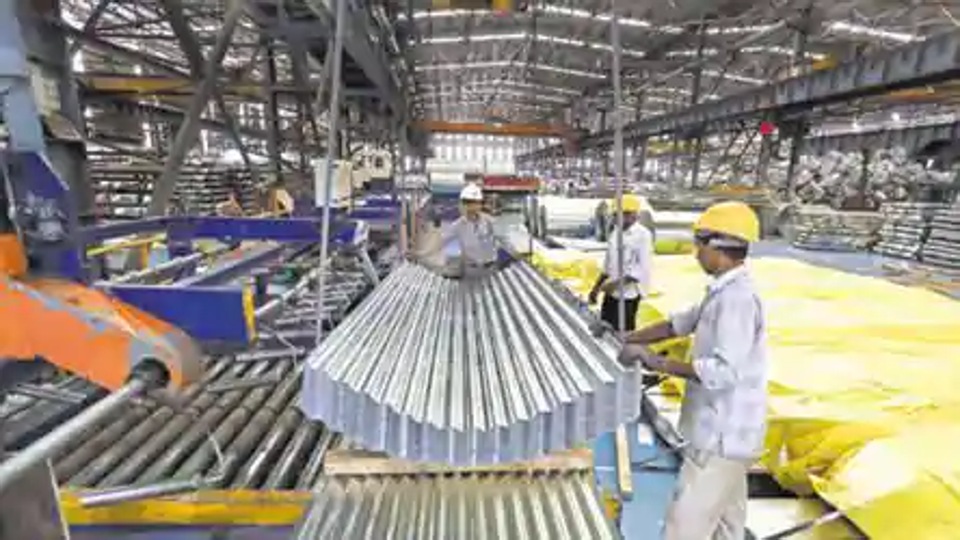
Some economists expressed hope that the relaxation of restrictions would get activities accounting for 45% of the economy going; however, reports from the states suggest that at least on Day 1, there was only a marginal improvement in terms of economic activities.
The ministry of home affairs, in guidelines issued on April 15, allowed factories in rural areas, special economic zones, industrial clusters and townships in non-Covid hotspots to reopen from April 20 onwards. It said these would have to maintain social distancing norms on the shopfloor and also make arrangements to either safely transport the workers or out them up temporarily onsite.
The state governments were required to issue guidelines for factories and commercial establishments to operate.
Even as companies tried to get their workforce organised, some states announced fresh guidelines on Monday.
The Haryana government , for instance, directed that a maximum of 1,000 workers for every rural block and 2,000 per municipal corporation would be allowed for industries and commercial establishments. Till Sunday, the rule was that all units in non-Covid areas could work -- with up to 50% workforce.
“Permissions will be granted by the designated approval committees on first come first serve basis in the first phase (for allowing the workers as per new limit),’’ said a senior Haryana government official, who asked not to be named. These conditions will, however, not apply for workers deployed onsite in construction projects.
In the biggest industrial cluster of Punjab, Ludhiana, around 99% of about 95,000 units remain closed on Monday after chief minister Amarinder Singh decided to continue the hard lockdown till May 3. The officials said the decision to withdraw the permission given to industry was taken after a review by the CM.
President of the Chamber of Industrial and Commercial Undertakings (CICU), Upkar Ahuja, said there was no benefit of opening a certain sector till the complete supply chain is permitted to operate.
Telangana on Sunday night announced that no relaxations would be given to industry and a complete lockdown will continue till May 7.
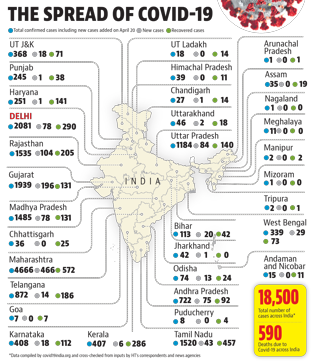
On Monday, Tamil Nadu, which has reported 16 deaths and 1,477 positive coronavirus disease cases till Monday afternoon announced that the complete lockdown would continue till May 3. “Essential and other services as already permitted will continue. Suitable orders will be promulgated if the virus spread reduces, depending upon the situation, based on the recommendations of the committee,” a government statement said.
India’s biggest state, Uttar Pradesh, saw a lukewarm response with industries in major clusters such as Kanpur, Lucknow, Moradabad, Bareilly and Varanasi not opening as they fall in red zones. Elsewhere, industry leaders cited “fear” of strict restrictions which include in-situ boarding and lodging for workers and closing of industries which fail to comply with orders and booking of factory owners if a worker tested positive for Covid-19.
UP permitted companies in 11 industries including cement, textiles and paper to resume production from Monday with 50% staff and strict hygiene and social distancing conditions.
“The government has imposed such tough conditions that it is not possible for us to run. No industrialist wants an FIR against him if any coronavirus positive case is reported from his units,” said Pankaj Kumar, national president of the Indian Industries Association. He said that except those listed in the essential goods category, no other unit resumed production on Monday.
The situation was better in Gujarat, with a government statement saying that nearly 4,000 units including ceramic units in Morbi, engineering units in Rajkot and Kutch, chemical units in Ankleshwar and automobile units in Sanand resumed operations.
In neighbouring Rajasthan, most units including those making the famous Makrana stone, did not start operations.
“My estimate is that about 5% units in industrial areas and 20% in rural areas started operating,” said Suresh Agarwal, president of the Federation of Rajasthan Trade and Industry (FORTI). “The guidelines do not work for us, especially regarding accommodating labourers in the factory premises,” he said.
Jute factories in West Bengal, key to provide packaging bags for wheat procured in the country, did not resume operations till late on Monday with permission from the state government awaited, company executives said. Government officials did not respond to queries seeking comment.
In Uttarakhand, the government received only 500 applications from a total 65,000 units to resume work from April 21. In Maharashtra, which has about 450,000 ndustries, applications were received from only 300. Maharashtra has set an online system to seek permission for industries to run.


