
 E-Paper



Interacting with judicial candidates helpful: CJI
CJI Bhushan R Gavai praised the collegium's practice of interviewing high court candidates, enhancing transparency and ensuring suitable appointments.

 Prefer HTon Google


Chief Justice of India (CJI) Bhushan R Gavai on Friday described the collegium’s recent practice of personally interacting with candidates being considered for high court appointments as “really helpful,” saying that even a brief 10-15 minute conversation can reveal how suitable a nominee would be in contributing to society.
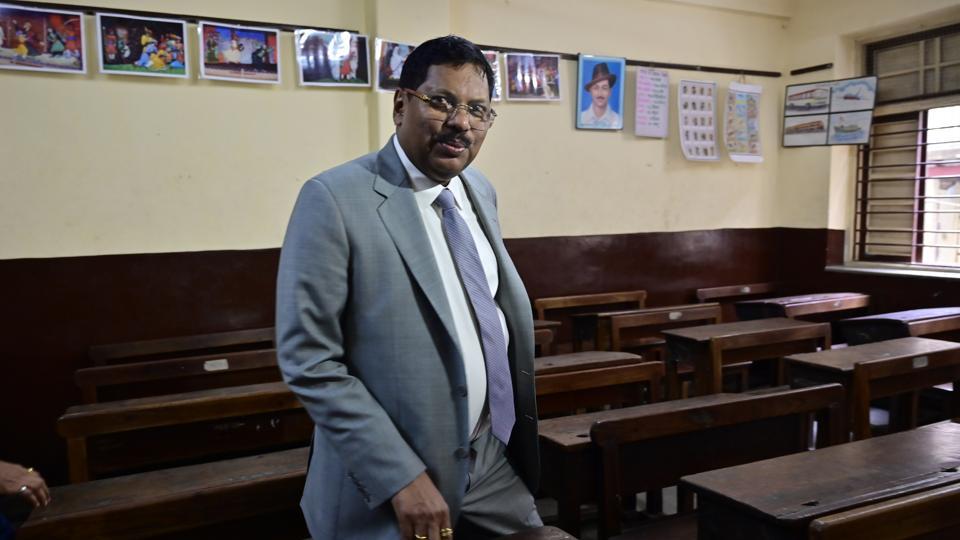
Speaking at the Supreme Court complex during Independence Day celebrations, the CJI underlined that the exercise, revived in December 2024 and now firmly embedded in the appointments process, has strengthened the collegium’s ability to assess candidates’ temperament, outlook and commitment beyond what can be gleaned from service records or paper credentials.
“In our opinion, after interaction with them for 10-15 minutes, or half an hour, we can find out as to how suitable they will be to contribute to society,” he said, noting that the practice was initiated during Justice Sanjiv Khanna’s tenure as CJI and has been continued under his leadership.
The latest round in July saw the collegium, comprising CJI Gavai and justices Surya Kant and Vikram Nath, meet more than 50 judicial officers and lawyers over just two days, setting a record for the highest number of face-to-face interactions in one go for high court appointments. Candidates were considered for the high courts of Madhya Pradesh, Punjab & Haryana, Patna, Rajasthan and others.
According to people familiar with the process, the trio, who include the next two CJIs in line, asked wide-ranging questions on constitutional values, pressing legal issues, ethics and institutional responsibility.
This model, the CJI on Friday said, reflected the collegium’s awareness of the need to evolve and adopt all measures required to enhance the efficiency and transparency of the judges’ selection mechanism.
Responding to Supreme Court Bar Association president Vikas Singh’s call for a body to collate names of potential appointees to the constitutional courts, the CJI stressed that several lawyers practising in the apex court had in recent years been appointed to various high courts and that more such recommendations were in the pipeline. While the Supreme Court collegium could suggest names to high court collegiums, the first call, he emphasised, lay with the latter.
“The Supreme Court is not a superior court to the high court. Both are constitutional courts… Therefore, the first call has to be taken by the high court collegium. We only recommend the names… and only after their satisfaction do the names come to the Supreme Court,” he said.
The revival of in-person interactions last December followed a controversy over judicial conduct involving Justice Shekhar Kumar Yadav of the Allahabad High Court, whose communal remarks at a public event earlier that month drew widespread criticism. At the time, the collegium, then led by Justice Khanna and including justices Gavai and Kant, saw such interviews as a way to ensure a more holistic understanding of a candidate’s suitability.
Union minister for law and justice Arjun Ram Meghwal, attorney general R Venkataramani, SCBA vice-president and senior advocate Rahul Kaushik and SCBA secretary Pragya Baghel were also present at the event.
In the second half of his speech, CJI Gavai turned to the role of the judiciary in protecting constitutional ideals. He called on judges to interpret laws in ways that “expand freedom, protect the rights of the marginalized, and strengthen the rule of law,” and urged both judges and lawyers to carry forward the legacy of the freedom struggle’s legal luminaries, who “argued fearlessly, challenged injustice, and defended the rights of the vulnerable.”
He invoked a vision of India where “no child is denied education because of her caste or poverty,” no woman “walks in fear, by day or by night,” and “no citizen is too small to be heard.” Judges, he stressed, bore the solemn duty not just to apply the law but to “actively uphold and embody” liberty, equality, and fraternity.
“Our history teaches us that the struggle for freedom was not only a political movement but also a moral and legal endeavour…This legacy must guide the lawyers of today,” said the CJI, urging legal professionals to recognise that even seemingly minor disputes may carry deep implications for life, dignity or survival.
Ends



