E-Paper



IPCC: Report on rising temp likely to be out today
Over the past two weeks, government representatives and scientists went over the report line by line, discussing each finding and giving it the final approval.

 Prefer HTon Google


The Intergovernmental Panel on Climate Change’s Working Group II report on “Impacts, Adaptation and Vulnerability” is expected to be released on Monday evening, with people aware of the matter indicating that it could be the most worrying account yet on rising temperatures across the world.
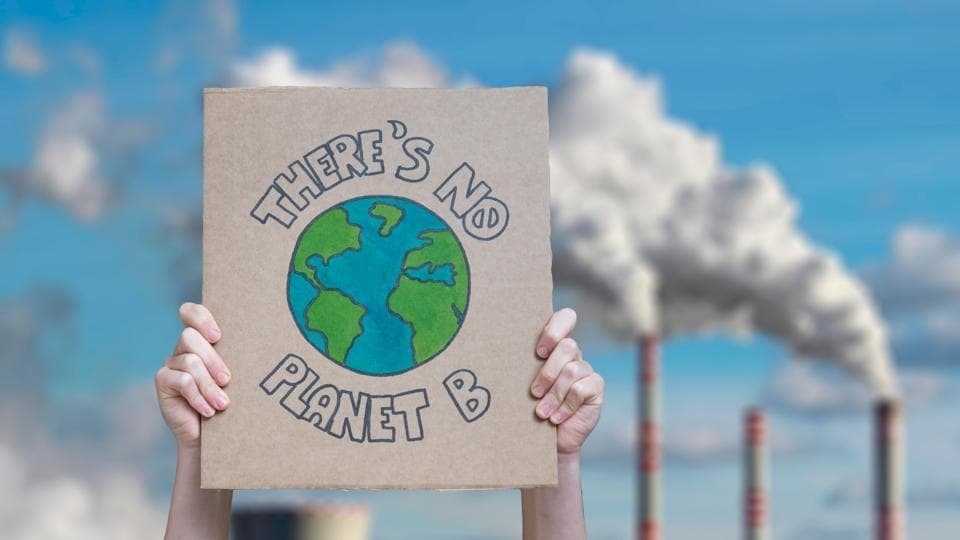
Over the past two weeks, government representatives and scientists went over the report line by line, discussing each finding and giving it the final approval. The report is expected to cover economic, social, food security, biosphere, health and mental health impacts of the climate crisis. The working group II report will also provide evidence and information on the limits of ecosystems, biodiversity hotspots and humans adapting to the climate crisis.
It will highlight which ecosystems are under stress and can possibly no longer tolerate the impacts of the climate crisis, leading to reaching tipping points, co-chairs of IPCC WG II said during a media briefing earlier this month.
According to reports, the study is likely to talk about key “tipping points” amid global warming, with the threat of irreversible damage.
The report is expected to highlight that climate crisis has already led to irreversible impacts in terms of loss of hundreds of species and extinctions; cascading and concurrent impacts of climate crisis like heat induced deaths and crop losses occurring together; humans reaching soft limits to adaptation while ecosystems like warm water coral reefs, coastal wetlands, some rainforests, polar regions reaching hard limits with very little scope for recovery.
IPCC’s critical report comes at a time when Russia has invaded Ukraine, leading to a geopolitical crisis. Experts said the war is likely to distract world leaders from the urgency of the climate crisis; it is also likely to have wide-ranging effects on trade in energy, particularly oil and gas. Climate Home reported on February 25 that climate scientists from Ukraine withdrew from the final approval process after Russia invaded Ukraine.
“The world really doesn’t need any distraction in the form of wars. We are at war with nature which is at its peak. The world needs to get its act together on reducing emissions. Not only is it a distraction as global players become more worried with war, the geopolitics of energy will change as gas prices go up. One of the fallouts of this could be countries moving to cleaner energy and another could be them going back to dirtier fuels such as coal and lignite,” said Sunita Narain, director general, Centre for Science and Environment.
“Europe sources 40% of its natural gas from Russia but with prices going up, the source may change to shale gas or Qatar gas. It’s too early to say which way it will move. The IPCC report will once again warn us about the dangers facing the world and the need to adapt as well as deal with loss and damage,” she added.
In 2019, almost two-thirds of the extra-EU’s crude oil imports came from Russia (27%), Iraq (9%), Nigeria and Saudi Arabia (both 8%) and Kazakhstan and Norway (both 7%). A similar analysis shows that almost three quarters of EU’s imports of natural gas came from Russia (41%), Norway (16%), Algeria (8%) and Qatar (5%), says Eurostat on its website.
“The #IPCC #WGII authors have finished their work. The text has been approved by member governments. The final approval of the WGII report on ‘Impacts, Adaptation and Vulnerability’ for #AR6 is expected early Sunday morning UTC, with final release on Monday 28 Feb at 11 UTC,” tweeted Lisa Schipper, an IPCC author.
“Compared to its predecessor reports, the Working Group II report will have a greater focus on solutions and more regional and local information. It will more strongly integrate the natural, social and economic sciences. And it will provide policymakers with sound data and knowledge to help them shape policies and make decisions,” Hoesung Lee, IPCC Chair said on February 14, when the approval process began. Over 270 scientists from 67 countries have contributed to the report.
“The approval plenary is a culmination of a rigorous process of drafting and review that happens with all IPCC reports. Experts from all over the world provided over 16,000 comments on the first-order draft of the report. Experts and governments provided more than 40,000 comments on the second draft of the full report and the first draft of the Summary for Policymakers. The final government review of the Summary for Policymakers received about 5,700 comments. This report references over 34,000 scientific papers,” according to IPCC.
According to Stockholm Environment Institute, the IPCC report preparation starts with governments formally approving the outline and ends with the approval of the Summary for Policy Makers and the acceptance of the rest of the report. Governments own the reports. That intergovernmental ownership is very important within the context of the global climate negotiations under the United Nations Framework Convention on Climate Change. The IPCC reports provide a collective foundation for these negotiations, which cannot then be undermined by negotiators challenging the scientific basis on which all countries have agreed.