
 E-Paper



Is apprehension of death due to Covid ground for bail? SC to hear next week
The Uttar Pradesh government says the Allahabad high court’s anticipatory bail to an alleged conman will set a dangerous precedent. The high court had reasoned that “only when the accused would be alive, he would be subjected to the normal procedure of law of arrest, bail and trial.”


The Supreme Court will hear a petition next week on whether apprehension of death due to Covid-19 can be a ground to grant anticipatory bail to any accused. The Uttar Pradesh government has challenged an Allahabad High Court verdict granting anticipatory bail to an alleged conman till January 2022 on the ground that an accused needs to be protected till the threat of novel coronavirus to his life is minimised or eradicated.
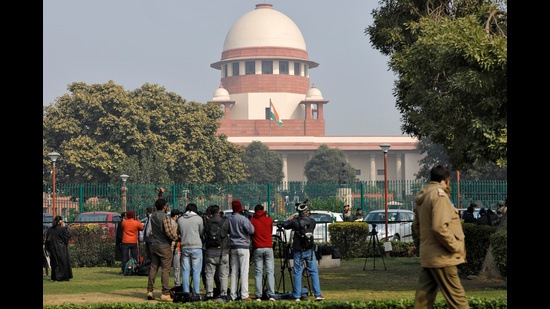
The UP government’s petition in the top court said the high court ruling granting an arrest shield to the accused in this case creates a dangerous precedent for similarly-placed accused. The government argued that the accused was not Covid-19 positive but has been allowed to roam free on mere apprehension of death if he contracts the infection in jail.
Solicitor General Tushar Mehta mentioned the petition before a vacation bench of Justices Vineet Saran and BR Gavai for urgent listing. Mehta raised an apprehension that the order could be used as a precedent for other accused to claim similar relief. The bench agreed to hear the petition next week.
The order under challenge was passed on May 10 on an application moved by Prateek Jain, who is accused of cheating and forgery in a case registered at Sihani Gate police station in Ghaziabad. The accused sought protection from arrest claiming that once he surrendered, his life would be in peril in view of the overcrowding of jails and lack of medical facilities in jail to preserve his life.
The high court granted his request. A single-judge bench of Justice Siddharth said, “extraordinary times require extraordinary remedy and desperate times require remedial remedy.”
The bench observed, “The apprehension of an accused being infected with novel coronavirus before and after his arrest and the possibility of his spreading the same while coming into contact with the police, court and jail personnel or vice-versa can be considered to be a valid ground for grant of anticipatory bail to an accused.” The high court further held that in cases where the charge-sheet has been submitted or warrants issued against an accused, “such an accused is required to be protected till the threat of novel coronavirus to his life is minimized or eradicated and normal functioning of the courts are restored.”
The high court allowed the accused to remain on anticipatory bail till January 3, 2022, considering the news of a possible third wave of infections by September this year.
The UP government’s petition argues this was wrong because it gives a go-by to established parameters for grant of anticipatory bail such as the nature and gravity of accusation, the criminal antecedent of the applicant, the possibility of fleeing from justice and whether the accusation has been made for injuring and humiliating the applicant by getting him arrested. Instead, the UP government said, the high court judge was of the view that “only when the accused would be alive, he would be subjected to the normal procedure of law of arrest, bail and trial.”
The high court, however, set bail conditions that required him not to leave or change his residence till the conclusion of the trial, remain physically present in court on dates fixed for evidence and when the witnesses are present in court, surrender his passport and not hamper the trial or investigation of the case by influencing witnesses or tampering with evidence.


