
 E-Paper



Is J&K on the cusp of economic transformation?
Officials believe that the UT is poised for an unprecedented transformation with huge investment in a range of sectors from health to tourism set to accelerate development after seven decades of neglect

 Prefer HTon Google


Srinagar/Jammu: Despite the surge in terror incidents, a familiar summer-time pattern in Jammu and Kashmir (J&K) since the outbreak of Pakistan-aided insurgency in 1989, an unmistakable air of optimism hangs over the region.
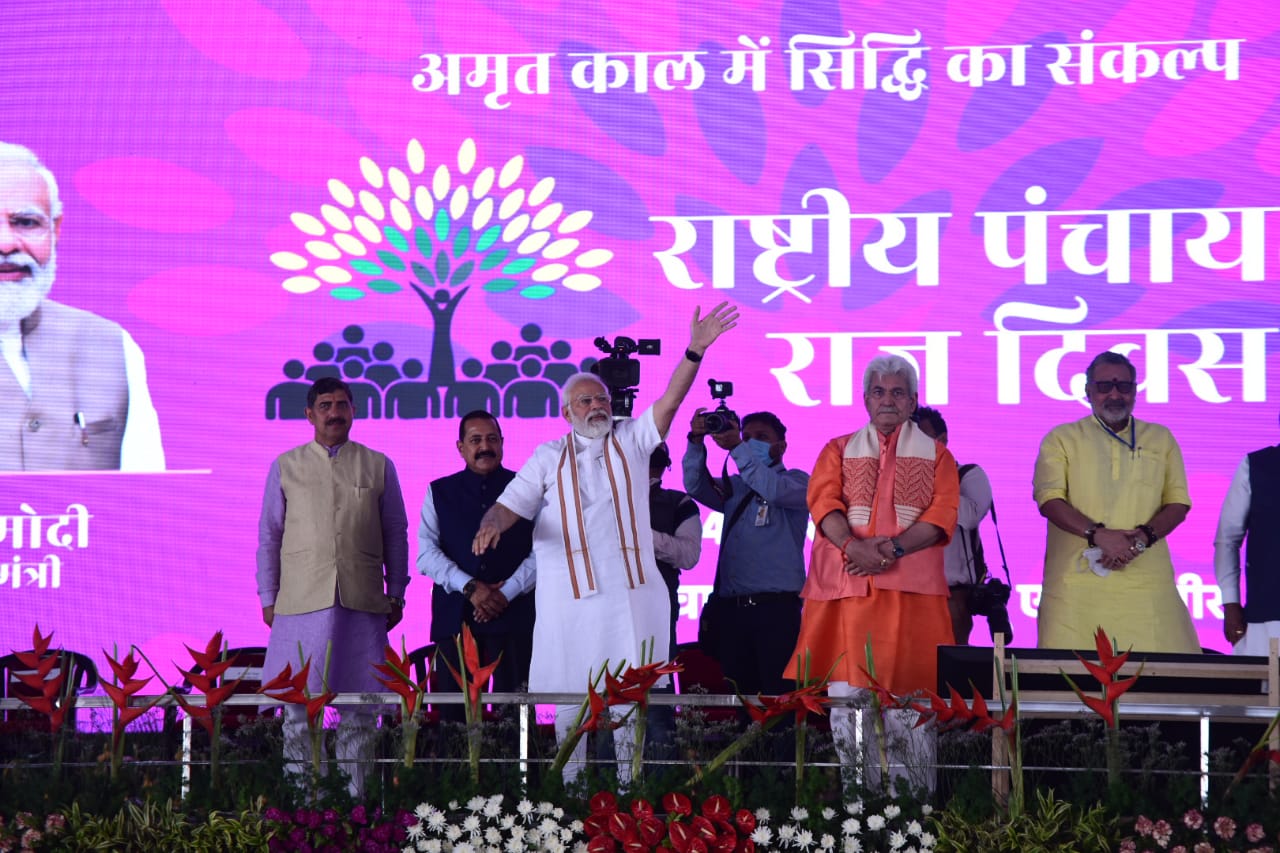
Officials believe that the economy of India’s newest union territory (UT) is poised for an unprecedented transformation over the next year with huge investment, both foreign and local, in a range of sectors from health to tourism set to create jobs and accelerate development after seven decades of neglect, including the last three decades that were lost to militancy and terrorism.
The promise of investments
“In 70 years, J&K didn’t even get an investment of ₹15,000 crore. Now in one year, we have proposals worth ₹53,000 crore. Land has been made available for a ₹38,082-crore investment. We are targeting ₹75,000-crore of private investment by this year-end, which is five times more than what took place in the past 75 years. J&K is poised for a transformational change in one year and this is where it takes off,” says the outgoing principal secretary, industries and commerce, Ranjan Prakash Thakur, who had been assigned the task to bring the sector back on track.
“J&K didn’t have night flights, the runway extension was pending for years, there was a 30% loading penalty and no night parking. Only a push was needed to get things going. Everything is in online mode now for transparency and accountability,” he says.
But given that there is a huge gap often between promises and delivery, what is the actual investment? The principal secretary put the figure at ₹2,000 crore plus, but pointed to the broader context. “We have set up the eco-system. Policies are in place, the next six to eight months are vital. Everything has to be followed up case by case.”
He said 208 services have single-window clearances, and in two months, all 275 services will be available online. “Today, J&K is among the top in ease of doing business. This is a transformation, not a small change for a state that was once run like a riyasat (estate),” he said.
Last week, Prime Minister Narendra Modi, on his first outing to Jammu and Kashmir since the nullification of the erstwhile state’s special status under the Article 370 in August 2019, suggested the UT was at the cusp of an economic transformation not seen by the previous generations of its residents since 1947.
Driving this ground-breaking change is the engine of investments spurred by a new policy framework. Modi, after addressing a public rally at Palli village in the Jammu region’s Samba district close to the India-Pakistan border Jammu region, also met a delegation from the United Arab Emirates keen on investing in various sectors.
Keeping up the momentum, the UT’s administration is holding its second real investment summit in Kashmir in August after the meet in Jammu last October. The government held a global investment summit in Srinagar in March during which proposals of ₹27,000 crore were cleared.
Health, food, and tourism are key areas
J&K industries and commerce director Mahmood Ahmad Shah claims that till last October, the UT had received 2,507 applications for investment in hospitals, medical colleges, food-based industry, controlled atmosphere (CA) stores, manufacturing and agro-based industries. “We finalised a list with October as the cut-off. We have 3,500 applications but can provide land to 1,000-1,200 applicants at present. A land bank is ready and another is being created to meet the demand,” he said.
This transformation, Shah said, was most obvious in the health care, food, manufacturing and agro sectors. “There are 20 proposals for hospitals in the three medi-cities at Bemina, Sempora and Lelhar, taking J&K’s capacity to 6,000 beds and 1,000 medical seats,” Shah adds.
The most visible economic spinner is booming tourism in the Valley. So heavy has been the rush of tourists that this month the Srinagar airport handled a record number of plus 100 domestic flights a day. Tourism deputy director Ahsan Chisti says post-Covid, Kashmir is seeing a “great season”. “The tourist footfall has grown with more than 300,000 people visiting the Tulip Garden this time alone. We have identified new destinations, too,” he added.
Kashmir Chamber of Industries and Commerce (KCCI) president Sheikh Ashiq agrees that the overall investment is a positive step for J&K’s development. “It’s not only companies from outside that are investing but also local businessmen who have submitted proposals and got clearance,” he says.
Echoing this sense of optimism, Baldev Singh, the president of the J&K chapter of the PHD Chamber of Commerce, says that J&K has potential for investment in health, education, tourism and horticulture. He has also submitted a proposal for a 1,000-bed hospital at Sempora on Srinagar’s outskirts that has been approved.
The Opposition’s critique
But Kashmir’s mainstream political parties remain sceptical of the government’s claims and voice their concern over three issues – the influx of outsiders, the transfer of properties of locals, and a worrying law and order dynamic.
National Conference chief spokesman Tanvir Sadiq said that his party welcomes investment in Kashmir but has concerns. “One, will the property be transferred for land use or will it be given on lease? Two, the jobs should be only for locals, and the investment should not sideline local businesses.”
People’s Democratic Party (PDP) chief spokesman Suhail Bukhari said he was not convinced by the government’s claims. “After the revocation of the special status, the Centre had promised 50,000 jobs for locals but that didn’t happen. They are unable to provide electricity to people what to speak of industrial unit holders.”
J&K Congress president Ghulam Ahmad Mir claimed the exercise of attracting investment was a case of building castles in the air. “In the annual budget allocation of 2021-22 for creating jobs in the rural areas, 50% of funds remained unspent, while 60% remained unspent in urban local bodies’ budget. A division of the roads and buildings department was allocated ₹35 crore in 2021-22 of which ₹5 crore was spent and rest of the amount lapsed,” says Mir.
He expressed disappointment that the PM did not touch on issues of the return to statehood and assembly elections. “We will wait and watch. Peace is the first and foremost for economic transformation. Holding photo ops in Dubai is easy but they don’t bring investment in a sensitive region. I was tourism minister twice and had bigger photo ops with business tycoons. They (investors) take 10 steps forward and go back 20 steps due to the disturbance in J&K,” he adds.
The mood in industry
Industry leaders, however, sound more optimistic. Jammu Chamber of Commerce and Industry president Arun Gupta claimed change was in the air. “J&K has relied on central aid. The administration is now attracting investment. Earlier, investors were reluctant, which is not the case today. A viable atmosphere is needed. There is a need to change land laws. Even today, the dry wet land issue (gair mumkin khad) has not been resolved. The government doesn’t have much land and if it resolves the issue, it will be easier for investors to buy land.”
Gupta also said that the new industrial package should not be confined to new investors but should be extended to old units, too.
Putting the debate in perspective, Deepankar Sengupta, a former head of the economics department at Jammu University and director of the Poonch campus, said that though J&K’s economy was heavily dependent on central aid, ever since New Delhi took over the governance of J&K, the expenditure and investment on road and hydel infrastructure has been seen on the ground. “We were issuing incentives to industries in the past but now there is a change because we are now linking subsidies with employment generation,” said Sengupta.
“Our state expenditure is still higher than the gross domestic product. It will start improving once the private sector starts expanding on the lines of Himachal Pradesh. Only next year will we be able to see the impact on the ground,” he added.


