
Sign in

Is Mission Sudarshan Chakra India's ballistic missile defence?

Top national security planners believe that PM has hinted towards expansion of DRDO’s Project Kusha or Extended Range Air Defence System.

Updated on: Aug 15, 2025, 16:35:14 IST
Share
Share via
  • facebook
  • twitter
  • linkedin
  • whatsapp
Copy link
  • copy link

Although Prime Minister Narendra Modi did not spell out ‘Mission Sudarshan Chakra 2035’ in details, the indications, after Pakistan unsuccessfully fired over 1000 missiles at India during Op Sindoor, are that he has announced the building of anti-ballistic missile defence and long range conventional ballistic missiles to tackle stand-off weapons of the regional and global adversaries.
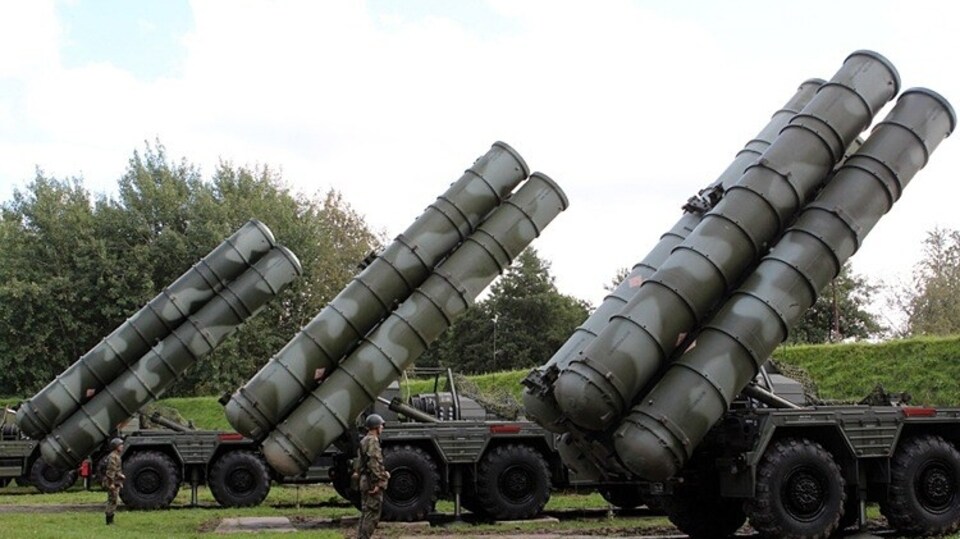
As of now, the DRDO is developing 500 km range Pralay surface to surface tactical ballistic missile with a 500-1000 kilogram warhead.

PM Modi in his speech said: “India is launching Mission Sudarshan Chakra to create a powerful weapon system to thwart and attempt by enemies to attack us…..all public places will be covered by an expanded nationwide security shield by 2035.”

While work on anti-ballistic missile defence is on in the DRDO, India needs to build conventional ballistic missiles to tackle regional and global threats using land, sea and aerial platforms. As of now, the DRDO is developing 500 km range Pralay surface to surface tactical ballistic missile with a 500-1000 kilogram warhead to launch an attack both on land or sea based targets.

Top national security planners believe that PM has hinted towards expansion of DRDO’s Project Kusha or Extended Range Air Defence System, which includes development of long range surface to air missile systems with three variants of interceptors between 2028 and 2030. The Kusha Project was cleared by the CCS for development in May 2022 with missile testing to begin later this year.
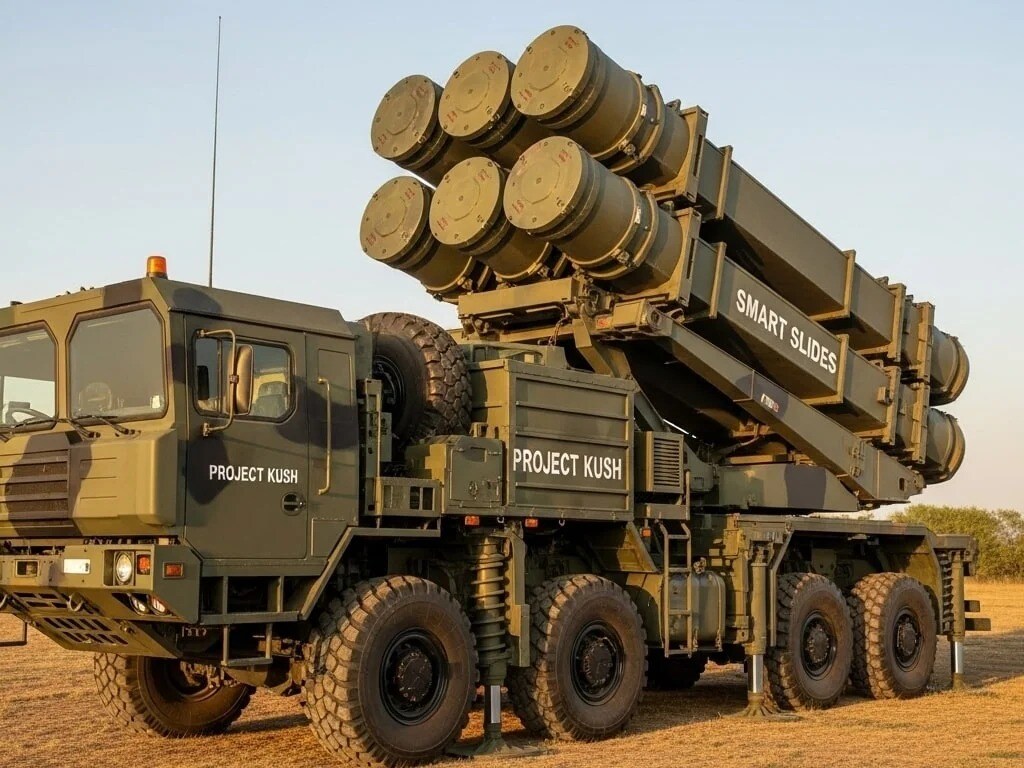
Missile testing for the Kusha Project will begin later this year.

The need for India to develop indigenous anti-ballistic missile defence becomes evident after Pakistan fired short-range Fatah I and Fatah II missiles towards hinterland India during Operation Sindoor. Further, Israel was only saved by its anti-missile defence after Iran launched hundreds of ballistic missiles and armed drones towards the only Jewish nation twice in as many years.

After India wiped out nine terrorist camps in Pakistan on May 7, Pakistan launched Turkish armed drones towards India as well as Chinese ballistic missiles till no fire pact was declared on May 10 at 5.30 pm. Fact is that Pakistan also violated the no fire pact by continuing to launch armed drones and long range artillery shelling on May 10 night.

Given that new age war relies on long range stand-off weapons and ballistic missile defence, PM Modi has taken a huge but necessary step towards Mission Sudarshan Chakra.

While Pakistan has small conventional missile arsenal, India’s other adversaries have a plethora of conventional ballistic missiles and rockets that can cause havoc in Indian hinterland in case of hostilities.

  • Shishir Gupta
    ABOUT THE AUTHOR
    Shishir Gupta

    Shishir Gupta is Executive Editor at Hindustan Times and one of India's top journalists covering national security, strategic affairs, foreign policy and geopolitics. Over the past three decades, he has extensively reported on India's military, diplomatic and security landscape, covering every major conflict and national security challenge, from the 1999 Kargil War and the 2020 East Ladakh standoff to Operation Sindoor in 2025. He has also covered major terror attacks, including the IC-814 hijacking, the 26/11 Mumbai attacks and the 2025 Pahalgam terror strike, along with numerous Pakistan-backed terrorist incidents in the Kashmir Valley and across India. He has reported on national and state elections for more than three decades. A recognised authority on strategic affairs, Gupta has covered India's nuclear programme since the Pokhran-II (Shakti series) tests in May 1998 and has written extensively on global nuclear issues, Indian diplomacy and the country's expanding global outreach. He has also reported widely on international conflicts and terrorism, with a special focus on the Indian subcontinent. Gupta has interviewed Prime Minister Narendra Modi more than four times, including Modi's first interview with the print media after becoming Prime Minister in May 2014. His other interviews include three with the Dalai Lama, as well as conversations with Benjamin Netanyahu, Amit Shah, Yogi Adityanath, S. Jaishankar, Nirmala Sitharaman and Piyush Goyal. He is the author of Indian Mujahideen: The Enemy Within (Hachette, 2011) and Himalayan Face-off: Chinese Assertion and Indian Riposte (Hachette, 2014). He was awarded the Chevening-Wolfson Joint Scholarship at Wolfson College, University of Cambridge, UK, in 1998 and participated in the International Visitor Leadership Program (IVLP) of the US State Department in 2006. He received the Ben Gurion Prize from Israel in 2011 and the K. Subrahmanyam Prize for Strategic Studies in 2015 from the Manohar Parrikar Institute for Defence Studies and Analyses (MP-IDSA). Since 2024, he has hosted Point Blank, Hindustan Times' weekly YouTube show on global geopolitics.Read More

Get the latest India News, breaking headlines and real-time updates from across the country. Stay informed about politics, government policies, crime, weather and major national developments.