
 E-Paper



Isolated populations of India are at higher risk of Covid-19, study finds
A total of 227 such groups were covered under this study, which was co-led by researchers at Hyderabad-based CSIR-CCMB and Varanasi's BHU.


A study led by experts at the Council of Scientific and Industrial Research-Centre for Cellular and Molecular Biology (CSIR-CCMB), Hyderabad, and the Varanasi-based Banaras Hindu University (BHU), has concluded that some isolated populations in the country have a higher genetic risk for the coronavirus disease (Covid-19). These include, for example, tribes such as Onge and Jarawa, researchers said.
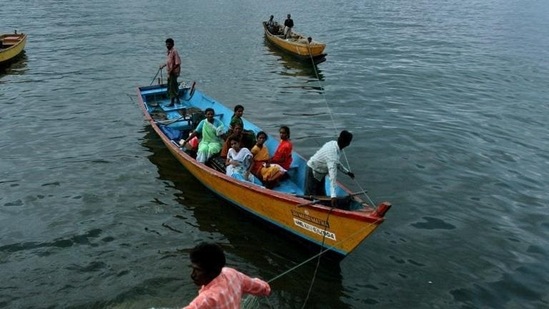
Both the tribes are isolated from the population on mainland India, as these are found on the Andaman and Nicobar Islands.
Speaking about the research, Professor Gyaneshwer Chaubey of the BHU, who co-led the exercise with CSIR’s Kumarasamy Thangaraj, said, “There might be some speculations on the effects on Covid-19 among isolated populations. However, for the first time, we used genomic data to study the risk of the infection on 227 isolated Indian populations. It was found that the ones which carry long homozygous segments in their genome are highly susceptible to Covid-19.”
The team investigated the high-density genomic data of more than 1600 people across these 227 groups. Among these, high frequency for Covid-19 risk alleles (gene) was found among the Onge and Jarawa tribes.
Besides these, the other groups found on here are the Great Andamanese and Sentinels.
“The study noted that these inhabitants live in protected areas and the general public is not allowed to interact with them. However, after seeing the number of cases among the islanders, it can be said that they are at greater risk mainly from illegal intruders and health workers. The total census of this population is less than 1000 in number,” Chaubey, who teaches molecular anthropology at BHU, further said.
On Thursday, two more people tested positive for coronavirus in the Union territory of Andaman and Nicobar, pushing the cumulative tally to 7637, according to a health department bulletin. This includes 7499 recoveries and nine active cases, while the toll remained unchanged at 129.
(With PTI inputs)


