
 E-Paper



‘It was Indian military action’: What Jaishankar said on US role in India-Pakistan ceasefire
S Jaishankar said India has learned to navigate tough situations by always prioritising national interest and making decisions to safeguard its security.

 Prefer HTon Google


External Affairs Minister S Jaishankar credited India’s military action for compelling Pakistan to reach out and agree to the ceasefire after the recent conflict.
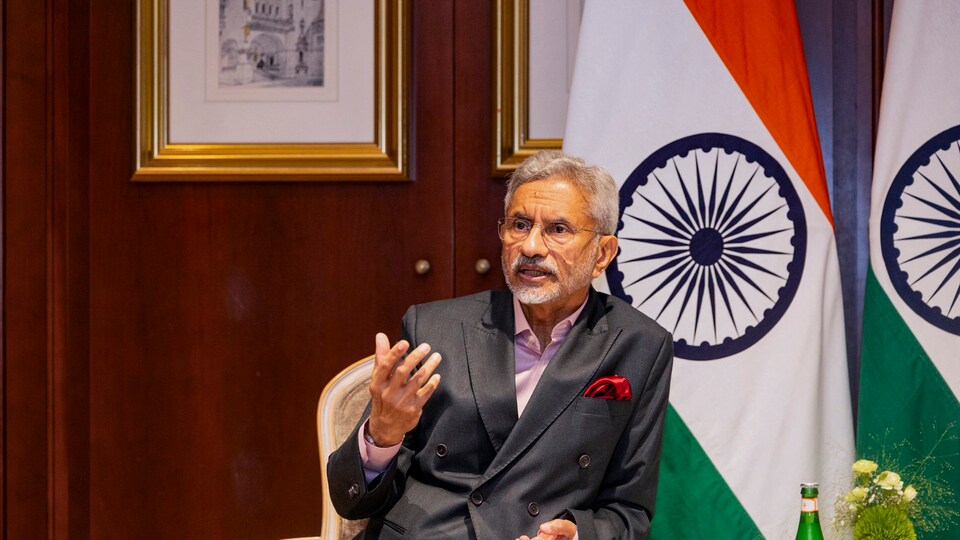
In an interview with the German newspaper Frankfurter Allgemeine Zeitung, Jaishankar was asked if the world should thank the US for the ceasefire between India and Pakistan.
He replied, “The cessation of firing was agreed between the military commanders of both sides through direct contact. The morning before, we effectively hit and incapacitated Pakistan's main airbases and air defence system. So, who should I thank for the cessation of hostilities? I thank the Indian military because it was the Indian military action that made Pakistan say: We are ready to stop.”
Asked how he views America’s role in global affairs, S Jaishankar acknowledged the US’s influence but underlined India’s independent approach to strategic decisions.
“America is still the most powerful country in the world. Therefore, every other country must constantly observe how the Americans approach the world and world affairs,” he said, before adding that shifts in American policy were not surprising for India.
“But it's not a new situation for us. We have never had the comfort and continuity that was enjoyed in Europe. Europe had long decades of growth, progress and stability after 1945, even during the Cold War. Only now is that changing. Things were different for us,” said Jaishankar.
‘We act in national interest,’ says Jaishankar
He stressed that India has learned to navigate complex situations by always prioritising its own interests. “We had to operate in a difficult environment and had to struggle with it. We have done well and have learned to always make decisions in the interests of our national interests and security. We do everything necessary to achieve this,” he said.
After three days of intense conflict, India and Pakistan agreed to a ceasefire on May 10. The hostilities began when India launched airstrikes on May 7 against terror infrastructure in Pakistan and Pakistan-Occupied Kashmir, in retaliation for the Pahalgam terror attack that claimed 26 civilian lives.
India emphasised that Operation Sindoor was focused on destroying terror bases, but Pakistan responded by firing hundreds of drones at Indian military and civilian targets.
In turn, India targeted Pakistan’s military installations, inflicting significant damage. Shortly afterwards, Pakistani military officials reached out to their Indian counterparts, resulting in the ceasefire agreement.
Though the Trump administration has claimed credit for the ceasefire and Islamabad has expressed thanks to Washington, New Delhi maintained that the US role was limited to expressing concern.


