E-Paper



Jaishankar flags trade, Russian oil, mediation claims as key issues in India-US ties
While acknowledging differences with the US, Jaishankar said other parts of the bilateral relationship with strong convergences were moving forward

 Prefer HTon Google


New Delhi: The three issues affecting India-US ties are trade negotiations, energy purchases from Russia, and US assertions of mediation between India and Pakistan, and New Delhi has set the protection of farmers and small producers as “red lines” in the trade talks that are continuing, external affairs minister S. Jaishankar said on Saturday.
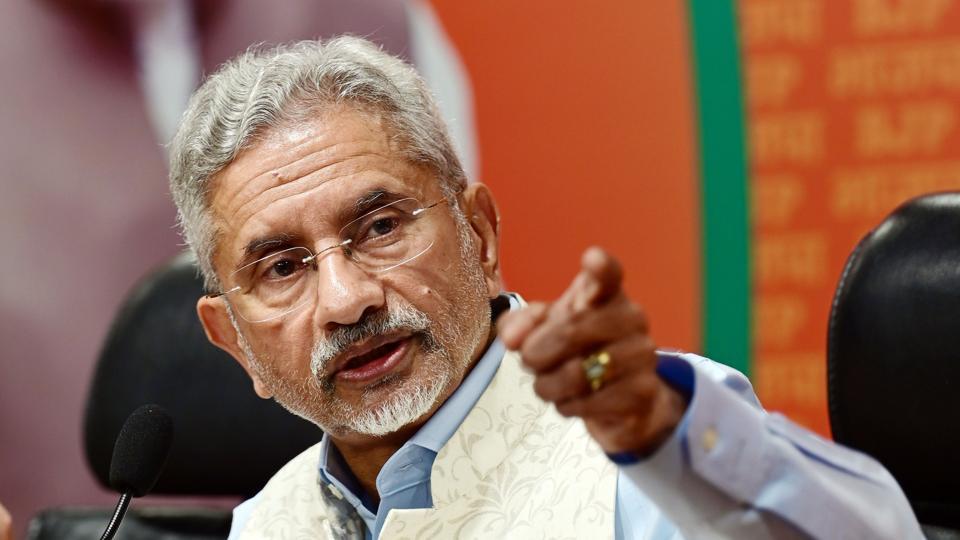
While acknowledging differences with the US, Jaishankar said other parts of the bilateral relationship with strong convergences were moving forward. In the face of reports that the Trump administration has paused talks on a bilateral trade deal, he said the discussions are still ongoing since “nobody said the negotiations are off.”
“Right now, I think there are issues. It’s pretty open,” Jaishankar said about the India-US relationship while speaking at a media conclave. “We’ve not had a US president who’s conducted foreign policy as publicly as the current one. That itself is a departure [but] that’s not limited to India.”
US President Donald Trump’s way of dealing with the world is a “very major departure from the traditional orthodox manner”, and his application of tariffs, including for non-trade issues, is novel, he said. Jaishankar listed trade negotiations as the most important of the three issues affecting ties with the US and said the Indian side won’t compromise on its “red lines”.
“Negotiations are still going on in the sense that nobody said the negotiations are off, and people do talk to each other,” he said. “Where we are concerned, the red lines are primarily the interests of our farmers and… of our small producers.”
The second issue is India’s purchases of Russian energy, but Jaishankar pointed out that the US has not targeted China, the largest importer of Russian oil, or the European Union (EU), the largest importer of Russian LNG. “When people say we are funding the war or putting money in the coffers of [Russian President Vladimir] Putin, Russia-EU trade is bigger than India-Russia trade. So is Europe not putting money into Putin’s coffers?” he said.
“My point is there is a certain inconsistency here. If you look even at exports, India’s exports to Russia have grown, but not that much. I can think of some other countries whose exports have grown dramatically after 2022,” he said, adding that strategic autonomy is about making decisions based on national interests.
The Trump administration is set to impose a 25% punitive tariff on Indian exports from August 28 over Russian oil purchases, and this is on top of a 25% reciprocal tariff already in place. Trump and members of his inner circle, such as White House trade adviser Peter Navarro, have criticised India’s energy trade with Russia and accused India of profiteering by selling refined products made from Russian oil on the open market.
Jaishankar responded to these accusations by saying: “It’s funny to have people who work for a pro-business American administration accusing other people of doing business… If you have a problem buying oil or refined products from India, don’t buy it. Nobody forced you to buy it. But Europe buys, America buys.”
There were conversations between the Indian and US governments in 2022 on New Delhi buying Russian energy to stabilise global oil prices, and the Trump administration, after assuming office in January, did not say that India should stop buying Russian oil, he said.
The third issue cited by Jaishankar was Trump’s assertions about mediating between India and Pakistan during the hostilities in May. “For more than 50 years now, there is a national consensus in this country that we do not accept mediation in our relations with Pakistan,” he said.
While acknowledging that US leaders were in contact with India after it launched Operation Sindoor to target terrorist infrastructure in Pakistan in retaliation for the Pahalgam terror attack, Jaishankar said, “But that is one thing. It is something quite different to assert mediation, or to assert that an outcome which was negotiated between India and Pakistan was not negotiated between India and Pakistan.”
Trump, who was the first to announce the cessation of hostilities on social media, has contended on almost three dozen occasions that he brokered a ceasefire between India and Pakistan. Jaishankar, however, said the Pakistan side sought an end to the hostilities after India’s military inflicted severe damage on Pakistani airbases on May 10.
“When it comes to trade, the interests of farmers, when it comes to our strategic autonomy, when it comes to opposition to mediation, this government is very clear,” he said. “Please tell the people of India you don’t value strategic autonomy. We do. We will do whatever we have to do to maintain it.”
Jaishankar also sought to dispel the impression that a recent thaw in relations with China had been spurred by the downturn in India-US ties, and said relations between New Delhi and Beijing were affected by both historical issues such as the boundary dispute and more recent problems such as a growing trade deficit and the military standoff on the Line of Actual Control (LAC) that began in 2020.
He contended that a slew of initiatives announced during Chinese foreign minister Wang Yi’s visit this week that are aimed at normalising relations were worked out in meetings held since last October, when the two sides agreed to end the LAC face-off.
“We have always maintained that if the border is stable, predictable, free of incidents, then there is a natural improvement in the rest of the relationship. The border has been stable for some time now and as the disengagement was completed, naturally it was logical there would be an improvement in other areas,” he said.