E-Paper



JEE (Advanced) 2026: 56,880 candidates qualify, Shubham Kumar tops CRL
With the 23 IITs offering 18,951 BTech seats, only about one in three qualified candidates will secure admission through the JoSAA counselling process

 Prefer HTon Google


As many as 56,880 candidates, including 10,107 women, have cleared the Joint Entrance Examination (Advanced) or JEE (Advanced) 2026, as the Indian Institute of Technology (IIT) Roorkee announced the results on Monday. The number of women qualifiers is the highest-ever in JEE (Advanced), up from 9,404 last year. The qualification rate was 24.92% among the 40,562 women candidates who appeared for the test.
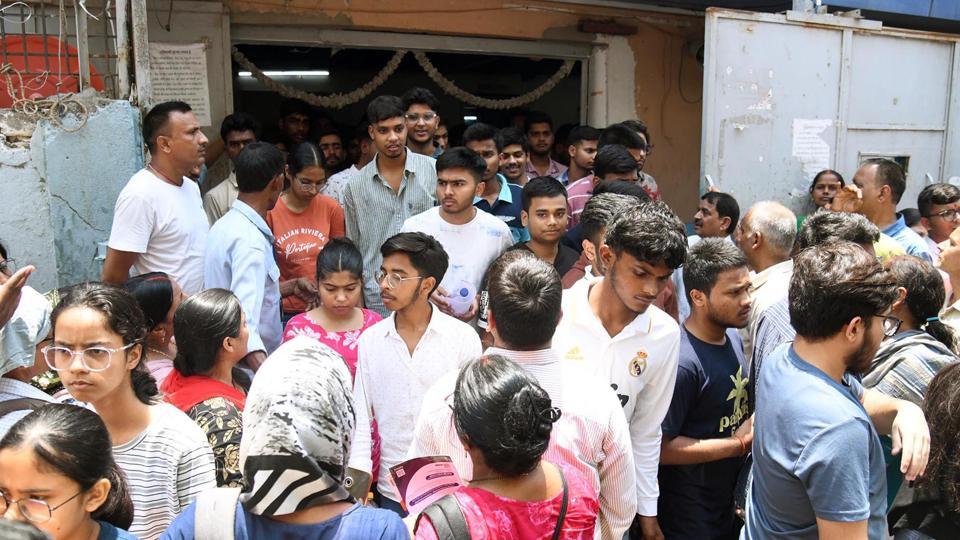
With the 23 IITs offering 18,951 BTech seats, only about one in three qualified candidates will eventually secure admission through the Joint Seat Allocation Authority (JoSAA) counselling process.
The number of successful candidates rose 4.6% from 54,378 in 2025 to 56,880 this year, even as that of aspirants appearing for the exam increased with a rise in the minimum qualifying marks across all categories. As many as 179,694 candidates appeared in 2026 compared to 180,422 in 2025.
This year, 92 was the minimum aggregate marks required to qualify for the general category, 82 for Other Backward Classes (non-creamy layer) and Economically Weaker Section, and 46 for Scheduled Caste (SC) and Scheduled Tribe (ST) candidates. In 2025, the corresponding cut-offs were 76, 66, and 37.
Shubham Kumar (IIT Delhi zone) emerged as the top-ranked candidate in the Common Rank List (CRL), securing 330 out of 360 marks. The CRL is the overall merit list prepared based on total marks, irrespective of category.
Arohi Deshpande (IIT Delhi zone) was the highest-ranked woman candidate with an All India Rank of 16, scoring 280 marks.
IIT Roorkee director and Joint Admission Board chairman Kamal Kishore Pant said all qualified candidates are encouraged to participate in the JoSAA 2026 counselling and seat-allocation process, irrespective of their class 12 (or equivalent) marks. “...However, the final admission shall remain subject to the fulfilment of the percentage-related eligibility requirements and other applicable conditions prescribed in the JEE (Advanced) 2026 information brochure,” Pant said in a statement.
Under the eligibility rules for JoSAA counselling, candidates seeking admission to IITs must either have secured at least 75% aggregate marks in class 12 (65% for SC, ST, and persons with disabilities candidates) or be among the top 20th percentile successful candidates in their respective school boards.
According to IIT Roorkee, 179,694 of the 187,389 registered candidates appeared for JEE (Advanced) 2026 on May 17 across about 221 cities in India. Among the seven IIT zones, the IIT Madras zone has the highest number of qualified candidates (14,294) and the IIT Guwahati zone has the lowest (2,883). Of the top 10 candidates in the CRL, five belong to the IIT Delhi, three to the IIT Madras, and two to the IIT Bombay zones.
The 23 IITs are administratively grouped into seven zones, each coordinated by a designated IIT, to conduct JEE (Advanced) and manage related admission processes across the country.