
 E-Paper



JNU row: What is the outrage all about
The boycott is a part of an ongoing strike against an increased hostel fee. While the students are confident of a mass boycott, the administration has conveyed to the students that police forces could be sought to conduct the examination, if needed.


Jawaharlal Nehru University (JNU) is all set to witness another showdown between the students and the administration. The agitating students have given the call to boycott the end-semester examinations which are scheduled to begin on December 12.
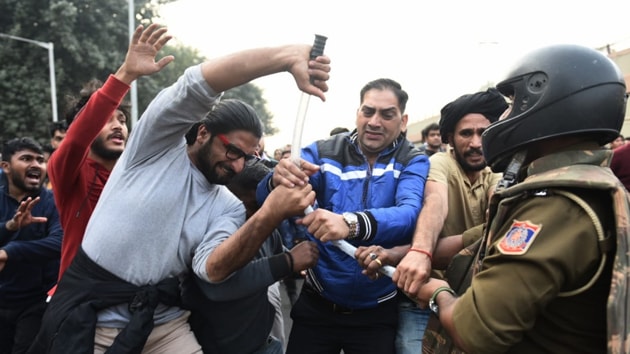
The boycott is a part of an ongoing strike against an increased hostel fee. While the students are confident of a mass boycott, the administration has conveyed to the students that police forces could be sought to conduct the examination, if needed.
Prolonged protests
For 44 days, students have been protesting against a steep increase in the hostel fee and demanding a complete rollback of the new hostel manual. Another major grouse has been the non-engagement of the JNU students’ union in the making of the draft hostel manual.
As per the proposed hostel manual, students would have had to pay a service charge of ₹1,700 per month approximately. This charge did not exist earlier. The rent for a single-seater room has been increased from ₹20 per month to ₹600 per month, and for a double-sharing room from ₹10 per month to ₹300 per month. The mess security fee, which is refundable, was revised from ₹5,500 to ₹12,000. Water and electricity were also made chargeable on a pay-per-consumption basis.
Students claim that along with additional mess charges of around ₹2,500 per month, they would have to pay around ₹6,000-7,000 monthly which would push many students out of the university. Under the existing fee structure, they pay around ₹3,000 per month.
As per the university’s annual report, of the 1,556 candidates admitted in the 2017-2018 academic session, around 40% of the students came from households where the parental income was less than ₹12,000 per month. Thus, the union argues that if a family earns around ₹15,000, it is not feasible for them to spend ₹6,000 as hostel fee in educating a child.
The fee hike crisis received national spotlight after hundreds of students protested outside the university’s third convocation on November 11 effectively confining vice chancellor M Jagadesh Kumar and Union human resource development minister Ramesh Pokhriyal at the spot for over six hours. A week later, on November 18, thousands of students spilled over to Delhi’s roads where, despite Delhi Police’s denial, they were charged with batons.
The university announced the first of two concessions in between these two incidents on November 15, effectively proposing a dual fee structure after the university’s 283rd Executive Council (EC) passed the revised manual.
Students belonging to the below poverty line (BPL) category, and not availing JRF/SRF/ or equivalent scholarships (which are above ₹25,000 per month), would be eligible for a 50% concession in all slabs. The one-time mess security deposit was also rolled back from proposed ₹12,000 to existing ₹5,500. Clauses citing curfew timing of 11.30pm and ‘appropriate’ dress code were also removed.
The second concession announced on November 25 gave a 50% concession in utility and service charges for all students and 75% reduction for those belonging to the BPL category. The utility and service charge slab was only introduced in the present manual and comes to around ₹2,000 per month, including electricity and water charges.
The students’ union rejected both the cutbacks calling it a gimmick and said two fee structures in a university would further stigmatise the marginalised. Their stir for a complete rollback continued with marches and demonstrations in different parts of the capital.
What next
Since protesting students have laid siege to the administrative block and classes have been suspended for over a month, the academic processes in the university have been severely affected. While students and teachers have lent support to the fee hike movement, students are also worried about missing out on studies and lecturers with renowned professors who may retire soon. Several foreign students are worried about the visa issue they may face if the semester were to be extended.
As students refuse to back down, the administration has been consistently stating that those not fulfilling their academic requirements through submissions and examinations will be expelled from the institute.
While examinations have been suspended in the university before due to the closure via sine die in 1983, this is a first where students would be boycotting the examination, former JNUSU members said.
The arguments
JNU administration has been justifying the hike and service charges citing a fund crunch. In a fact-sheet issued last month, Satish Chandra Garkoti, Rector II, revealed that the varsity has a deficit of more than ₹45 crore and it is largely because of huge electricity and water charges and the salary of contractual staff which is no longer paid by UGC. The university said that the “shortfalls in the non-salary expenditures should be met by using the internal receipts generated by the university” as per UGC instructions.
Interestingly, the second concession announced by the varsity came a day before the three-member MHRD-appointed committee was to submit its report on the matter after consultation with students, administration, and teachers.
While MHRD is tight-lipped about the report, officials have revealed that it has recommended the release of funds by UGC and a consultation process with all stakeholders before making further decisions. Officials in the HRD ministry are currently brainstorming to end the stalemate and the matter is being discussed with UGC as well.


