
 E-Paper



‘Judges be vigilant’: Kapil Sibal sounds alarm on bills to replace criminal laws
Former law minister Kapil Sibal has called on the government to withdraw three bills that aim to replace colonial-era IPC, CrPC and Indian Evidence Act.

 Prefer HTon Google


Former law minister and senior advocate Kapil Sibal on Sunday called on the government to take back the three bills that seek to replace the colonial-era Indian Penal Code, Code of Criminal Procedure, and Indian Evidence Act. Sibal alleged that the proposed law allows the use of “draconian police powers for political ends”.
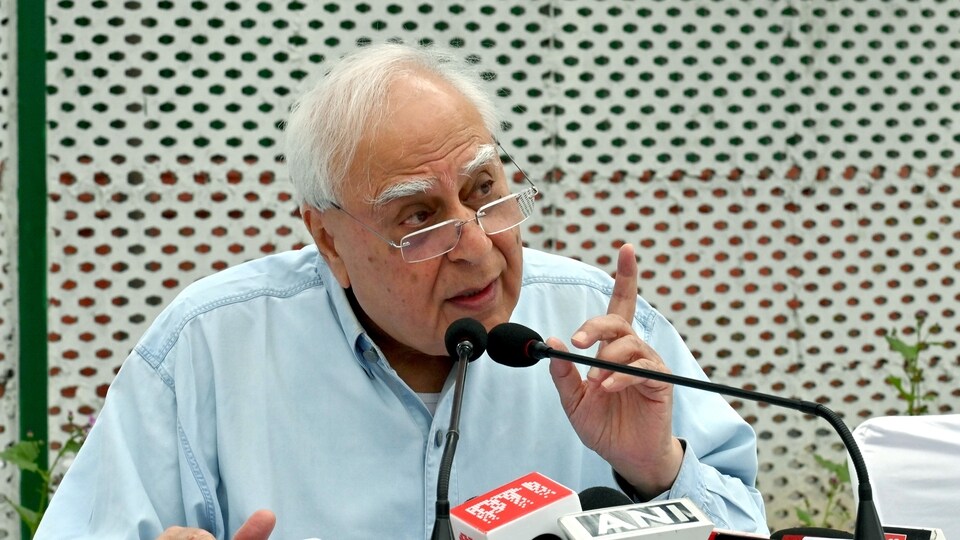
"They (NDA government) talk about ending colonial-era laws, but their thinking is that they want to bring dictatorship in the country through laws. They want to make such laws under which action can be taken against Supreme Court and high court judges, magistrates, public servants, CAG (Comptroller and Auditor General), and other government officials," Sibal said at a press conference in New Delhi.
"I want to request judges to be vigilant. If such laws are passed then the future of the country would be imperiled," he claimed.
Union home minister Amit Shah tabled Bharatiya Nyaya Sanhita (BNS) Bill, Bharatiya Nagarik Suraksha Sanhita (BNSS) Bill, and Bharatiya Sakshya (BS) Bill in Lok Sabha on Friday, the last day of Monsoon session of the Parliament. Shah said the bills will be sent to a parliamentary panel for scrutiny.
Referring to the BNS Bill, Sibal said it is "dangerous" and if passed then only the government's writ will run on all institutions.
"I request you (government) to take back these (bills). We will tour the country and tell the people what kind of democracy you want – one that throttles the people through laws and gags them," he alleged.
The act of sedition continues to be a crime under the proposed law, albeit under a different name, with the punishment for it actually being increased. HT analysis of the BNS bill suggests that the offence of sedition has been retained under the proposed law with a new nomenclature and a more expansive definition of what will constitute “acts endangering sovereignty, unity and integrity of India”, even as it removes the words “disaffection towards the Government established by law in India” from the old Section 124A of IPC.
Sibal also alleged that the bill is "completely contrary to the independence of the judiciary".
"This is completely unconstitutional, it strikes at the root of the independence of the judiciary. Their thinking is clear that they don't want democracy in this country," he said.


