
 E-Paper



‘Judges must avoid social media use, refrain from opinion on rulings’: Supreme Court
The bench comprising made the observations while hearing a case concerning the termination of two female judicial officers by the Madhya Pradesh High Court.


The Supreme Court on Thursday observed that judges should avoid using social media or expressing opinions on judgments, saying that the judicial profession demands a hermit-like lifestyle and tireless dedication.
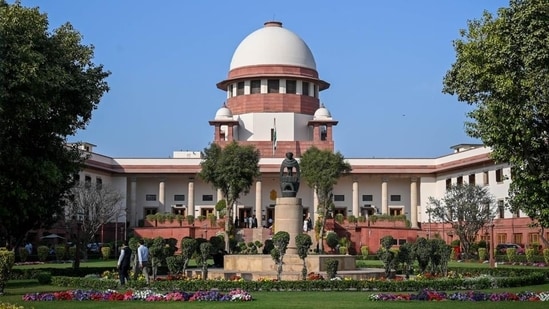
News agency PTI reported that a bench comprising Justices BV Nagarathna and N Kotiswar Singh made these observations while hearing a case concerning the termination of two female judicial officers by the Madhya Pradesh High Court.
The bench said that the judiciary is not a platform for flamboyance, noting, “Judicial officers should not go to Facebook. They should not comment on judgments because tomorrow, if the judgment is cited, the judge has already expressed one way or the other.”
The court further said, “It is an open platform. You have to live like a hermit and work like a horse. Judicial officers must make significant sacrifices and should entirely avoid Facebook.”
Senior advocate R Basant, representing one of the dismissed judges, concurred with the court's sentiments, agreeing that no judicial officer or judge should use Facebook for matters related to their work.
The remarks were prompted after amicus curiae, senior advocate Gaurav Agarwal, informed the bench about complaints against one of the dismissed judges, including a Facebook post she had made.
When were the woman judicial officers terminated?
The Supreme Court criticised the Madhya Pradesh High Court for dismissing a woman judge based on performance, without considering her health issues, including a miscarriage, saying, “Wish men have menstruation.” The court addressed this issue while examining the termination of six female civil judges by the Madhya Pradesh government over alleged unsatisfactory performance.
On November 11, 2023, the top court took suo motu cognizance of the case. Subsequently, the MP High Court revisited its earlier decision on August 1, reinstating four judges—Jyoti Varkade, Sonakshi Joshi, Priya Sharma, and Rachna Atulkar Joshi—under specific conditions, but excluded Aditi Kumar Sharma and Sarita Chaudhary.
The dismissed judges had joined the Madhya Pradesh judicial service in 2018 and 2017, respectively. According to the MP High Court’s report, Sharma’s performance ratings had dropped from "very good" and "good" in 2019-20 to "average" and "poor" in later years. She reportedly had about 1,500 pending cases in 2022, with a disposal rate below 200 cases. Sharma, however, informed the court about her 2021 miscarriage and her brother’s cancer diagnosis, which impacted her performance.
The Supreme Court noted that the judges’ performance could not be quantitatively assessed due to the COVID-19 pandemic. Despite this, their termination orders were issued in June 2023 by the state law department after the administrative committee and full court found their probationary performance unsatisfactory.
One of the terminated judges, through her advocate Charu Mathur, filed an impleadment plea, arguing that her dismissal violated fundamental rights under Articles 14 and 21 of the Constitution. She contended that her unblemished four-year service record and lack of adverse remarks were ignored, and the dismissal was carried out without following due process.
The plea said that excluding maternity and child care leave from the performance evaluation was unjust. It asserted, “Maternity and child care leave is a fundamental right of a woman and the infant. Evaluating performance during this period is grossly violative of fundamental rights.”
The judge also highlighted that this approach undermined her right to equality and personal liberty.


