
 E-Paper



Just Like That: Ancient monuments at risk amid neglect, encroachment, ASI strains
Have we guarded India’s ancient monuments well? How effectively does Archaeological Survey of India (ASI), custodian of our national monuments, steward them?

 Prefer HTon Google


Many years ago, I wrote The Havelis of Old Delhi to document what remained of these iconic structures. The book documented a sad chronicle: neglect, colonial amnesia, and administrative indifference had nearly erased this architectural heritage. Over time, I have watched as even the remnants I chronicled are rapidly vanishing—or have disappeared entirely—with only a few notable and commendable exceptions.
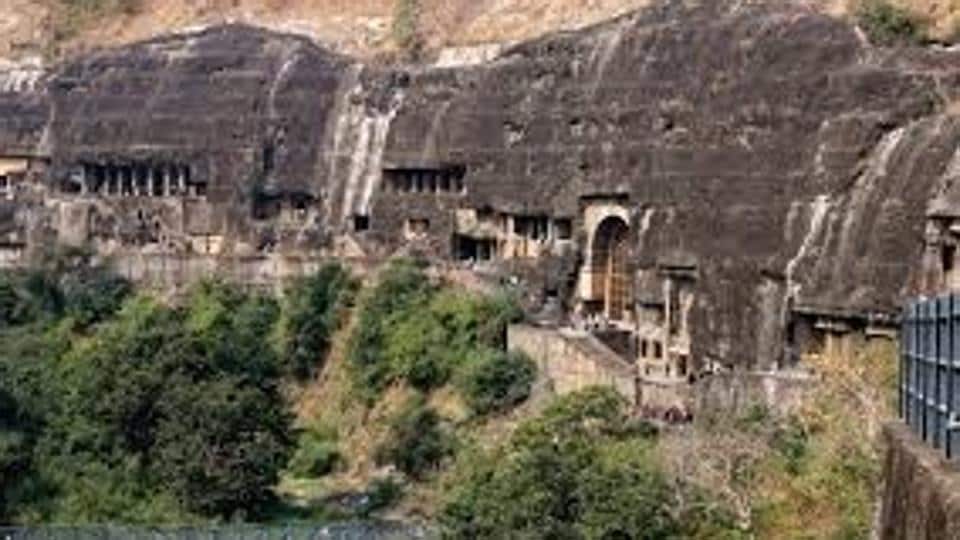
In the vast tapestry of India’s cultural memory, its ancient monuments stand as silent sentinels—architectural witnesses to millennia of faith, power, artistry, local craftsmanship, and time. From the caves of Ajanta and Ellora to the fort ramparts of Mandu, from megalithic burial chambers to Mughal tombs, and from magnificent temples to remarkable baolis, the country’s built heritage forms a majestic palimpsest—one that must be read, preserved, and honoured. Yet, as we peer into this inheritance, a disquieting question arises: how well have we guarded these treasures? And how effectively does the Archaeological Survey of India (ASI), the custodian of our national monuments, steward them?
India’s architectural legacy is nothing short of extraordinary. According to the ASI, some 3,679 monuments and archaeological sites have been declared of national importance under the Ancient Monuments and Archaeological Sites and Remains (AMASR) Act, 1958.
On paper, the ASI’s mandate is formidable: “protection and maintenance of 3,679 centrally protected monuments/sites,” carried out through its 37 Circle offices and a Mini Circle. The ASI’s conservation programme is renewed annually—designed to identify monuments needing “special structural repair” (over 800 monuments are routinely assessed).
Yet, how far is this mandate met? According to reports, many of these monuments face pressure from climatic forces, biological degradation (like plant overgrowth), natural disasters, and, perhaps most perniciously, human intervention. Encroachment looms large on this list: in Parliament, the government has admitted that “a number of monuments and sites are under encroachment.” In recent years, the ASI has openly acknowledged that 18 centrally protected monuments will be delisted because they have become “untraceable” or “ceased to be of national importance.” These include Kos Minars (ancient Mughal-era milestones), old cemeteries, and Buddhist ruins—structures once deemed precious, now beyond the reach of ASI’s conservation prerogative.
The reasons are stark: rapid urbanisation, encroachment, submergence under reservoirs, and administrative neglect. According to ASI’s own reckoning, in some instances, original records (khasras, gazetteers) have become meaningless, especially after redrawing of administrative boundaries, making it hard to physically locate a monument once documented.
Moreover, there is a deeper structural malaise: manpower shortages in the ASI. In some reports, the shortage is stark—out of a requisitioned security strength of 7,000 personnel, only 2,578 have been provided for 248 locations. Without adequate safeguarding staff, physical patrolling and protection are compromised.
Encroachment remains perhaps the gravest threat to many monuments. Even among the celebrated interiors of India’s heritage—forts, tombs, cave complexes—illegal construction, slums, and other urban intrusions have taken root. The ASI issues notices, but clearing encroachments is often long, legally fraught, and locally contentious. As per parliamentary disclosures, while many show-cause notices and demolition orders are issued, actual removal is far from swift or consistent.
Furthermore, heritage critics argue that despite protection, the ASI’s capacity is overstretched and funding limited. HT had reported that India has over 500,000 heritage structures and sites, only a fraction enjoy legal protection. That means a vast majority of India’s heritage—physical monuments precious but of lesser visibility—is vulnerable.
According to some evaluations, the ASI still relies on very old manuals (even dating back to 1923) for its field-preservation practices, raising concerns about its scientific modernisation. Fragmentation among different ASI wings—documentation, excavation, conservation—has impeded a unified strategy. Some of ASI’s monuments generate significant revenue (through tourism), but the funds are deposited into the Consolidated Fund of India, not necessarily recycled into upkeep.
Some of the steps that can be taken include empowering local communities in heritage zones: they can act as guardians, guides, and beneficiaries of tourism. We also need to promote heritage education in schools and urban planning curricula so that the public internalises the value of these monuments. At the same time, far more proactive public-private partnerships, philanthropic funding, and heritage trusts for sustainable funding models should be encouraged, as has been done successfully with the Aga Khan Trust. The use of satellite imagery, drone surveillance, and swift judicial and administrative action to prevent illegal constructions is a must. Finally, the government must reform the Ancient Monuments and Archaeological Sites and Remains (AMASR) Act, 1958 to make it more responsive to today’s urban pressures and facilitate better coordination between central (ASI), state archaeology departments, and urban local bodies.
Those who do not cherish their past glories can hardly build an authentic future. India’s ancient monuments are its biography written in stone. That we are losing some of them—whether through neglect, urban pressures, or bureaucratic inertia—is not just a managerial failure but an irreplaceable cultural loss.
(Pavan K Varma is an author, diplomat, and former member of Parliament (Rajya Sabha). The views expressed are personal)


