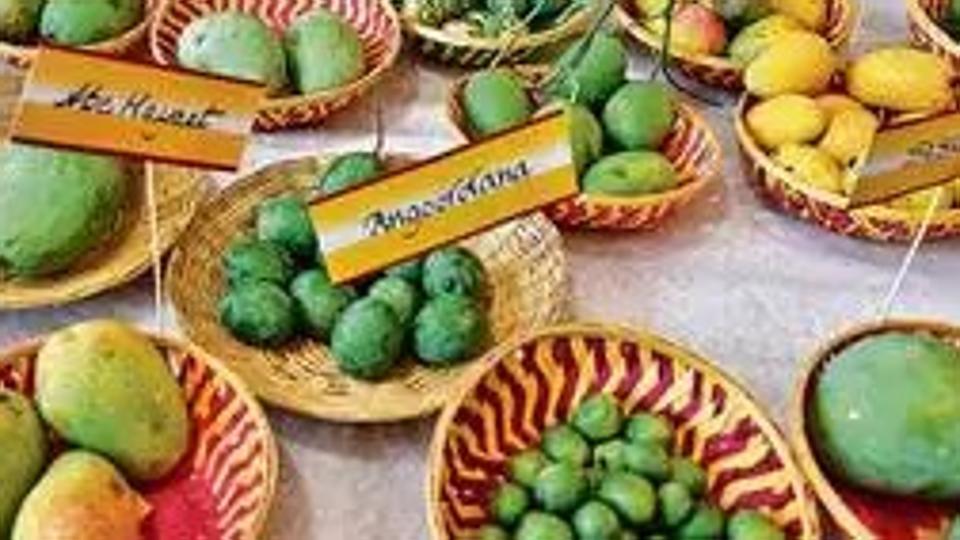
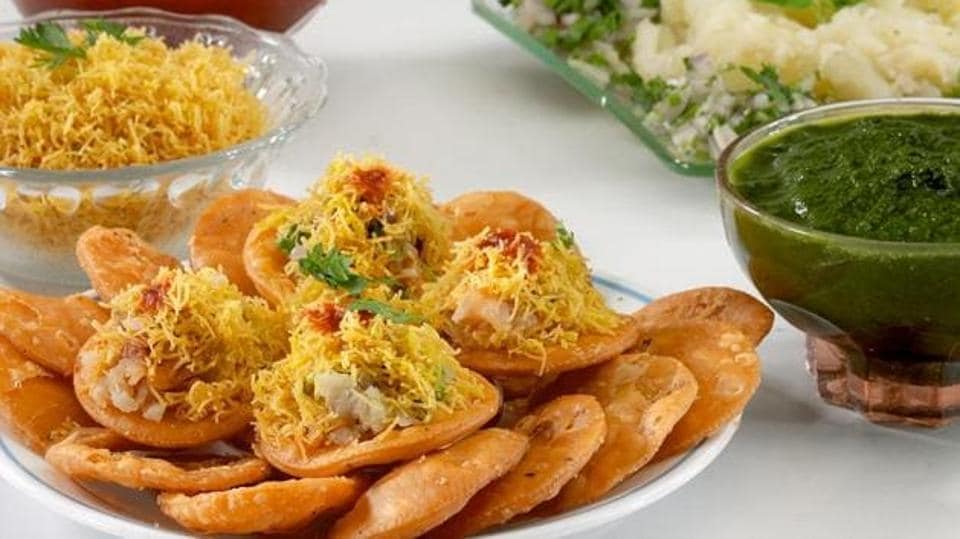
Last week, I attended Shashi Tharoor’s annual lunch party, where he serves only mangoes and chaat. It is a popular event, and his spacious lawn was full of guests. On one side, there was a long table where mangoes of a great many species were available. On the adjoining row were the chaat specialties. One would have thought that, being a Lok Sabha MP from Kerala for several terms and a proud Keralite, he might have made his annual lunch a Kerala food extravaganza. But, while being a great fan of Kerala food myself, I appreciate his cosmopolitanism and ability to rise above solely regional or parochial considerations.
In India, the mango is not a fruit—it is an inheritance, a season, a sentiment, a sensuous experience elevated to poetic devotion. (HT Photo/ Representative photo)
Perhaps it is not sufficiently known that Dilli ki Chaat is an art. Each of the succulent items available—golgappas, papri chaat, chillas, aloo tikkis, dahi bhallas, and chhole kulchas—comes with a hoary evolutionary lineage that makes them—even though the same dishes are available all across India—specifically that of Delhi.
To understand chaat in Delhi is not merely to understand a category of street food. It is to understand an ethos—a syncretic celebration of taste that defies hierarchy and resists classification. It is a cultural emblem, the gastronomic result of centuries of migration, conflict, syncretism, and innovation. It is the city’s edible biography.
Delhi, that ancient city of seven avatars, has been burnt and built, looted and loved, ruled and rebelled against. And through each of its transformations, it absorbed people—and their palates. The Mughals brought saffron and dried fruits; the Punjabis, following the Partition, brought spice, butter, and bravado; while Kayasthas, Banias, and Muslims all added to the culinary chorus. It is no coincidence that chaat, that riotous mix of textures and tastes, found its most iconic expression in this city of juxtaposed histories.
The word chaat itself is derived from the Hindi verb chaatna, to lick—suggesting a dish so delicious that one licks not just the plate but, figuratively, the soul. Historically, its origins are often traced to the kitchens of Emperor Shah Jahan. When water contamination in Delhi led to a spate of illnesses, his hakims recommended the liberal use of spices, tamarind, and rock salt in food to balance the body’s humours. What began as medicinal—tangy, piquant, invigorating—became irresistible.
The word chaat itself is derived from the Hindi verb chaatna, to lick—suggesting a dish so delicious that one licks not just the plate but, figuratively, the soul (iStock/ Representative photo)
It is thus not mere street fare but a curious confluence of culinary science and sensuality. And Delhi, even the aesthetic alchemist, perfected it. In doing so, for Dilli-wallahs, chaat is not just food. It is a theatre. It is Delhi’s secular sermon. It is the pulse of the city’s street life, the confidante of gossip, the sustenance of first dates, the affordable indulgence of every class. Unlike the rigidity of silver cutlery, it demands nothing but a willing tongue and a forgiving gut.
There are fruits, and then there is the mango. And in India, the mango is not a fruit—it is an inheritance, a season, a sentiment, a sensuous experience elevated to poetic devotion. It is not mere produce; it is pedigree. It is history dipped in syrup.
In the sweltering heart of the Indian summer, something miraculous occurs in orchards from Ratnagiri to Malihabad, from Salem to Murshidabad. The mango ripens—aam in Hindi, maambazham in Tamil, and mamidi in Telugu. The great Sanskrit poet Kālidāsa sang of mango blossoms in Ritusamhāra. The gourmet Mughal emperor Akbar planted over 100,000 mango trees in his Lakhi Bagh in Darbhanga. Jahangir said, “No other fruit can equal the flavour of mango.” In one of his letters, Ghalib wrote that “if there are no mangoes in paradise, I don’t want to go.”
There is the story that once Ghalib was eating mangoes with one of his close friends who did not share his enthusiasm for the fruit. Just then, a donkey ambling along sniffed at some of the mango skins and passed on. His friend could not help remarking that even donkeys did not like mangoes. Like lightning came Ghalib’s reply: “Of course, donkeys don’t like them.”
What makes India’s mangoes truly unique is their astonishing variety. More than a thousand varieties are grown across the country, the more well-known ones being Alphonso, Ratnagiri, Malda, Langda, Chausa, Dussehri, Himsagar, Totapuri, and the Banganapalle. Each mango carries its own personality, like regional dialects of the same mother tongue. And each has its fierce supporters. In my own opinion, no mango can beat the Langda—although a good Chausa just manages to.
Seeing the variety of mangoes arrayed by Shashi, I was overtaken by a sense of nostalgia. At one time, my family owned a ten-acre Langda orchard in Ghazipur, near Varanasi, on the border of Bihar. As children, I remember, we used to be taken for picnics to the orchard, where the most succulent mangoes were put into buckets and let down into a well to cool. Rugs were spread on the ground for us to eat. And when the mangoes were brought out, there was hardly a mouth not visibly salivating at the treat that lay ahead.
Alas, the orchard has long been sold. But the memories remain.
Thank you, Shashi. And may you have a tangy and fruitful year ahead.
Get the latest India News, breaking headlines and real-time updates from across the country. Stay informed about politics, government policies, crime, weather and major national developments.
Home/India News/Just Like That: Mangoes, Chaat, Nostalgia At Tharoor’s Annual Spread

 E-Paper